TL;DR

Get health and wellness essentials delivered free with Prime
- Fast, free delivery on millions of items
- Prime Video, Amazon Music and more included
- Member-only deals all year
A Fit&Well writer reported reaching a 5,889-foot summit in Albania after doing step-ups and Bulgarian split squats as part of year-round training. The exercises can be performed with bodyweight or added load, but the account is personal experience, not evidence that they will produce the same results for every walker.
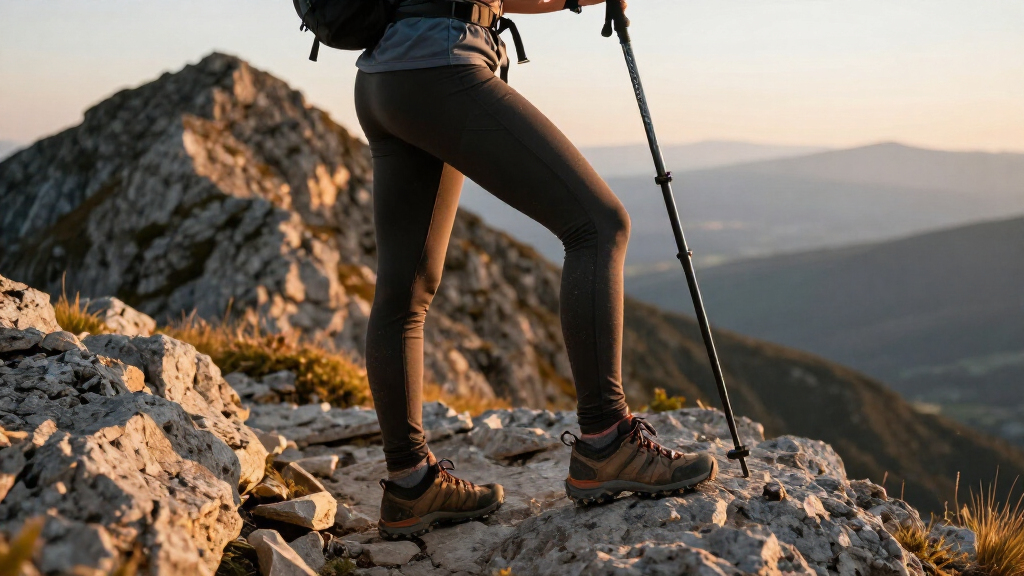
A Fit&Well writer says step-ups and Bulgarian split squats helped them feel steady while hiking to a 5,889-foot (1,795-metre) summit in the Albanian Alps. The report describes the exercises as part of the writer’s year-round training, offering walkers two ways to practise single-leg strength at home or in a gym; it does not establish that the routine will produce the same result for others.
The writer, who lives in London and says access to challenging terrain is limited, reported making trips to hike farther afield several times a year. On the Albanian Alps trip, they said they were able to move over boulders and large rocks with confidence and had no knee discomfort on the descent. Those details are the writer’s account of one hike, rather than independently measured outcomes.
The two exercises are a step-up and a Bulgarian split squat. The report says both work muscles including the hips, hamstrings, quadriceps and glutes, while also challenging core stability. It highlights the step-up, when performed slowly and with control, as a movement that resembles the action of climbing uphill.
For step-ups, the report recommends 8–12 repetitions per side: place one foot on a stable platform, press through that foot to rise, then lower the other foot with control. A lower surface can make the movement easier; a higher one or a weight held at the chest can increase the challenge. For the split squat, the rear foot rests on a chair or bench while the front leg bends and straightens. The report also suggests 8–12 repetitions per side and says weights can be added to make it harder.
Building Strength for Steeper Trails
The report is relevant to walkers who want to prepare for climbs without having regular access to hills. Single-leg exercises can be done indoors and adjusted by changing the platform height or adding weight, giving readers options for practising movements that use one leg at a time.
That practical appeal should be kept separate from the writer’s personal result. The article describes how the exercises fit into one person’s preparation and experience; it does not provide a controlled comparison, a training schedule, or evidence that these movements prevent knee problems or guarantee a more comfortable hike. Trail conditions, fitness, experience and individual needs differ.
Products Worth Considering

BowFlex Results Series SelectTech Adjustable Dumbbells (Pair)

Bowflex SelectTech 840 Adjustable Kettlebell

Garmin Forerunner 570 GPS Running Smartwatch, 47mm, Aluminum, Black
As an affiliate, we earn on qualifying purchases.
The Exercises Behind the Report
The writer says their coach regularly includes both movements in their plan and that they also prescribe them to personal-training clients. The report presents them as exercises that can be done at home with a chair or at a gym, with the choice of bodyweight or added resistance. It does not state how often the writer performed each exercise, how long they had trained, or how much weight they used.
The step-up begins with one foot on a box or chair. The person pushes through that foot to stand on the platform, then lowers the other foot under control before repeating on the same side. In the Bulgarian split squat, one foot is elevated behind the body while the front leg supports the movement. The report advises keeping the front knee above the ankle as the body lowers, then pushing through the front foot to return to standing.
The two movements share a focus on strength and balance through the working leg, but the source does not compare their effects or say that walkers need to perform both. Its central point is that the writer’s regular single-leg training accompanied their preparation for a demanding hike.
What the Account Cannot Establish
The report does not provide a training log, independent evaluation, or comparison with walkers who did not do these exercises. It is therefore unclear how much the movements contributed to the summit hike, compared with other preparation, prior experience, the route or conditions on the day. The source also gives no publication date, hike date, or details about the summit’s route and difficulty.
The writer’s report of no knee discomfort on the descent is not evidence that the exercises prevent pain or injury. The article does not offer individualized guidance for people with injuries or other health concerns. Readers should adapt exercise choices to their ability and consult a qualified professional for personal fitness or medical decisions.
How Walkers Can Apply the Ideas
The report sets out no follow-up study, new training program or scheduled milestone. Its practical next step for interested walkers is to begin with a stable, low platform and bodyweight movements, then adjust the difficulty only as appropriate to their capacity. The suggested range is 8–12 repetitions per side, with control emphasized for the step-up.
Whether these exercises improve a particular walker’s uphill performance remains individual and untested by the report. Any broader claim would require evidence beyond this single hiking account.
Key Questions
Which two exercises did the writer use?
The writer identified step-ups and Bulgarian split squats as regular parts of their training.
What peak did the writer climb?
The report says the writer reached a 5,889-foot (1,795-metre) summit in the Albanian Alps. It does not name the peak.
How many repetitions does the report suggest?
It recommends 8–12 repetitions per side for each exercise. The report does not specify how many sets or how often to train.
Can the exercises be done at home?
The report says both can be done at home using a chair or similar support, provided the setup is stable. It suggests adjusting the step-up platform or adding weights to change the challenge.
Does the report prove the exercises prevent knee pain?
No. The writer said they experienced no knee discomfort on the descent, but that is a personal observation from one hike, not evidence that the exercises prevent pain or injury.
Source: fitandwell.com