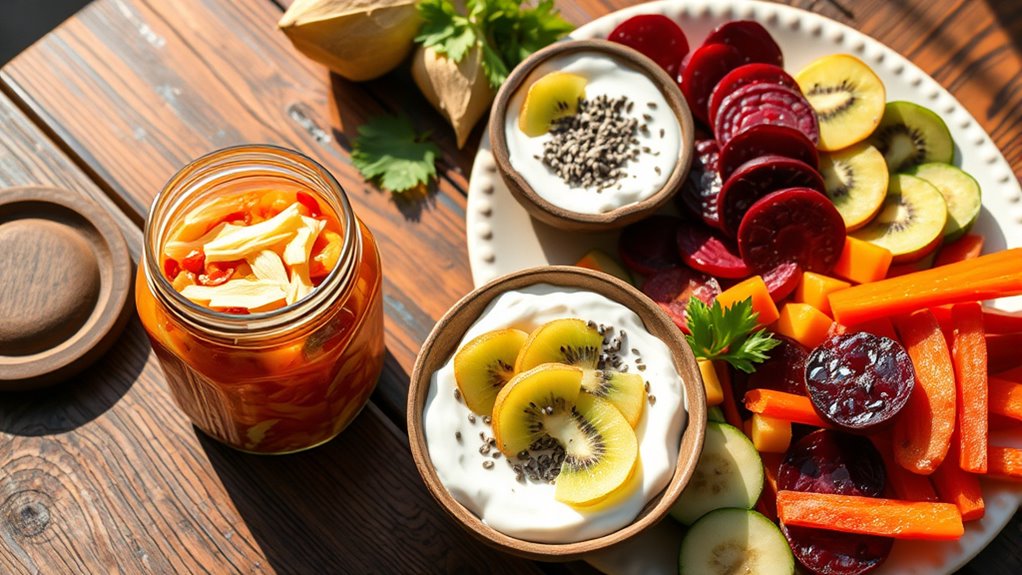

To support your gut health as a vegan, focus on adding a variety of plant-based probiotics like sauerkraut, kimchi, kombucha, miso, and tempeh to your diet. Also, include prebiotic-rich foods such as fiber-filled vegetables and fruits to feed beneficial bacteria. Regularly consuming these fermented foods helps maintain microbiome diversity and boost your immune system. Keep exploring to discover simple ways to incorporate more of these gut-boosting options into your daily routine.
Key Takeaways
- Incorporate a variety of fermented plant-based foods like sauerkraut, kimchi, miso, and tempeh to boost probiotic intake.
- Consume probiotic-rich beverages such as kombucha to diversify gut bacteria naturally.
- Include prebiotics like fiber-rich vegetables and roots to feed beneficial gut microbes and enhance probiotic effects.
- Choose unpasteurized, live-culture fermented foods to maximize probiotic benefits and support microbiome diversity.
- Regularly eating fermented foods promotes gut health, immune function, and overall well-being for vegans.
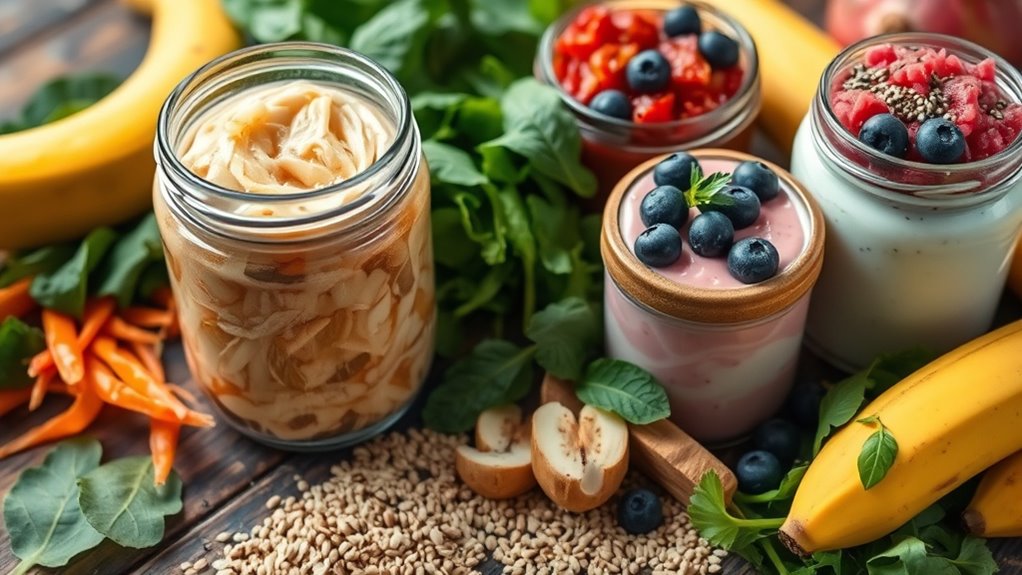
Have you ever wondered how your gut health impacts your overall well-being? The answer lies in understanding the powerful role of fermentation benefits and probiotic sources. Your gut is home to trillions of bacteria that influence digestion, immunity, mood, and even energy levels. When your gut bacteria are balanced, you tend to feel healthier, more energetic, and better equipped to fight off illnesses. But maintaining that balance requires more than just a good diet; it involves actively incorporating foods that support your microbiome, especially if you’re vegan. Fermented foods are a cornerstone in this effort, as they contain live microorganisms that help replenish and diversify your gut flora.
Fermentation benefits are numerous. During fermentation, natural microbes break down carbs and other compounds in foods, creating new beneficial bacteria called probiotics. These probiotics are vital because they help restore and maintain a healthy gut environment. When you consume fermented foods, you’re directly introducing probiotic strains that can outcompete harmful bacteria, improve digestion, and strengthen your immune response. Unlike supplements, fermented foods offer a natural, whole-food way to enhance your gut health. Plus, they often contain prebiotics—fibers and compounds that feed your existing good bacteria—making them an even more powerful tool for supporting your microbiome. Additionally, diversity in probiotic strains enhances the overall effectiveness of gut health strategies.
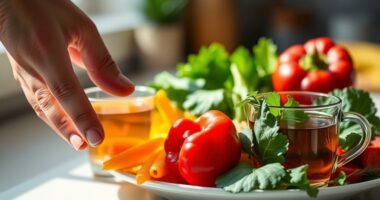
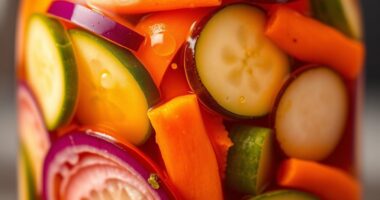
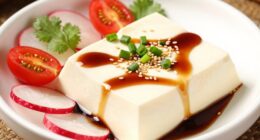
As a vegan, you might think your options are limited, but that’s not the case. Many plant-based foods serve as excellent probiotic sources. For example, fermented vegetables like sauerkraut and kimchi are rich in live cultures and are easy to include in your meals. Kombucha, a fermented tea, provides an invigorating way to boost your probiotic intake, while miso and tempeh are versatile options packed with beneficial microbes. Incorporating these foods into your daily diet helps guarantee you’re consistently supplying your gut with the beneficial bacteria it needs. Remember, not all fermented foods are created equal—look for unpasteurized, live-culture versions to maximize fermentation benefits.
![Raw Organic Fermented Probiotic Sauerkraut, "Classic" Variety [Vegan, Gluten Free, Non-GMO, Probiotic] 16oz Glass Jar by Wise Goat Organics](https://m.media-amazon.com/images/I/41slxc+X3xL._SL500_.jpg)
Raw Organic Fermented Probiotic Sauerkraut, "Classic" Variety [Vegan, Gluten Free, Non-GMO, Probiotic] 16oz Glass Jar by Wise Goat Organics
Probiotic Rich for Gut Health – Our sauerkraut is traditionally fermented for an extended period of time to…
As an affiliate, we earn on qualifying purchases.
As an affiliate, we earn on qualifying purchases.
Frequently Asked Questions
Can Vegans Get Enough Probiotics Without Dairy Products?
Yes, you can get enough probiotics without dairy products. Vegan probiotic sources like sauerkraut, kimchi, and kombucha offer dairy-free fermentation options that boost your gut health. Incorporate these foods into your diet regularly, and consider vegan probiotic supplements if needed. By choosing diverse fermented foods, you’ll support your microbiome and maintain a healthy gut without relying on dairy-based probiotics.
Are All Fermented Foods Suitable for Vegans?
Not all fermented foods are suitable for vegans. Many traditional options, like dairy-based yogurts or cheeses, contain animal products. However, you can find plenty of plant-based fermentation and vegan probiotic sources, such as sauerkraut, kimchi, kombucha, and plant-based yogurts made from coconut or almond milk. Always check labels to verify there are no hidden animal ingredients, so you can enjoy these vegan-friendly options safely.
How Long Does It Take to See Gut Health Improvements?
You can start noticing improvements in your gut microbiota and health markers within a few days to a few weeks of consistently consuming probiotics, prebiotics, or fermented foods. It varies based on your current gut health, diet, and lifestyle. Keep track of changes such as improved digestion or energy levels, and stay patient, as it often takes several weeks for significant, lasting gut health benefits to develop.
Can Prebiotics Cause Digestive Discomfort?
Think of your gut as a delicate garden; too much prebiotic overload can cause Digestive sensitivity, making your garden bloom painfully. Yes, prebiotics can cause discomfort if you consume them excessively or if your system is sensitive. Start with small amounts, and gradually increase to avoid irritation. Listening to your body helps prevent issues, ensuring your gut garden flourishes without the weeds of discomfort.
Are Probiotic Supplements Necessary for Vegans?
Probiotic supplements aren’t always necessary for vegans, especially if you consume a variety of fermented foods rich in diverse probiotic strains. Their efficacy depends on the strains included and your gut’s unique needs. If you find you have digestive issues or want to boost your gut health, supplements can help, but it’s best to choose high-quality ones with proven strain efficacy. Always consider your diet first before relying on supplements.
![Spicy Premium Fermented Kimchi Napa Cabbage [ FUN SIZE Pouch Pack of 8] - [Original] – (Gluten Free / KETO / Vegan) | 0 Fat/ 0 Sugar/ 0 Cholesterol | Long Shelf Life | Perfect for Ramen & Stir-Fries - JONGGA](https://m.media-amazon.com/images/I/41DtyjAKBsL._SL500_.jpg)
Spicy Premium Fermented Kimchi Napa Cabbage [ FUN SIZE Pouch Pack of 8] – [Original] – (Gluten Free / KETO / Vegan) | 0 Fat/ 0 Sugar/ 0 Cholesterol | Long Shelf Life | Perfect for Ramen & Stir-Fries – JONGGA
KOREAN FLAVOR WITH FERMENTATION – Crafted using time-honored fermentation methods and premium napa cabbage, Jongga’s kimchi delivers the…
As an affiliate, we earn on qualifying purchases.
As an affiliate, we earn on qualifying purchases.
Conclusion
Think of your gut as a garden, and probiotics, prebiotics, and fermented foods as its dedicated caretakers. By nourishing these tiny allies, you cultivate a vibrant ecosystem where health blooms like a resilient, flourishing tree. Remember, every bite plants a seed of energy, shaping your wellbeing from the roots up. Embrace this journey with patience and love, knowing that each mindful choice acts as the sunlight and water guiding your gut’s beautiful, enduring growth.

Liquid Remedy Kombucha Sugar Free Organic Drink, Low Calorie, Probiotic Like Tea for Gut Health – Super Sampler Variety Pack – 8.5 Fl Oz Can, 24-Pack
The Tastiest Kombucha Going 'Round: Liquid Remedy is the only light and refreshing, low calorie, gut health drink…
As an affiliate, we earn on qualifying purchases.
As an affiliate, we earn on qualifying purchases.
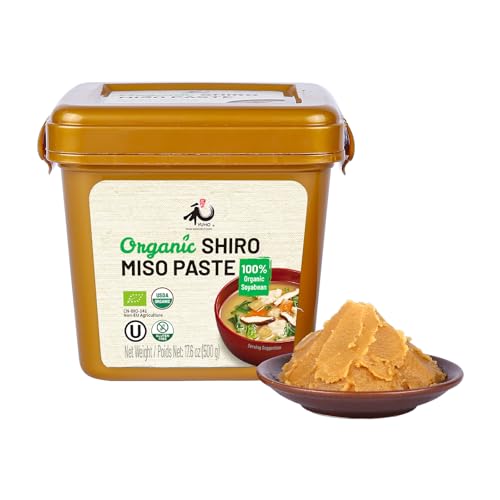
YUHO Organic Shiro Miso Paste, No GMO, NON-MSG, Japanese Style Instant Miso Soup, Gluten Free, Kosher, No Preservatives, Vegan 17.6 oz
Certified Organic & Allergen-Friendly – YUHO miso paste is Organic, Non-GMO, gluten-free, and contains 0 artificial additives or…
As an affiliate, we earn on qualifying purchases.
As an affiliate, we earn on qualifying purchases.