
To make vegan sourdough, start by creating a starter using organic flour and filtered water, capturing wild yeasts and bacteria naturally present in the environment. Feed it regularly with vegan-friendly ingredients like whole wheat or rye flour. When ready, mix portions of the starter with more flour and water to form dough, then let it ferment to develop flavor and rise. With patience, you’ll produce flavorful vegan bread—continue exploring this process to master your own recipes and variations.
Key Takeaways
- Vegan sourdough starter is made from flour, water, and natural microbes, requiring no animal products or commercial yeast.
- Regular feeding with vegan-friendly ingredients keeps the starter active and promotes healthy fermentation.
- Whole wheat, rye, or spelt flours can be used to develop unique flavors in your vegan sourdough.
- Fermentation duration enhances flavor complexity, tanginess, and bread texture without animal-derived additives.
- Baking vegan sourdough involves mixing the starter with plant-based ingredients, kneading, and allowing natural fermentation for leavening.
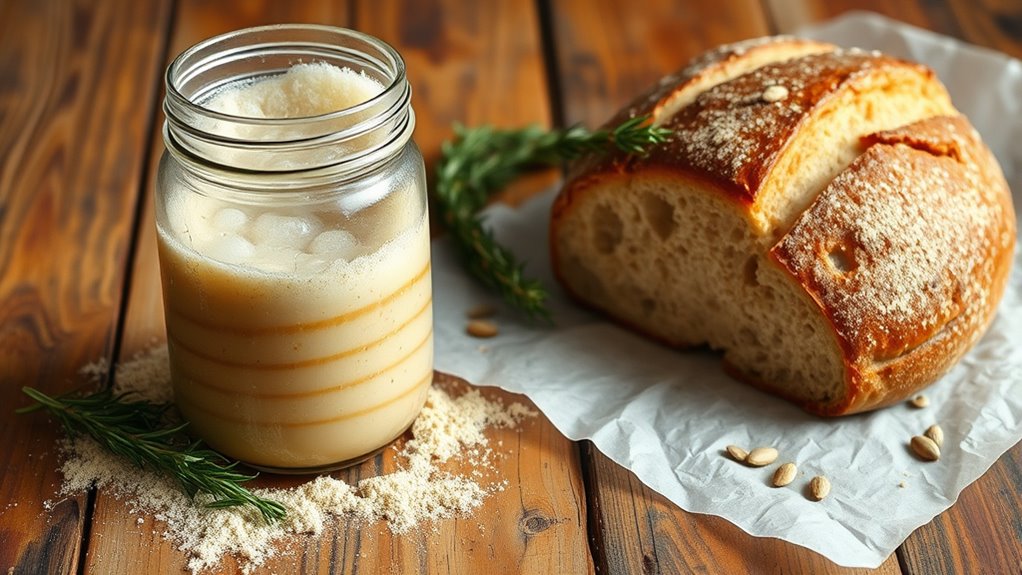
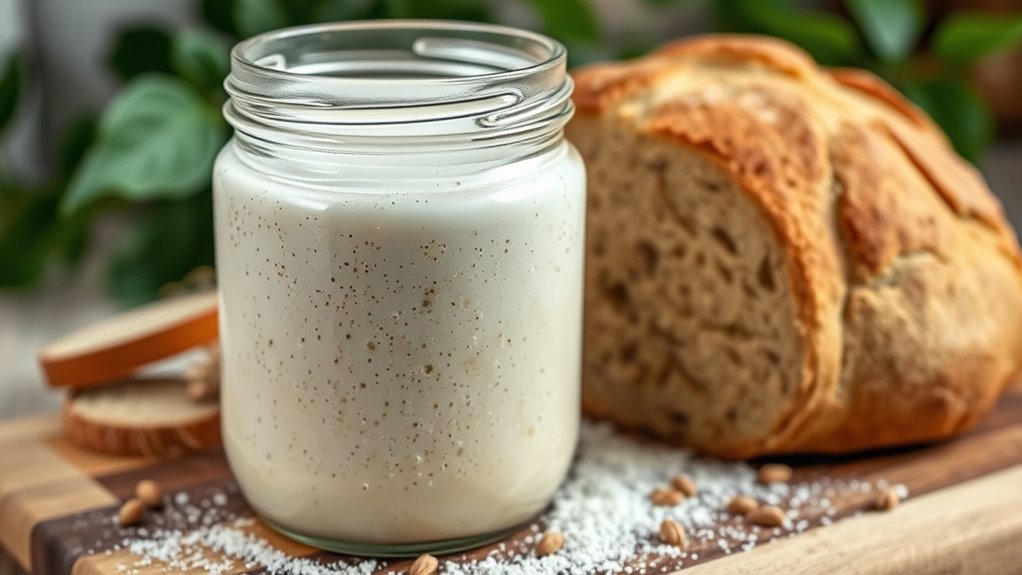
Ever wondered how vegans can enjoy the rich, tangy flavor of sourdough bread? The secret lies in understanding the fermentation process and choosing vegan ingredients that support it. Traditional sourdough relies on wild yeast and bacteria to ferment the dough, creating that signature tang and chewy texture. As a vegan, you don’t need animal products to achieve this; instead, you focus on plant-based ingredients that foster the right environment for fermentation. Flour, water, and salt form the foundation, but what makes it special is how these ingredients interact during fermentation. You’ll mix your flour and water to create a starter, which naturally draws in wild yeasts and beneficial bacteria from the environment. This process can take several days, but it’s essential for developing flavor and leavening power. During fermentation, the natural microbes consume the sugars in the flour, producing gases and acids that give sourdough its distinctive taste and texture. You don’t need any animal-derived additives—just vegan-friendly ingredients like organic flour, filtered water, and sea salt. Some bakers boost fermentation by adding a small amount of vegan-friendly sweetener, like maple syrup or agave nectar, to encourage microbial activity, but it’s optional. Patience is key here; the longer you let your starter ferment, the more complex and tangy the flavor becomes. As a vegan baker, you’ll appreciate that this process is entirely plant-based, relying solely on natural fermentation. When your starter is lively and bubbly, it’s ready to use for baking. You’ll combine portions of the starter with additional vegan ingredients such as water and flour, kneading it into a dough that will rise through fermentation. The beauty of sourdough is that it doesn’t require commercial yeast or animal-derived ingredients, making it perfect for vegans. Plus, the fermentation process not only enhances flavor but also improves digestibility and nutrient availability in the bread. Additionally, understanding how fermentation works can help you better troubleshoot and improve your bread’s flavor and texture. Once you master creating a vegan starter, you can experiment with different flours—whole wheat, rye, or spelt—to add variety and depth. Keep in mind that maintaining your starter involves regular feeding with vegan ingredients, keeping it active and healthy. This ongoing process ensures you’ll always have a reliable base for baking delicious, tangy sourdough bread that aligns with your vegan lifestyle. So, embrace the fermentation process, enjoy the natural simplicity of vegan ingredients, and savor the unique flavors that only a well-fed sourdough starter can produce.
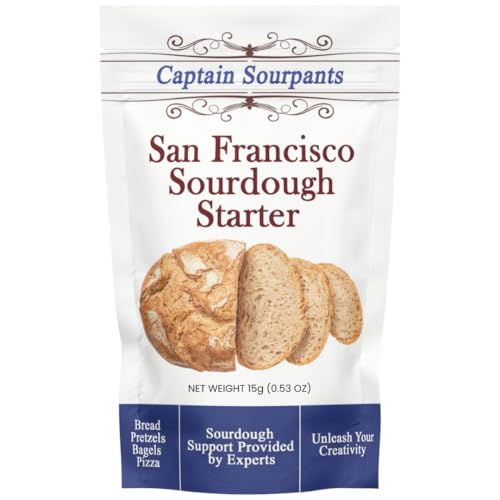
San Francisco Sourdough Starter Culture- 100+ Year Old Dehydrated Heirloom Style Sourdough Starter Kit for Sourdough Bread, Pizza, Buns, Pancakes, Muffins | Easy to follow instructions. By Captain Sourpants
Authentic San Francisco Sourdough Culture: this starter brings the distinct tangy flavor of traditional West Coast sourdough straight…
As an affiliate, we earn on qualifying purchases.
As an affiliate, we earn on qualifying purchases.
Frequently Asked Questions
Can Vegans Make Sourdough Without Commercial Yeast?
Yes, you can make vegan sourdough without commercial yeast by relying on vegan fermentation. Your natural starter acts as a plant-based leavening agent, cultivating wild yeast and beneficial bacteria from the environment. To do this, feed your starter regularly with flour and water, letting it ferment until bubbly and active. This method creates a flavorful, vegan-friendly sourdough bread, eliminating the need for commercial yeast altogether.
How Do I Store Vegan Sourdough Starter Long-Term?
Your vegan sourdough starter can last a lifetime with proper fermentation preservation! Store it in the fridge, covered loosely, to slow fermentation and prevent spoilage. Follow a consistent starter feeding schedule—once a week if refrigerated—to keep it lively. For long-term storage, consider drying or freezing portions. Just remember, neglecting these steps is like risking a sourdough apocalypse—your starter could die and take your baking dreams with it!
Are There Gluten-Free Vegan Sourdough Options?
Yes, you can make gluten-free vegan sourdough using gluten-free grains like rice, millet, or buckwheat. You’ll need to adapt vegan fermentation techniques, relying on naturally occurring wild yeast and bacteria. Start a gluten-free sourdough starter with these grains, feed it regularly, and maintain it at the right temperature. This way, you create a tasty, allergen-friendly sourdough that’s perfect for gluten-sensitive and vegan bakers.
What Are Common Vegan-Friendly Sourdough Flour Substitutes?
They say, “You are what you eat,” and that’s true with sourdough. For vegan-friendly options, you can swap traditional flour with grain alternatives like buckwheat, millet, or sorghum. These not only serve as effective flour substitutes but also offer nutrient boosts, making your bread more wholesome. Keep experimenting with different grains to find the perfect texture and flavor for your vegan sourdough journey.
How Do I Adjust Recipes for High-Altitude Vegan Sourdough Baking?
When baking vegan sourdough at high altitude, you should make altitude adjustments by reducing the flour slightly and increasing hydration to account for moisture considerations. You might also need to shorten fermentation times and bake at a slightly lower temperature to prevent over-proofing. Keep an eye on your dough’s consistency and adjust water content as needed, ensuring your loaf maintains proper rise and texture despite the altitude.

King Arthur 100% Organic Bread Flour, Unbleached, 5 lb (Pack of 1) – Non-GMO Project Verified, No Preservatives
High Protein Flour: 12.7% protein – a full point more than other national brands, King Arthur flour ensures…
As an affiliate, we earn on qualifying purchases.
As an affiliate, we earn on qualifying purchases.
Conclusion
Just like a thriving sourdough starter, your vegan baking journey begins with patience and care. Each loaf you craft symbolizes growth, resilience, and the nourishing power of tradition reimagined. Embrace the process, and let your bread be a demonstration to your dedication and creativity. With every bake, you’re not just making bread—you’re cultivating a symbol of connection, sustainability, and the delicious possibilities that come when you nurture something truly special.

Koolstuffs Silicone Bread Sling for Dutch Oven, 2 PCS Non-Stick & Easy Clean Reusable Sourdough Mat, Sourdough Bread Baking Supplies, Tools & Accessories
[Safe Long Handle Design]- Koolstuffs silicone bread sling features dual reasonable long handles for Dutch oven use. Effortlessly…
As an affiliate, we earn on qualifying purchases.
As an affiliate, we earn on qualifying purchases.

Mature Sourdough Starter Culture – 100+ Years Old Dehydrated Sourdough Starter Kit for Delicious Homemade Sourdough Bread – All-Natural and Healthy – Beginner Friendly, Fast reactivation and Expert Support
Mature and Lively 100+ years Old Dehydrated Sourdough Starter – Create Delicious and Tangy Sourdough Bread right at…
As an affiliate, we earn on qualifying purchases.
As an affiliate, we earn on qualifying purchases.