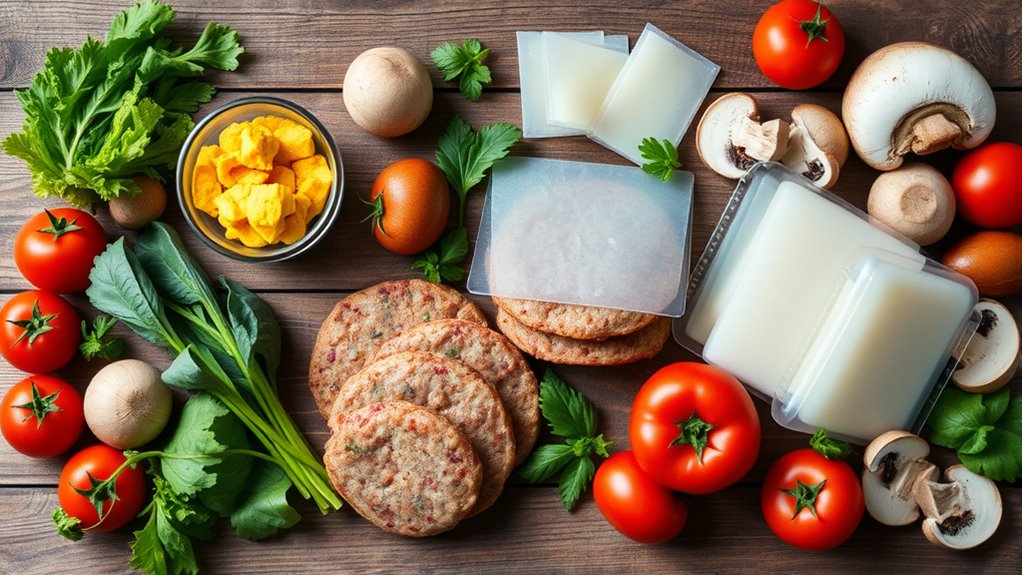
If you’re exploring vegan substitutes, start with plant-based proteins like lentils, tofu, tempeh, and jackfruit to replace meat, while plant-based milks and vegan cheeses stand in for dairy. For eggs, mashed bananas or commercial replacers work well in baked goods. Use agar-agar, carrageenan, or pectin instead of gelatin. With creative swaps and tips, you can craft tasty, cruelty-free meals—more options and ideas await if you continue your journey.
Key Takeaways
- Use plant-based proteins like tofu, tempeh, and jackfruit as substitutes for meat and poultry in recipes.
- Replace eggs with mashed bananas, applesauce, or commercial egg replacers in baking.
- Opt for dairy alternatives such as plant-based milks, vegan cheeses, and cashew-based creams.
- Substitute animal gelatin with agar-agar, carrageenan, or pectin for thickening and gelling needs.
- Experimentation and recipe adaptation are key to creating flavorful, satisfying vegan dishes with these substitutes.

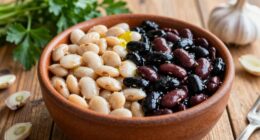
Are you looking to replace animal-based ingredients with plant-based alternatives? If so, you’re in the right place. Switching to vegan substitutes might seem tricky at first, but with the right knowledge, it becomes straightforward and rewarding. When it comes to protein sources, plant-based proteins are your best friends. Legumes like lentils, chickpeas, and black beans pack a punch of protein and fiber, making them excellent replacements for meat in most dishes. Tofu and tempeh are versatile, rich in protein, and absorb flavors well, allowing you to recreate many traditional recipes without animal products. Seitan, made from wheat gluten, offers a meaty texture and is perfect for sandwiches and stir-fries.
Switch to plant-based proteins like lentils, tofu, and seitan for tasty, nutritious vegan meals.
Dairy alternatives are another key aspect of *adapting* to a vegan diet. You’ll find a wide variety of options, from plant-based milks like almond, soy, oat, and coconut milk, to vegan cheeses made from nuts or soy. These dairy alternatives are often enriched with calcium, vitamin D, and other nutrients, so you can enjoy your favorite creamy textures without sacrificing nutrition. When baking or cooking, coconut cream or cashew cheese can substitute for traditional dairy, providing richness and flavor. Many brands now produce plant-based yogurts that contain live cultures and probiotics, making them a healthy and tasty choice for breakfast or snacks. It’s worth experimenting with different dairy alternatives to find the ones that best suit your taste and dietary needs.
Replacing eggs can be simple with a variety of vegan substitutes. Common options include mashed bananas, applesauce, or pumpkin puree, which work well in baked goods. Commercial egg replacers made from starch or ground flaxseed mixed with water are also effective, especially for recipes like muffins, pancakes, and cookies. These alternatives bind ingredients and add moisture, mimicking the role of eggs. When baking, it’s important to adapt recipes slightly to account for differences in texture and binding properties, but with a little practice, you’ll find that vegan baking can be just as satisfying.
For meat replacements, aside from tofu, tempeh, and seitan, there are many innovative options. Textured vegetable protein (TVP) offers a ground-meat consistency, perfect for tacos or Bolognese. Jackfruit, when cooked properly, provides a shredded texture similar to pulled pork or chicken. Commercial vegan products like vegan sausages, burgers, and deli slices are widely available, giving you convenience and variety. Gelatin is another animal-derived ingredient, but it can be swapped out for plant-based options like agar-agar, carrageenan, or pectin, which set and thicken foods just like gelatin.
*Transitioning* to a vegan diet involves exploring these plant-based proteins and dairy alternatives. With a little creativity and experimentation, you can enjoy a diverse, flavorful, and nutritious plant-based lifestyle that replaces animal-derived ingredients seamlessly.
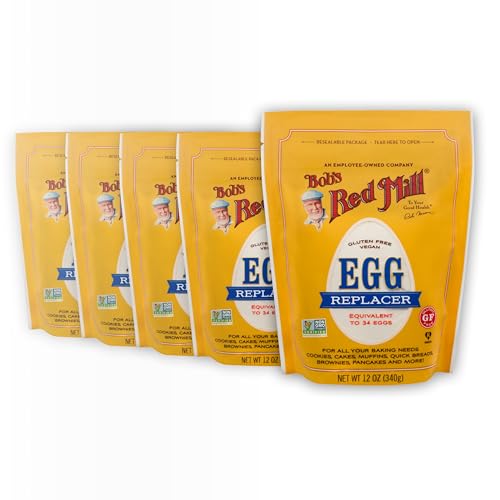
Bob's Red Mill Gluten Free Egg Replacer, 12oz (Pack of 5) – Non GMO, Vegan, Paleo Friendly, Equals 34 Eggs/Bag, Kosher
Versatile Egg Alternative: Bob's Red Mill Egg Substitute provides a versatile solution for recipes that traditionally require eggs,…
As an affiliate, we earn on qualifying purchases.
As an affiliate, we earn on qualifying purchases.
Frequently Asked Questions
Are Vegan Substitutes Nutritionally Equivalent to Animal Products?
Vegan substitutes aren’t always nutritionally equivalent to animal products because of bioavailability differences and nutritional content. You might get similar protein from plant-based options, but vitamins like B12 and minerals like iron may be lower or less absorbable. It’s essential to verify the nutritional comparison and consider fortified foods or supplements to meet your nutritional needs. This way, you guarantee a balanced diet while enjoying plant-based alternatives.
How Do Vegan Substitutes Impact Cooking and Baking Textures?
Vegan substitutes can profoundly impact cooking and baking textures, causing texture variation that you might notice in your final dish. For example, plant-based eggs may produce a different rise or binding, and dairy alternatives can alter creaminess or moisture. You’ll often need to adapt flavors too, since some substitutes have distinct tastes. Experimenting helps you find the right balance, ensuring your recipes maintain their desired texture and flavor while accommodating your vegan goals.
Can Vegan Substitutes Be Used in All Traditional Recipes?
You can use vegan substitutes in most traditional recipes, but recipe adaptability varies. Some dishes might need tweaks to achieve the same taste and texture, especially baked goods or creamy sauces. While vegan options often mimic the original, they may not perfectly replicate every flavor or consistency. Experimenting helps you find the right balance, ensuring your dishes remain delicious while accommodating dietary preferences.
Are There Any Allergens Common in Vegan Substitutes?
Did you know that over 2 million Americans suffer from food allergies? Vegan substitutes can contain common allergens like soy, nuts, or gluten, which may cause allergic reactions. While they often reduce dairy or egg allergens, there’s still a risk of allergen cross reactivity, affecting your nutritional concerns. Always read labels carefully, and if you’re sensitive, consult with a healthcare professional to avoid unexpected allergic responses.
How Long Do Vegan Substitutes Typically Last in Storage?
Vegan substitutes generally last from a few days to several weeks, depending on the type and storage conditions. For ideal shelf life, store them in airtight containers in the fridge or freezer, following specific storage tips on packaging. Always check for signs of spoilage before use, such as sour smell or mold. Proper storage extends their freshness, so you can enjoy your vegan ingredients safely and conveniently.
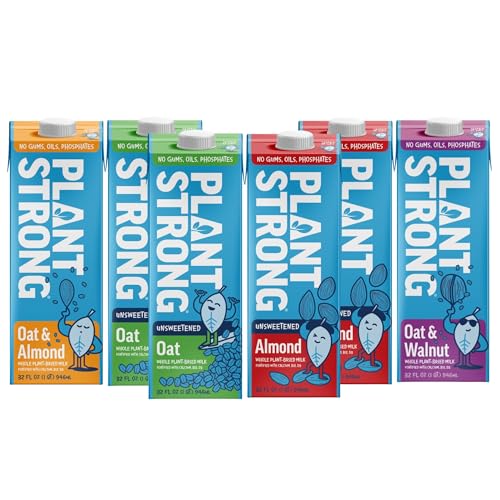
PLANTSTRONG Dairy-Free Milk Best Sellers Variety Pack – Whole Plant-Based Milk, Fortified with Calcium, B12 & D3, No Gums or Oils, Non-GMO Project Verified, Gluten Free, Vegan (6-Pack (32 Fl Oz Each))
PLANT-BASED MILK VARIETY PACK: Includes 2 Unsweetened Almond, 2 Unsweetened Oat, 1 Oat & Almond, and 1 Oat…
As an affiliate, we earn on qualifying purchases.
As an affiliate, we earn on qualifying purchases.
Conclusion
Switching to vegan substitutes can transform your cooking and help the planet. Did you know that reducing meat consumption by just 10% can cut greenhouse gases by over 50 million tons annually? By choosing plant-based options, you’re not only enjoying delicious meals but also making a positive impact on the environment. So go ahead, experiment with these substitutes—you’ll be surprised how satisfying and eco-friendly your dishes can be!

Violife, Cheese Just Like Cheddar Slices Vegan Non-GMO, 10 Count, 7.05 Ounce (Pack of 1)
One 7.5-Ounce pack of VIOlife Just like cheddar slices
As an affiliate, we earn on qualifying purchases.
As an affiliate, we earn on qualifying purchases.

Plant Basics – Hearty Plant Protein – Unflavored Crumbles, 8 oz, Made from Peas, Non-GMO, Gluten Free, Low Fat, Low Sodium, Vegan, Meat Substitute
BRING VEGAN RECIPES TO LIFE – Make your mealtimes fun and deliciously delightful with our versatile and protein-packed…
As an affiliate, we earn on qualifying purchases.
As an affiliate, we earn on qualifying purchases.