To make a vegan recipe truly filling, focus on combining plant-based proteins like lentils, chickpeas, or tofu with fiber-rich ingredients such as vegetables and whole grains. Adding healthy fats like avocado or nuts also helps prolong satiety. Proper cooking techniques and thoughtful meal assembly—balancing textures and flavors—enhance satisfaction. When you master these components, your meals will be more nourishing and satisfying—there’s plenty more to discover for creating the ultimate filling vegan dishes.
Key Takeaways
- Incorporate plant-based proteins like lentils, tofu, and chickpeas for muscle support and satiety.
- Add fiber-rich ingredients such as vegetables and whole grains to slow digestion and prolong fullness.
- Use healthy fats like avocado, nuts, and olive oil to enhance flavor and sustain energy levels.
- Employ cooking techniques like roasting and simmering to improve texture, flavor, and digestibility.
- Combine proteins, fiber, and healthy fats in balanced meals to maximize satiety and overall satisfaction.

Finding satisfying vegan meals can be a challenge, especially if you’re used to filling your plate with hearty animal-based proteins. The key to making vegan dishes truly filling lies in choosing ingredients that provide both substance and sustained energy. Plant-based proteins are essential because they help you feel full longer and support muscle maintenance, making your meals more satisfying. These can include lentils, chickpeas, tofu, tempeh, and edamame. Incorporating a variety of these sources ensures your meal isn’t just flavorful but also nutritionally complete.
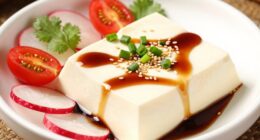
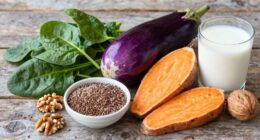
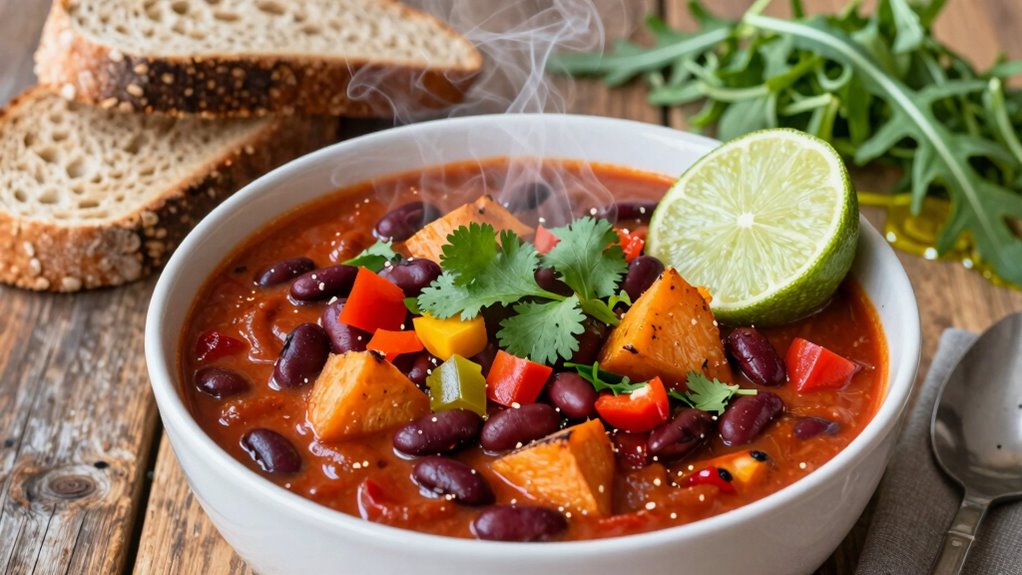
Plant-based proteins like lentils, tofu, and chickpeas make vegan meals filling and nutritionally complete.
Fiber-rich ingredients are equally important for creating a sense of fullness. When you include foods high in fiber, you slow down digestion, which keeps hunger at bay and stabilizes blood sugar levels. Vegetables like broccoli, Brussels sprouts, carrots, and leafy greens are excellent fiber sources. Whole grains such as quinoa, brown rice, oats, and barley also add bulk to your meals, making them more satisfying. Using fiber-rich ingredients can also help support digestive health and regularity. By combining fiber-rich ingredients with plant-based proteins, you create a meal that’s both hearty and nourishing.
You should also think about including healthy fats, which naturally increase satiety. Avocado, nuts, seeds, and olive oil not only add flavor but also help your body absorb fat-soluble vitamins and provide long-lasting energy. These fats work synergistically with fiber and protein to make your meal more substantial, preventing hunger pangs hours after eating. Incorporating healthy fats into your dishes can further enhance satiety and flavor. When you assemble your vegan dishes, aim for a balanced mix of these elements to maximize fullness.
Cooking techniques matter too. For example, roasting vegetables intensifies their flavor and makes them more satisfying, while simmering beans or lentils until tender ensures they’re appetizing and easy to digest. Incorporating hearty grains or legumes into salads, stews, or bowls can also boost the filling power of your meals. Additionally, using cooking methods that enhance texture and flavor can make a significant difference in how satisfying your meal feels. The right techniques can also help unlock additional flavors and nutrients, making your meals more appealing overall.
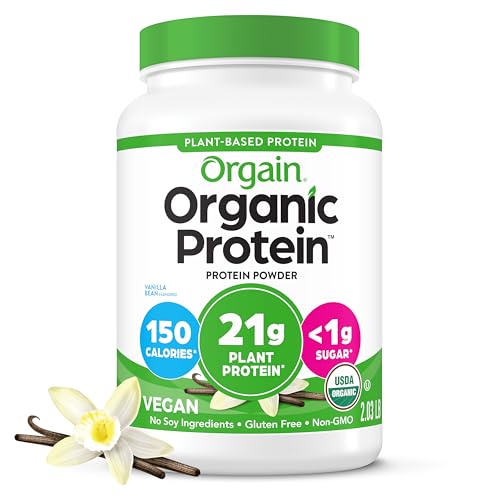
Orgain Organic Vegan Protein Powder, Vanilla Bean – 21g Plant Protein, 6g Prebiotic Fiber, No Lactose Ingredients, No Added Sugar, Non-GMO, For Shakes & Smoothies, 2.03 lb (Packaging May Vary)
CLEANER INGREDIENTS: 21g of Organic plant based protein and 1g sugar. Our protein blend contains Organic peas, brown…
As an affiliate, we earn on qualifying purchases.
As an affiliate, we earn on qualifying purchases.
Frequently Asked Questions
Can Vegan Meals Be Satisfying Without High Protein Content?
Yes, vegan meals can be satisfying without high protein content by focusing on plant-based fibers and diverse plant proteins. You can include ingredients like beans, lentils, whole grains, and vegetables, which provide bulk and slow digestion, keeping you full longer. Incorporate healthy fats and complex carbs to enhance satiety. Combining these elements guarantees your meal feels hearty and fulfilling, even without relying solely on high-protein sources.
How Do Vegan Recipes Compare in Satiety to Meat-Based Dishes?
You might find vegan recipes just as filling as meat-based dishes because plant-based textures and flavor profiles can mimic traditional favorites, proving you can have your cake and eat it too. When well-crafted, these dishes offer satisfying fiber, healthy fats, and complex carbs that promote fullness. So, don’t judge a book by its cover; vegan meals can stand toe to toe with meat dishes regarding satiety.
Are There Specific Ingredients That Increase Fullness in Vegan Cooking?
Yes, certain ingredients boost fullness in vegan cooking. You should include plant-based fibers like beans, lentils, and whole grains, which add bulk and slow digestion. Additionally, plant proteins such as tofu, tempeh, and seitan help increase satiety by supporting muscle repair and keeping you full longer. Combining these ingredients creates hearty, satisfying vegan dishes that curb hunger effectively, making your meals more fulfilling and enjoyable.
Do Portion Sizes Affect How Filling a Vegan Meal Feels?
Portion sizes can make a vegan meal feel more filling, like filling a vessel to the brim. When you focus on portion control, you guarantee you’re not overeating or under-eating. Fiber-rich foods, such as beans, whole grains, and vegetables, also boost satiety because they slow digestion and keep you full longer. So, larger portions of fiber-dense foods work together to make your vegan meal satisfying and hearty.
Can Vegan Snacks Curb Hunger as Effectively as Non-Vegan Snacks?
Yes, vegan snacks like plant-based options can curb hunger effectively, especially when they include fiber-rich ingredients. These snacks slow digestion and keep you full longer, much like non-vegan snacks. Incorporate nuts, seeds, fruits, and whole grains into your plant-based snacks to boost satiety. By choosing fiber-rich ingredients, you guarantee sustained energy and reduced cravings, making vegan snacks just as satisfying as their non-vegan counterparts.

Ziyad Cracked Wheat Bulgur – Fiber-Rich Whole Grain, Nutty Flavor & Chewy Texture – Ideal for Tabbouleh, Kibbeh, Curries, Soups & Salads – Easy 30-Minute Prep, Vegan – No. 2 Medium, 16oz
NUTRIENT-RICH SUPERFOOD: Enjoy the health benefits of Ziyad Cracked Wheat Bulgur, a fiber-rich whole grain with a delightful…
As an affiliate, we earn on qualifying purchases.
As an affiliate, we earn on qualifying purchases.
Conclusion
Remember, a filling vegan recipe isn’t just about adding more carbs or fats—it’s about balance and quality ingredients. Focus on combining protein-rich foods, fiber, and healthy fats to keep you satisfied longer. Think of it like building a sturdy house; every part supports the whole. When you choose wholesome, nutrient-dense ingredients, your meals will keep you full and energized. After all, Rome wasn’t built in a day, and a nourishing meal takes time and care too.

Be A Plant-Based Woman Warrior: Live Fierce, Stay Bold, Eat Delicious: A Cookbook
As an affiliate, we earn on qualifying purchases.
As an affiliate, we earn on qualifying purchases.

Making Vegan Meat: The Plant-Based Food Science Cookbook (Plant-Based Protein, Vegetarian Diet, Vegan Cookbook, Seitan Recipes)
As an affiliate, we earn on qualifying purchases.
As an affiliate, we earn on qualifying purchases.