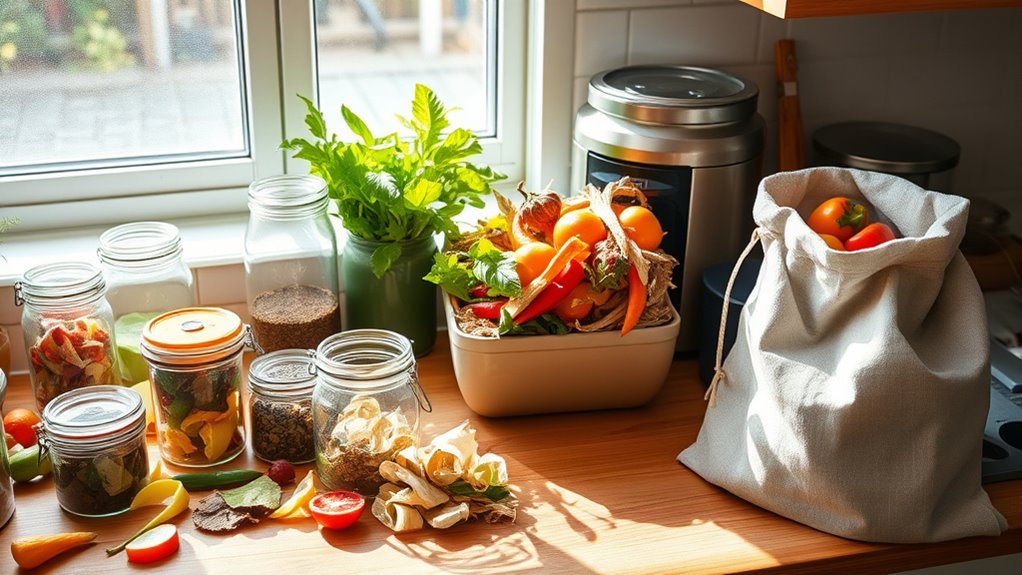

You can reduce food waste at home by practicing upcycling and composting, even as a beginner. Upcycling involves creatively transforming vegetable scraps or leftovers into new meals or useful items, extending their usefulness. Composting turns kitchen scraps like fruit peels and coffee grounds into nutrient-rich soil, decreasing trash and benefiting your garden. By implementing these simple steps, you’ll cut waste, save money, and support sustainability—discover more ways to make a positive impact with your food habits.
Key Takeaways
- Implement upcycling by creatively repurposing food scraps into new meals or ingredients to extend their use.
- Start composting kitchen waste like vegetable peels and coffee grounds to reduce landfill contributions and create nutrient-rich soil.
- Properly sort and store food to prevent spoilage, minimizing waste and making the most of purchased groceries.
- Plan meals to avoid overbuying and spoilage, ensuring only necessary ingredients are purchased and used promptly.
- Use airtight containers and freezing techniques to store leftovers and surplus food for later use, reducing unnecessary disposal.
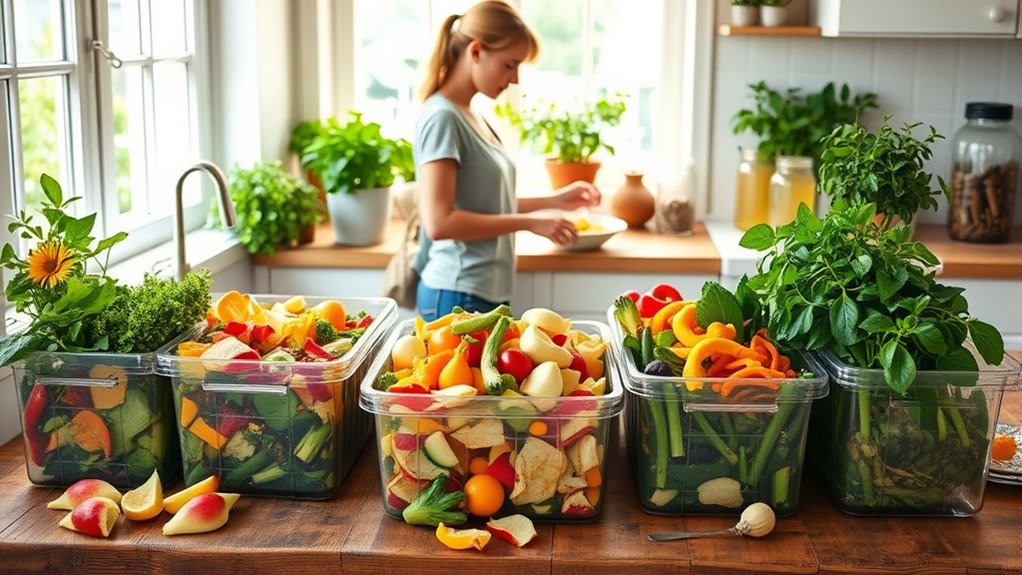
Have you ever wondered how much food you waste daily? It’s easy to toss out leftovers or let produce spoil because you didn’t plan your meals properly. That’s where meal planning and food storage come into play. When you take the time to plan your meals ahead of time, you not only save money but also reduce the chances of food going bad before you can eat it. Start by making a weekly menu, listing out what you’ll need for breakfast, lunch, and dinner. Check your fridge and pantry before shopping so you only buy what’s necessary. This helps avoid impulse buys that could end up wasted. Once you bring groceries home, proper food storage becomes vital. Use airtight containers for leftovers to keep them fresh longer. Store fruits and vegetables in the crisper drawer, but be aware of which items need to breathe or stay dry. For example, keep potatoes and onions separate because they emit gases that spoil each other faster. Proper food storage extends the lifespan of your groceries, giving you more time to enjoy them rather than tossing them away. Incorporating food preservation techniques like freezing surplus items can further reduce waste. Meal planning also helps you avoid overbuying. When you know exactly what you need, you’re less likely to buy in bulk and forget about items until they spoil. Additionally, consider freezing portions of cooked meals or surplus produce so you can enjoy them later instead of letting them rot in the fridge. This practice not only minimizes waste but also saves time on busy days. As you become more intentional with your food storage and meal planning, you’ll notice a significant decrease in the amount of food you throw out. It’s a simple yet effective way to make your household more sustainable and save money over time.
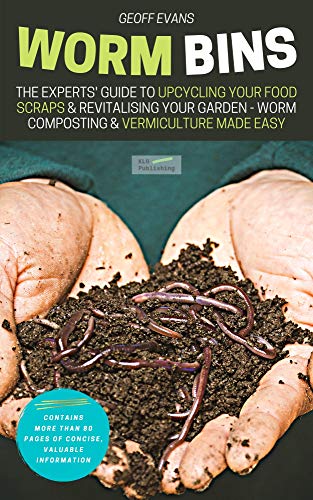
Worm Bins: The Experts' Guide To Upcycling Your Food Scraps & Revitalising Your Garden – Worm Composting & Vermiculture Made Easy (Your Backyard Dream Book 1)
As an affiliate, we earn on qualifying purchases.
As an affiliate, we earn on qualifying purchases.
Frequently Asked Questions
How Can I Identify Which Food Scraps Are Suitable for Composting?
You can identify suitable food scraps for composting by focusing on organic materials that break down easily, like fruit and vegetable peels, coffee grounds, and eggshells. Avoid meat, dairy, and oily foods, which can harm soil health and attract pests. Regularly maintain your compost bin by turning it and monitoring moisture levels to make sure proper decomposition. This keeps your compost healthy and nutrient-rich, perfect for enriching your garden soil.
What Are Some Creative Ways to Upcycle Leftover Fruits and Vegetables?
Imagine transforming leftover fruits and veggies into vibrant art and fun puzzles. You can turn fruit peel crafts into colorful bowls or decorative garlands, catching sunlight and sparking joy. Vegetable stem puzzles challenge your creativity, stacking and arranging stems into playful sculptures. These upcycling ideas breathe new life into scraps, making your kitchen a hub of eco-friendly fun. So get creative, and turn leftovers into delightful, sustainable masterpieces!
How Long Does It Take for Compost to Become Usable Fertilizer?
It typically takes about 3 to 6 months for compost to reach maturity and become usable fertilizer. You’ll know it’s ready when it’s dark, crumbly, and earthy-smelling, with no recognizable food scraps. Once the compost has matured, you can safely apply it to your garden as fertilizer, providing essential nutrients for healthy plant growth. Keep monitoring moisture and aeration to speed up the composting process.
Are There Specific Containers Recommended for Composting at Home?
You should choose a compost bin that suits your space and needs. For small areas, a tumbling compost bin offers quick mixing and easy access, while a larger, aerated bin provides more capacity. Container size options range from compact countertop models to sizable outdoor bins. Look for durable materials like plastic or wood, with good ventilation and a lid to keep pests out, ensuring efficient composting and minimal mess.
What Are Common Mistakes to Avoid When Starting Composting?
When starting composting, avoid overcomplicating the process, as it can discourage you. Keep an eye on moisture levels, ensuring the compost stays damp but not soggy, because neglecting this can slow decomposition. Also, don’t add too much food waste at once or include non-compostable materials, which can create odors or pests. Simplify your routine, monitor moisture, and you’ll turn waste into rich compost efficiently.

Utopia Kitchen Countertop Compost Bin Kitchen with Charcoal Filter -1.3gallon Stainless Steel Kitchen Compost Bin Countertop – Ideal Kitchen Essentials or Small Composter for Under The Sink Trash
This Counter Compost Bin With Lid Having Capacity Of 1.3 Gallon Is Manufactured With Stainless Steel For Optimal…
As an affiliate, we earn on qualifying purchases.
As an affiliate, we earn on qualifying purchases.
Conclusion
Now that you’re equipped with simple upcycling and composting tips, imagine walking into your kitchen and seeing your food scraps transforming into rich soil or creative new meals. Every peel, leftover, or scrap holds the power to reduce waste and nourish your home. But the real question is—are you ready to take that first step? With each small change, you’re not just saving food; you’re shaping a greener, more sustainable future.

Airtight Food Storage Containers with Lids, Vtopmart 24 pcs Plastic Kitchen and Pantry Organization Canisters for Cereal, Dry Food, Flour and Sugar, BPA Free, Includes 24 Labels,Black
Help Organize Your Kitchen and Pantry— Imagine every time walking to your kitchen or pantry, found everything is…
As an affiliate, we earn on qualifying purchases.
As an affiliate, we earn on qualifying purchases.
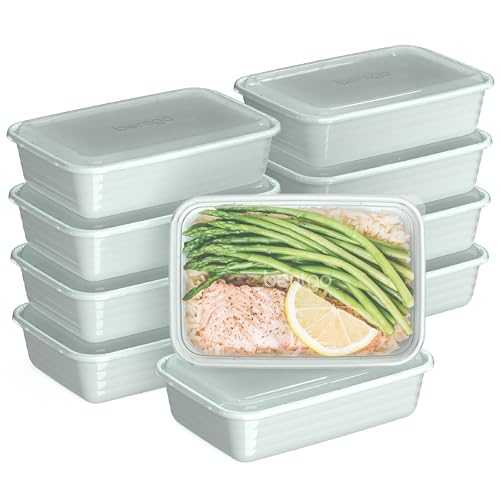
Bentgo Prep – 20-Piece 1-Compartment Reusable Meal Prep Containers with Lids, PFAS & BPA Free Materials, Durable, Microwave, Freezer, & Dishwasher Safe To Go Food Storage (Mint)
#1 Brand Pick for Meal Prep Containers: Bentgo is the top pick for meal prep containers!* This lightweight,…
As an affiliate, we earn on qualifying purchases.
As an affiliate, we earn on qualifying purchases.