Anti-nutrients like phytic acid and enzyme inhibitors in plant-based foods can block mineral absorption and slow digestion, leading to discomfort. You can neutralize these compounds through soaking and sprouting, which activate natural enzymes that break down anti-nutrients and make minerals more available. These simple methods not only improve nutrient absorption but also enhance flavor and digestibility. Keep exploring to discover effective techniques that can help you maximize your plant-based meals.

Get health and wellness essentials delivered free with Prime
- Fast, free delivery on millions of items
- Prime Video, Amazon Music and more included
- Member-only deals all year
Key Takeaways
- Anti-nutrients like phytic acid and enzyme inhibitors in plant foods hinder mineral absorption and digestion.
- Soaking and sprouting activate natural enzymes that break down anti-nutrients, enhancing nutrient bioavailability.
- These preparation methods reduce phytic acid and enzyme inhibitors, improving digestion and mineral absorption.
- Combining soaking or sprouting with cooking further neutralizes anti-nutrients, maximizing nutritional benefits.
- Simple techniques like overnight soaking and sprouting are effective, inexpensive ways to neutralize anti-nutrients at home.
Have you ever wondered why some foods cause digestive issues or diminish nutrient absorption? It often comes down to anti-nutrients like phytic acid and enzyme inhibitors lurking in plant-based foods. These substances aren’t inherently harmful, but they can interfere with how your body absorbs essential minerals and nutrients. Phytic acid, for example, binds to minerals such as iron, zinc, calcium, and magnesium, creating insoluble complexes that your digestive system struggles to break down. As a result, even if you consume foods rich in these nutrients, your body might not absorb them efficiently. Similarly, enzyme inhibitors target digestive enzymes like amylase, protease, or lipase, which are essential for breaking down carbohydrates, proteins, and fats. When these inhibitors are present in high amounts, they can slow down or inhibit the enzymatic processes needed for effective digestion, leading to bloating, discomfort, or nutrient deficiencies over time.
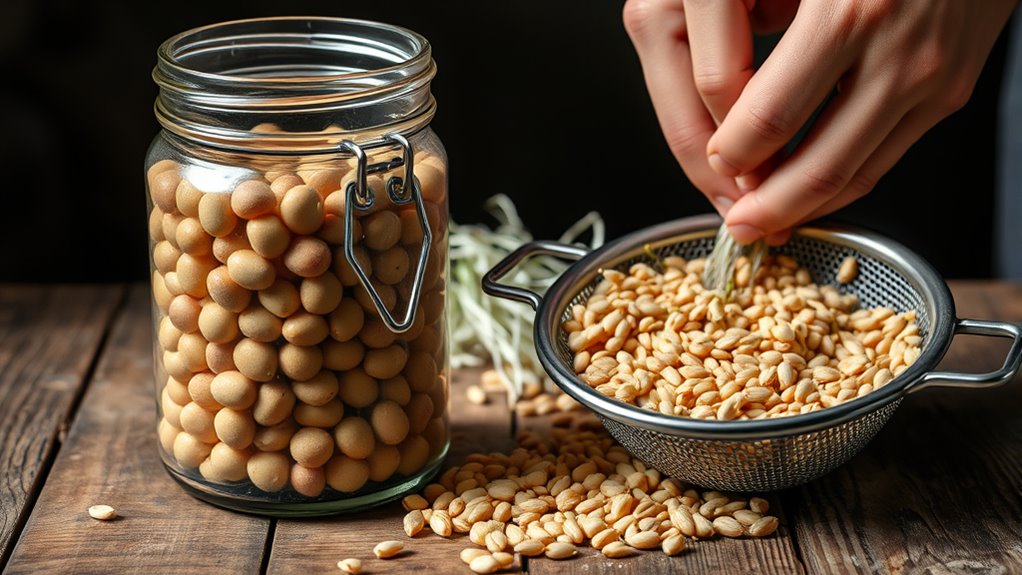
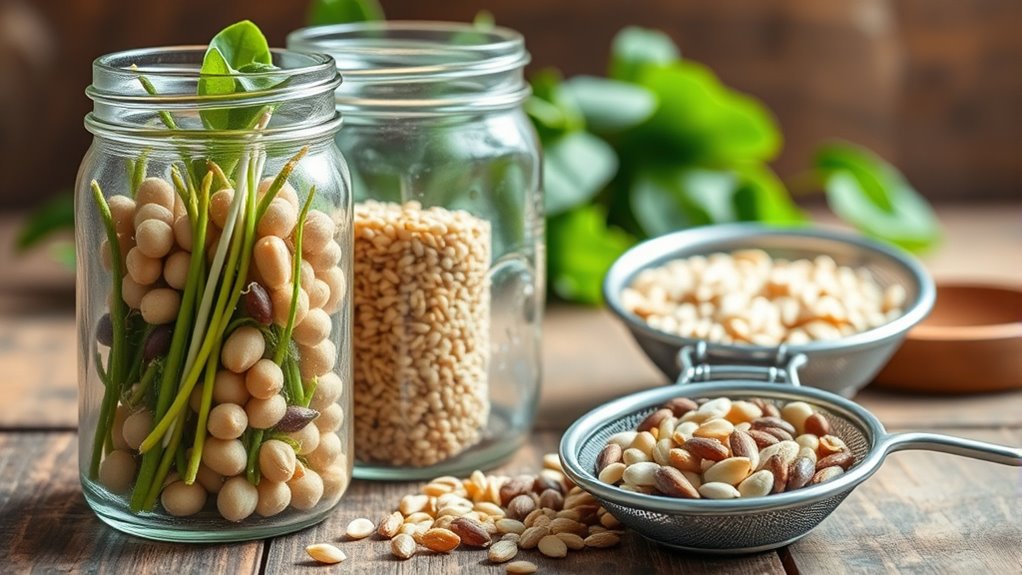
The good news is that you don’t have to avoid these foods altogether. Simple preparation methods like soaking and sprouting can *considerably* neutralize these anti-nutrients. When you soak grains, nuts, seeds, or legumes in water, it triggers natural enzymatic activity that begins to break down phytic acid and enzyme inhibitors. This process reduces their levels and makes minerals more bioavailable, facilitating better absorption. Sprouting, or germinating, takes this a step further by allowing the seed or grain to sprout, which activates enzymes that naturally diminish anti-nutrient content. As the sprout grows, it consumes some of the phytic acid and enzyme inhibitors, further improving digestibility and nutrient availability. Additionally, research into AI-powered food analysis suggests that modern technology can help optimize preparation methods to maximize nutrient retention and anti-nutrient reduction.
It’s important to remember that soaking and sprouting are simple, inexpensive techniques you can do at home. For example, soaking chickpeas or almonds overnight and then rinsing them thoroughly can lower their phytic acid content. Sprouting lentils or sunflower seeds for a day or two can make their nutrients more accessible and reduce digestive discomfort. These methods don’t just improve mineral absorption; they can also enhance flavor, texture, and overall digestibility of your foods. In addition, combining soaking or sprouting with other cooking techniques like boiling or roasting helps further deactivate anti-nutrients. By incorporating these practices into your food preparation routine, you actively reduce the impact of anti-nutrients, supporting better digestion and maximizing the nutritional benefits of plant-based foods.
Frequently Asked Questions
Do Anti-Nutrients Affect Everyone Equally?
Anti-nutrients don’t affect everyone equally because individual susceptibility varies. Your genetic factors, overall health, and gut health influence how your body absorbs and reacts to these compounds. Some people can tolerate higher levels without issues, while others may experience discomfort or nutrient deficiencies. So, it’s crucial to take into account your personal genetics and health status when managing anti-nutrient intake, and techniques like soaking and sprouting can help reduce their impact.
Can Cooking Eliminate All Anti-Nutrients?
Cooking can markedly reduce many anti-nutrients, improving bioavailability enhancement of minerals like iron and zinc. However, it usually doesn’t eliminate all anti-nutrients completely. Some, like phytates and oxalates, may persist despite cooking methods. To maximize nutrient preservation while minimizing anti-nutrients, combine techniques like soaking, sprouting, and gentle cooking. This approach helps you enjoy the benefits of nutrient preservation while reducing the impact of anti-nutrients on your diet.
Are Anti-Nutrients Present in Processed Foods?
Processed foods often contain anti-nutrient remnants, making their anti-nutrient content a concern. You might wonder if these foods harbor harmful anti-nutrients, and the answer is yes—they can. Many processed products include anti-nutrients from ingredients or additives, which can interfere with nutrient absorption. While processing can reduce some anti-nutrients, it doesn’t eliminate them entirely. So, staying savvy about processed foods helps you sustain a balanced, beneficial diet.
How Long Should Soaking or Sprouting Last?
You should soak your foods for about 8 to 12 hours, adjusting based on the specific item, to effectively reduce anti-nutrients. For sprouting, aim for a sprouting time of 2 to 5 days, rinsing daily. Longer soaking or sprouting can help neutralize anti-nutrients further, but avoid overdoing it to prevent spoilage. Always monitor and adjust based on the type of food you’re preparing.
Are There Any Side Effects From Neutralizing Anti-Nutrients?
Did you know that soaking and sprouting can reduce anti-nutrients by up to 50%? These methods generally don’t cause side effects, but they might lead to some nutrient loss if overdone. This can sometimes result in less nutrient absorption and potential digestive discomfort. However, when done properly, soaking and sprouting are safe and improve digestibility without significant side effects, making your food more nutritious and easier on your stomach.
Conclusion
By soaking and sprouting, you can effectively neutralize anti-nutrients and reveal the full health benefits of your favorite foods. These simple techniques make your meals safer and more nourishing. Isn’t your well-being worth a little extra effort? Take control of your diet and nourish your body with smarter preparation methods. After all, aren’t you deserving of food that truly supports your health and energy?
Cold & flu season Picks
humidifiers
As an affiliate, we earn on qualifying purchases.