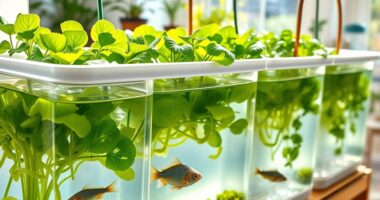
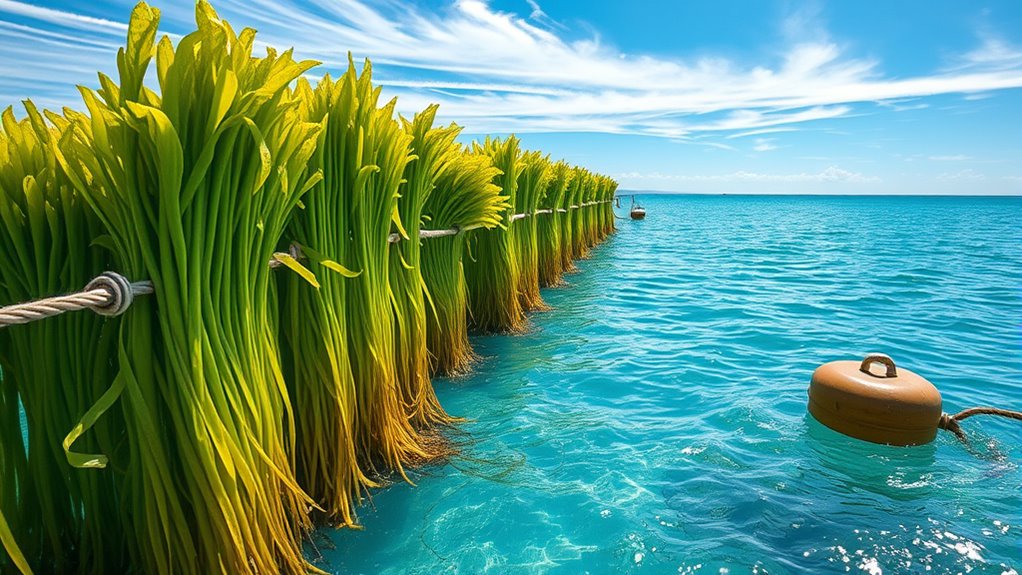
Seaweed farming presents a promising climate solution by absorbing CO2, improving marine biodiversity, and reducing coastal pollution. It creates sustainable jobs, boosts local economies, and offers a low-impact way to support healthy oceans. These aquatic crops also help ecosystems recover and become more resilient to environmental stresses. As you explore this innovative approach, you’ll discover how seaweed cultivation can play a key role in fighting climate change and protecting marine life for the future.

Get health and wellness essentials delivered free — and shop member deals
- Fast, free delivery on millions of items
- Access to Prime Big Deal Days deals on October 6–7
- Prime Video, Amazon Music and more included
Key Takeaways
- Seaweed farming absorbs CO2, making it a natural climate change mitigation strategy.
- It boosts marine biodiversity by providing habitats for various marine species.
- Aquatic crops support sustainable economies by creating jobs and reducing reliance on traditional industries.
- Seaweed cultivation reduces water pollution by absorbing excess nutrients and preventing harmful algal blooms.
- The rise of seaweed farming enhances ecosystem resilience and contributes to global climate goals.
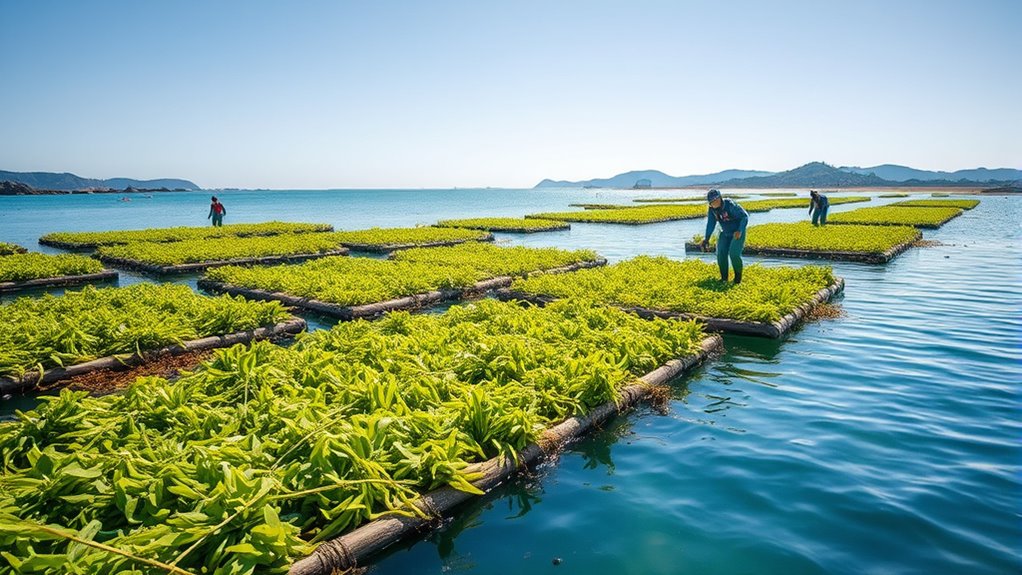
Seaweed farming has emerged as a promising solution to combat climate change by absorbing carbon dioxide and promoting sustainable ocean ecosystems. As you explore the benefits of cultivating these aquatic crops, you’ll discover how they play a crucial role in preserving marine biodiversity. Unlike other farming practices that can harm fragile ecosystems, seaweed farms provide habitat for various marine creatures, from tiny plankton to larger fish. This increase in marine biodiversity enhances the resilience of ecosystems, helping them recover from environmental stresses and maintain their natural balance. By establishing seaweed farms near coastlines, you also support the local marine life, creating a more vibrant and thriving underwater environment.
Beyond their ecological importance, seaweed farming substantially impacts the coastal economy. For communities dependent on fishing or tourism, developing sustainable seaweed industries offers new income streams and job opportunities. As you participate in or support seaweed cultivation, you contribute to a diversified economy that’s less vulnerable to traditional fishing disruptions caused by overfishing or climate change. This shift can lead to more stable livelihoods and boost local economies by attracting investments in processing facilities, research, and infrastructure. Additionally, seaweed farming requires minimal input compared to terrestrial crops, which lowers costs and reduces environmental impact, making it an appealing option for coastal entrepreneurs. Furthermore, seaweed’s ability to absorb excess nutrients from the water helps mitigate coastal pollution and prevent harmful algal blooms, which threaten both marine life and local economies reliant on clean water.
As an affiliate, we earn on qualifying purchases.
Frequently Asked Questions
How Does Seaweed Farming Impact Local Marine Biodiversity?
Seaweed farming positively impacts local marine biodiversity by enhancing marine habitats and supporting species interactions. You’ll notice it creates new structures that serve as shelters for fish and invertebrates, promoting a healthier ecosystem. By boosting habitat complexity, seaweed farms encourage diverse marine life and reduce stress on wild populations. This sustainable practice fosters a balanced environment, benefiting both marine species and the broader ecosystem you’re working to protect.
What Are the Economic Benefits for Small-Scale Seaweed Farmers?
You benefit from small-scale seaweed farming through market diversification, which reduces your reliance on a single crop and spreads risk. It also offers income stability, as seaweed can be harvested multiple times a year, providing a consistent revenue stream. Additionally, demand for eco-friendly products boosts your earning potential, helping you build resilience against market fluctuations. Overall, seaweed farming can be a sustainable and profitable livelihood for small-scale farmers.
Can Seaweed Farming Be Integrated With Existing Fishing Industries?
Yes, you can integrate seaweed farming with existing fishing industries through sustainable harvesting and ecosystem integration. By doing so, you promote coexistence, enhance resource efficiency, and support environmental health. This approach allows you to diversify income, reduce ecological impact, and strengthen local communities. Embracing these practices creates a balanced system where fishing and seaweed cultivation thrive together, fostering a resilient, sustainable future for both industries.
What Are the Main Challenges in Scaling up Seaweed Cultivation Globally?
You’ll face several challenges in scaling up seaweed cultivation globally. Regulatory hurdles can slow progress, as different countries have varying rules and permits. Market demand is another factor; if consumers don’t embrace seaweed products or if supply outpaces demand, growth stalls. Additionally, infrastructure, investment, and environmental impacts must be managed carefully. Overcoming these obstacles requires coordinated efforts, innovative solutions, and clear policies to *unleash* the full potential of aquatic crops.
How Does Seaweed Farming Influence Ocean Acidification?
Seaweed farming positively influences ocean acidification by increasing carbon absorption, which helps reduce CO₂ levels in seawater. As seaweed grows, it absorbs carbon dioxide during photosynthesis, aiding in pH regulation and preventing acidification. Your support for seaweed cultivation can help mitigate climate change effects, protect marine ecosystems, and promote healthier oceans. By fostering sustainable practices, you contribute to a balanced marine environment and combat the adverse impacts of increased CO₂ emissions.
As an affiliate, we earn on qualifying purchases.
Conclusion
As you explore the world of seaweed farming, it’s almost surprising how this ancient practice aligns perfectly with today’s climate challenges. The more you learn, the more it feels like nature itself is offering a solution right beneath the waves. By embracing aquatic crops, you’re not just growing food—you’re helping the planet breathe easier. Sometimes, the biggest solutions are the ones that seem to appear by chance, just like seaweed thriving in the ocean’s embrace.
marine biodiversity habitat structures
As an affiliate, we earn on qualifying purchases.
As an affiliate, we earn on qualifying purchases.
As an affiliate, we earn on qualifying purchases.
Fall Picks
fall essentials
As an affiliate, we earn on qualifying purchases.