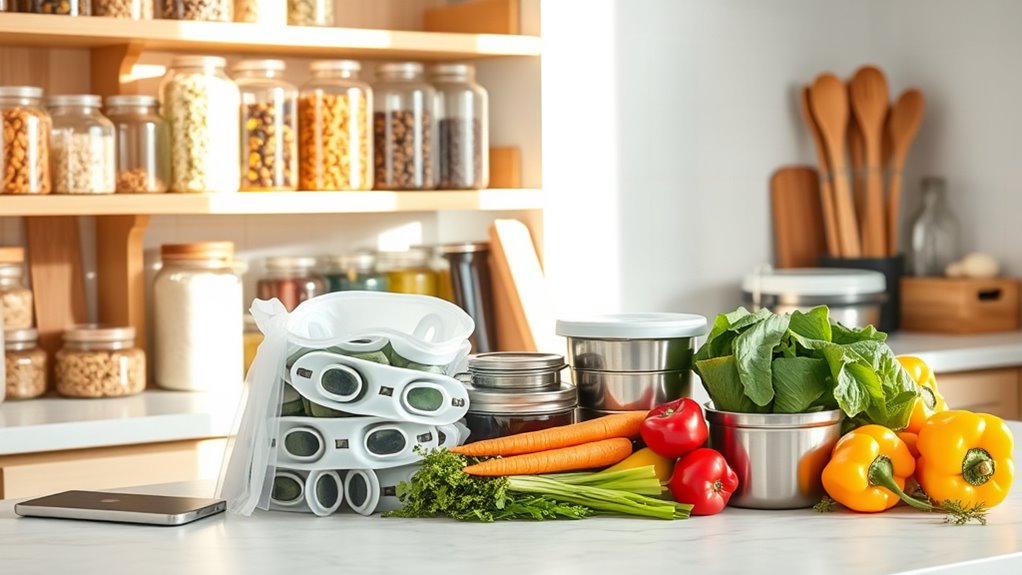

To make your kitchen plastic-free and vegan-friendly, swap plastic wrap and zip-top bags for beeswax wraps or silicone covers, and choose glass or stainless steel containers for storage. Shop with your own containers for bulk and produce, and reduce packaging waste. Set up a compost bin for vegetable scraps and coffee grounds to nourish your plants. Keep exploring simple swaps and strategies that will help you create a sustainable, cruelty-free kitchen environment.

Get health and wellness essentials delivered free with Prime
- Fast, free delivery on millions of items
- Prime Video, Amazon Music and more included
- Member-only deals all year
Key Takeaways
- Use glass or stainless steel containers for storing vegan meal prep and leftovers, replacing plastic wrap and bags.
- Choose produce with minimal or eco-friendly packaging, bringing reusable bags and containers for bulk and produce shopping.
- Incorporate composting of vegetable scraps, coffee grounds, and eggshells to reduce plastic waste and enrich soil.
- Replace single-use plastic items with beeswax wraps, silicone covers, and reusable utensils for everyday kitchen use.
- Educate yourself on local sustainable shopping and composting options to minimize plastic reliance in a vegan kitchen.
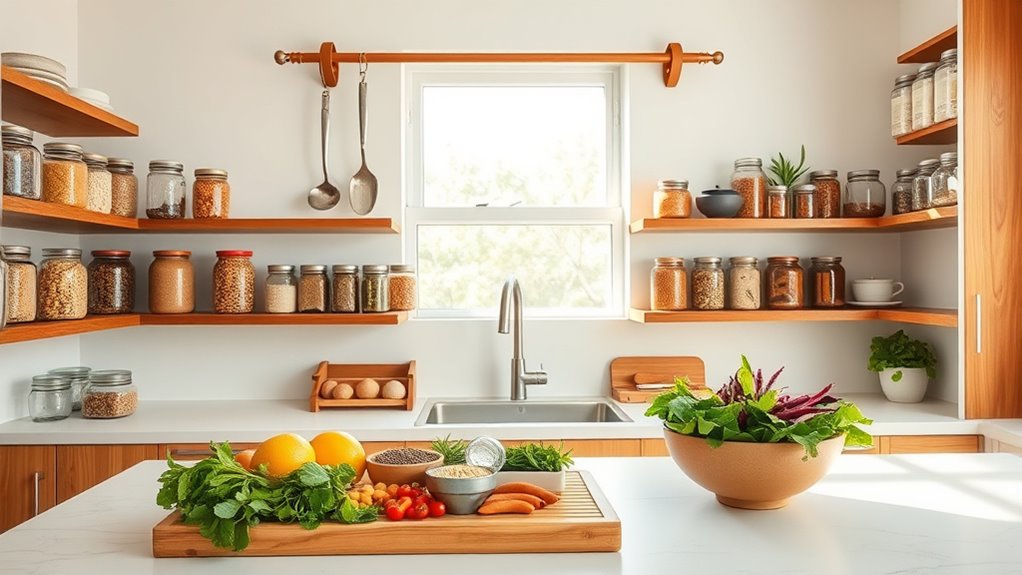
Creating a plastic-free kitchen is a practical step toward reducing environmental impact and embracing healthier living. One of the most effective ways to do this is by switching to reusable containers. Instead of relying on single-use plastic wrap or zip-top bags, invest in glass or stainless steel containers that can be used repeatedly. These are durable, safe for storing food, and don’t leach harmful chemicals. Reusable containers also keep your food fresher for longer and help you cut down on waste. Keep a variety of sizes handy so you can store leftovers, meal prep ingredients, or snacks without resorting to plastic packaging. When shopping, choose products that come in minimal or eco-friendly packaging, and bring your own containers to the store for bulk items or produce. This not only minimizes plastic waste but also encourages more sustainable shopping habits.
Alongside switching containers, adopting composting methods can markedly reduce your kitchen’s plastic footprint. Composting transforms organic waste into nutrient-rich soil, decreasing the amount of waste sent to landfills and cutting down on plastic trash bags. You can start by composting vegetable scraps, coffee grounds, and eggshells in a compost bin or tumbler. Using compostable materials like paper-based kitchen towels instead of synthetic ones further supports your eco-friendly efforts. If you’re new to composting, look for local community programs or municipal compost services that accept organic waste. This way, you avoid using plastic bags for your compost and keep your process clean and straightforward. Layering your compost with dry materials like shredded paper or cardboard helps balance moisture and aeration, making the process more efficient. Remember that composting isn’t just good for the environment; it also benefits your garden or indoor plants, giving you a sustainable way to recycle kitchen waste.
To make your plastic-free kitchen truly effective, combine these strategies with mindful shopping and cooking habits. Use reusable containers not only for storage but also to carry meals on the go, reducing reliance on plastic packaging from takeout or pre-packaged foods. When cleaning or organizing, opt for beeswax wraps or silicone covers instead of plastic wrap. For waste management, set up a designated compost bin in your kitchen to make composting a seamless part of your routine. Regularly maintain your compost to prevent odors and pests, and educate yourself about local guidelines to ensure you’re composting correctly. Incorporating composting techniques and mindful shopping habits can further enhance your eco-friendly efforts. By integrating reusable containers and composting methods into your daily routine, you create a healthier, more sustainable kitchen that aligns with your values as a vegan committed to reducing plastic waste. This proactive approach not only benefits the planet but also fosters a more mindful and eco-conscious lifestyle.
As an affiliate, we earn on qualifying purchases.
Frequently Asked Questions
How Can I Reduce Plastic Packaging for Bulk Vegan Ingredients?
To reduce plastic packaging for bulk vegan ingredients, start by bringing reusable containers when you go bulk shopping. This way, you avoid single-use bags and bottles. Look for stores that accept your containers or have minimal packaging options. Additionally, buy in larger quantities to cut down on packaging per use. These simple swaps help you minimize plastic waste while maintaining a sustainable, vegan lifestyle.
What Are Eco-Friendly Alternatives to Plastic Storage Bags?
Think of your kitchen as a garden, and eco-friendly storage options as the soil that nurtures your plants. You can replace plastic storage bags with biodegradable wraps that break down naturally or opt for reusable containers that keep your vegan ingredients fresh without waste. These alternatives are sturdy, eco-conscious, and versatile, helping you cut down on plastic while maintaining an organized, sustainable kitchen.
How Do I Choose Sustainable Kitchen Utensils?
To choose sustainable kitchen utensils, look for those made from biodegradable materials like bamboo or wood, which decompose naturally. Opt for reusable utensils such as stainless steel or silicone, reducing waste and environmental impact. Consider durability and ease of cleaning to guarantee they last longer. By selecting eco-friendly, reusable utensils, you support sustainability and create a more environmentally conscious kitchen.
Are There Plastic-Free Cleaning Supplies Suitable for Vegan Kitchens?
Imagine a sparkling, eco-friendly oasis—your vegan kitchen. Yes, there are plastic-free cleaning supplies with plant-based ingredients that keep your space spotless without harm. Reusable cleaning tools like bamboo brushes and cloths replace disposables, making your cleaning routine greener. These options not only protect your environment but also align with your plant-based lifestyle. Embrace these sustainable choices, and your kitchen will shine with purity and purpose.
How Can I Compost Vegan Food Scraps Effectively?
To compost vegan food scraps effectively, choose the right composting methods like backyard composting or vermicomposting. Keep your compost bin aerated and balanced with brown and green materials. Focus on vegan compostables such as fruit and vegetable scraps, coffee grounds, and paper. Avoid plastics or animal products. Regularly turn your compost to speed up decomposition, and monitor moisture levels for healthy composting, ensuring your scraps turn into rich soil.
stainless steel food storage containers
As an affiliate, we earn on qualifying purchases.
As an affiliate, we earn on qualifying purchases.
Conclusion
By embracing these swaps and strategies, you’re planting seeds of change in your kitchen, cultivating a space that reflects your values. Every mindful choice is a drop in the ocean, rippling outward to inspire others. Your commitment becomes the sturdy root of a greener future, where sustainability blossoms like a resilient tree. As you nurture this movement, remember that even the smallest act can grow into a powerful forest of transformation.
As an affiliate, we earn on qualifying purchases.
As an affiliate, we earn on qualifying purchases.
Cold & flu season Picks
humidifiers
As an affiliate, we earn on qualifying purchases.