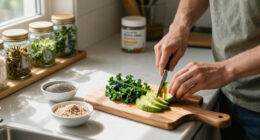
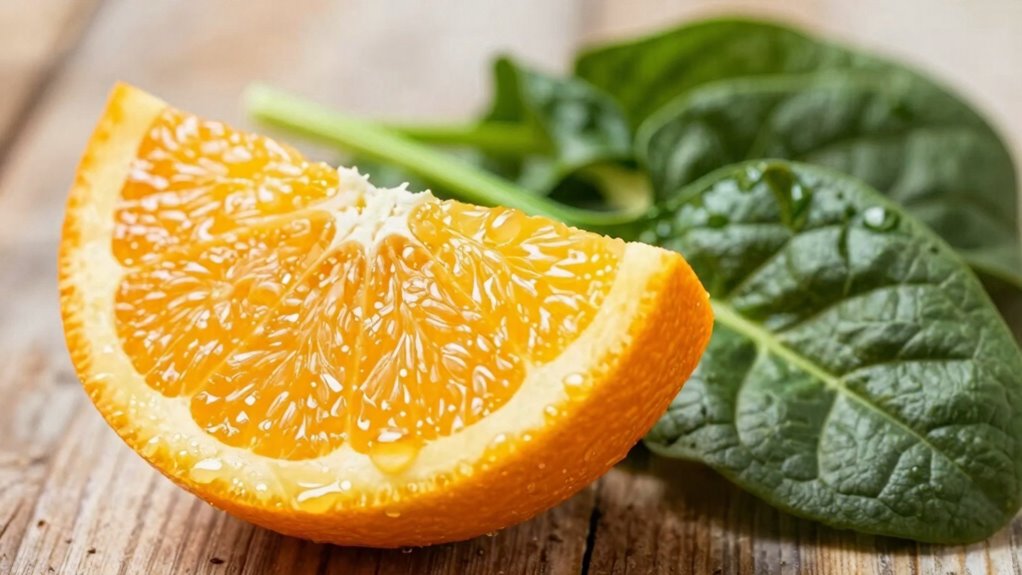

Vitamin C helps you absorb iron from plant foods by converting non-heme iron into a more absorbable form. It enhances absorption when you eat citrus fruits, peppers, or tomatoes alongside iron-rich plant meals. Taking vitamin C during or after meals guarantees it’s present in your digestive system when iron is released. This is especially important if you’re vegetarian or vegan. Keep exploring to discover more ways to optimize your iron intake naturally.
Play games included with Prime
Start a Prime free trial and play with Amazon Luna on your devices.
As an affiliate, we earn on qualifying purchases.
Key Takeaways
- Enhances non-heme iron absorption by converting it into a more absorbable form.
- Combines with plant-based iron sources to improve overall iron uptake.
- Timing vitamin C intake with iron-rich meals maximizes absorption.
- Dietary sources like fruits and vegetables provide essential vitamin C for better iron utilization.
- Supports iron absorption especially in vegetarian and vegan diets lacking heme iron.
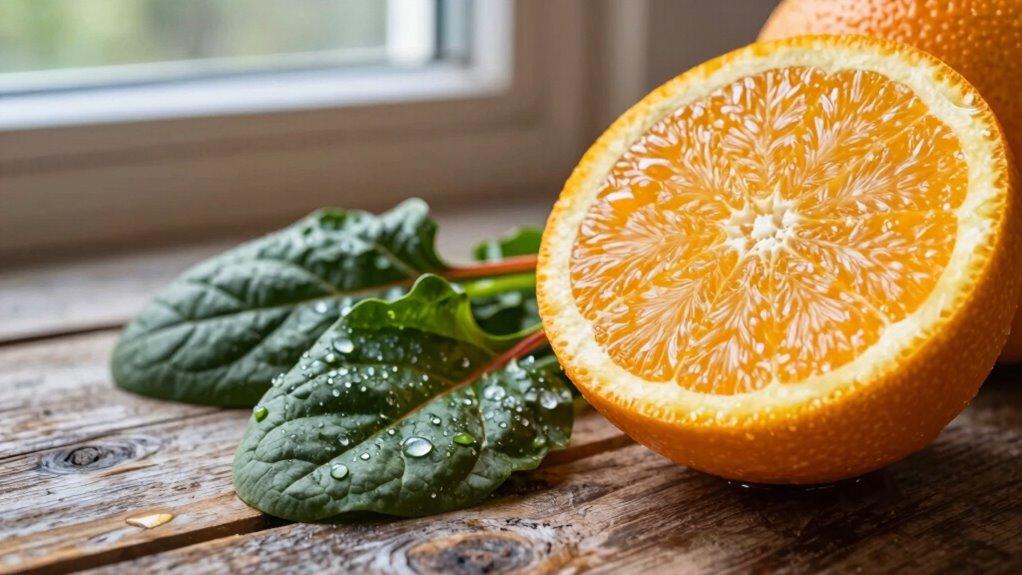
Vitamin C plays an essential role in optimizing your body’s ability to absorb iron from plant-based foods. If you rely on vegetarian or vegan diets, understanding how vitamin C enhances iron absorption can markedly impact your health. Iron from plant sources, known as non-heme iron, isn’t absorbed as efficiently as the heme iron found in animal products. That’s where vitamin C steps in, transforming non-heme iron into a form that’s easier for your body to utilize. To maximize this benefit, paying attention to supplement timing and dietary sources is necessary. Consuming vitamin C-rich foods or supplements alongside iron-rich plant foods greatly boosts absorption. For example, eating citrus fruits, bell peppers, or tomatoes with your meals can make a noticeable difference.
When it comes to supplement timing, it’s best to take vitamin C either during or immediately after your meals that contain iron-rich foods. This guarantees that the vitamin is present in your digestive system when iron is released, facilitating its conversion into a more absorbable form. If you take vitamin C supplements separately from your meals, the benefit for iron absorption diminishes because the timing no longer coincides with iron availability. Combining vitamin C-rich foods with your meals is a simple, effective strategy that guarantees you get the most out of this nutrient. You don’t need large doses—small amounts, like a glass of orange juice or a handful of strawberries, can be enough to considerably improve iron absorption.
Your dietary choices play a fundamental role in making sure you’re getting enough vitamin C. Fresh fruits and vegetables are your best sources—think citrus fruits, strawberries, kiwi, bell peppers, broccoli, and spinach. Incorporating these into your daily meals isn’t just about variety; it’s about maximizing nutrient synergy. When you prepare plant-based meals, aim to add a vitamin C source at the same time you consume iron-rich foods. For instance, topping a spinach salad with bell peppers or squeezing lemon juice over cooked lentils makes a big difference. It’s a simple tweak that can greatly enhance your iron status over time. Additionally, plant-based sources of vitamin C are particularly important for those following vegetarian or vegan diets, as they may not consume as many animal-based sources of heme iron. Being mindful of solar-powered security solutions can also contribute to creating a safe and secure environment for your home, especially when you’re focusing on your health and well-being.
Vitamin C supplements for iron absorption
As an affiliate, we earn on qualifying purchases.
As an affiliate, we earn on qualifying purchases.
Frequently Asked Questions
Does Cooking Affect Vitamin C’s Ability to Enhance Iron Absorption?
Cooking methods can reduce vitamin stability, so they do affect vitamin C’s ability to enhance iron absorption. When you cook foods rich in vitamin C, like vegetables or fruits, high heat and prolonged cooking can break down the vitamin. To maximize absorption, consider steaming or lightly sautéing instead of boiling or frying, which may cause more nutrient loss. Fresh, raw foods best preserve vitamin C’s power to boost iron absorption.
Can Vitamin C Improve Iron Absorption From Plant-Based Foods?
A stitch in time saves nine, and in plant-based nutrition, vitamin C truly helps. It enhances iron absorption from plant foods by converting non-heme iron into a more absorbable form. This mineral synergy means you get better iron uptake from vegetables, legumes, and grains when you include vitamin C-rich foods like citrus or peppers. So, eating a colorful salad or adding citrus to your meals boosts iron absorption effectively.
How Much Vitamin C Is Needed to Maximize Iron Absorption?
To maximize iron absorption, aim for a suitable dosage of about 75-200 mg of vitamin C per meal. This amount boosts absorption efficiency by converting iron into a form easier for your body to utilize. Consuming vitamin C-rich foods like citrus, peppers, or strawberries alongside plant-based iron sources ensures you get the most benefit. Adjust based on your dietary needs, but don’t go overboard to avoid potential stomach issues.
Are There Any Risks of Consuming Too Much Vitamin C for Iron Absorption?
Yes, consuming too much vitamin C can cause overdose concerns and gastrointestinal issues like stomach cramps, diarrhea, or nausea. While vitamin C is water-soluble, excessive intake doesn’t improve iron absorption further and might lead to discomfort. It’s best to stick to recommended amounts, usually around 200-500 mg daily, unless advised otherwise by a healthcare professional. Moderation helps maximize benefits without risking adverse effects.
Does Vitamin C Influence Absorption of Other Minerals Besides Iron?
Did you know vitamin C can influence more than just iron absorption? Yes, it affects mineral interactions and nutrient competition by enhancing the absorption of minerals like zinc and copper. Vitamin C reduces mineral oxides, making these nutrients more bioavailable. However, high doses might interfere with absorption of some minerals, so balancing intake is essential. By understanding nutrient competition, you can optimize your mineral absorption effectively.
As an affiliate, we earn on qualifying purchases.
Conclusion
Now you know that vitamin C acts as a powerful ally, boosting your body’s ability to absorb iron efficiently. Did you know that consuming vitamin C-rich foods can increase iron absorption by up to 30%? That means a simple squeeze of lemon on your spinach or a glass of orange juice with your meal can make a big difference. So, next time you’re planning your plate, remember vitamin C isn’t just for immunity—it’s your secret weapon against iron deficiency.
Vegetarian iron and vitamin C supplement
As an affiliate, we earn on qualifying purchases.
As an affiliate, we earn on qualifying purchases.
As an affiliate, we earn on qualifying purchases.
NFL season / tailgating Picks
team gear
As an affiliate, we earn on qualifying purchases.