
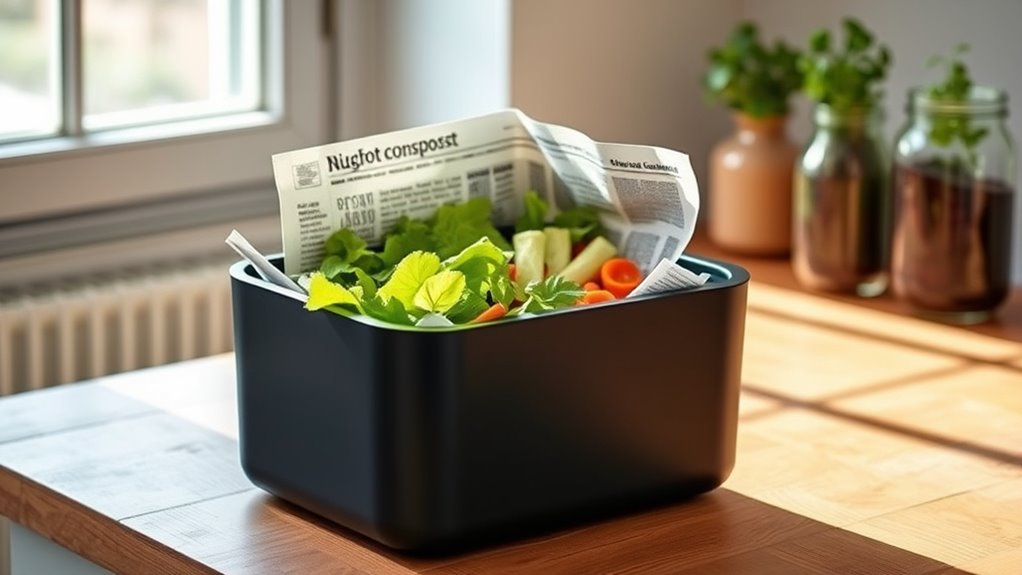

To start composting kitchen scraps in your apartment, set up a small worm bin with aerated, moist bedding like shredded newspaper and add red worms. Feed it vegetable peels, coffee grounds, and eggshells while avoiding meat or oily foods. Keep the bin in a shaded, warm spot, and monitor moisture and odors regularly. With simple steps and some care, you’ll transform waste into valuable compost—discovering more tips to make it even easier.
Key Takeaways
- Choose a small, vented container like a plastic bin or wooden box suitable for limited space.
- Layer bedding materials such as shredded newspaper or coconut coir and add moist soil or compost.
- Introduce red worms (red wigglers) and regularly add vegetable peels, coffee grounds, and eggshells.
- Maintain moisture levels, avoid overfeeding, and keep the system in a shaded, room temperature area.
- Harvest finished compost after a few months for use in indoor plants or balcony gardens.
Have you ever wondered how to reduce waste and nourish your garden at the same time? If you’re living in an apartment with limited space, composting might seem tricky, but it’s definitely doable with the right approach. One effective method is vermicomposting, which uses worms to break down kitchen scraps quickly and efficiently. To get started, you’ll need to familiarize yourself with vermicomposting techniques. These involve creating a suitable environment for red worms, which thrive in moist, dark, and aerated conditions. You’ll want to avoid adding meat, dairy, or oily foods, as these can attract pests and cause odors. Instead, focus on vegetable peels, coffee grounds, eggshells, and fruit scraps. Worms eat these materials and turn them into nutrient-rich compost that’s perfect for your indoor plants or balcony garden.
When it comes to setting up your vermicomposting system, choosing the right composting container options is key. You don’t need a bulky outdoor bin; many apartment dwellers opt for small, stackable worm bins that fit easily on a balcony, in a closet, or under the sink. These containers typically come with ventilation holes to ensure proper airflow, which keeps your worms healthy and prevents foul smells. Some options include plastic bins with lids, wooden boxes, or specially designed worm composting units. The main goal is to provide enough space for worms to move comfortably, while making it easy for you to add scraps and harvest finished compost. The use of digital platforms can also help you track your composting progress and troubleshoot issues. You might prefer a system with a tap at the bottom to drain excess moisture, which helps maintain ideal conditions and reduces mess.
Setting up your vermicomposting container is simple. Start by layering shredded newspaper or coconut coir at the bottom for bedding. Add a handful of moist soil or compost to introduce beneficial microbes. Then, introduce your worms—red wigglers are the best choice—and add small amounts of kitchen scraps regularly. Keep the bin in a shaded area, maintaining a temperature between 55-77°F (13-25°C), and keep the bedding moist but not soaked. Regularly check your bin for excess moisture or odors, and turn the contents gently to aerate. As the worms work through the scraps, they’ll produce dark, crumbly compost in a few months. Harvest this compost to enrich your potted plants or balcony garden soil.

3-Layer Worm Composter, 50L Worm Compost Bin for Indoor & Outdoor, Worm Farm Starter Kits for Vermicomposting Starter, Garden Composting Bin for Recycling Food Waste (Black)
- Capacity: 50L worm compost bin with 3 trays
- Material: High-quality black PP plastic
- Fertilizer Outlet: Built-in faucet for liquid fertilizer
As an affiliate, we earn on qualifying purchases.
As an affiliate, we earn on qualifying purchases.
Frequently Asked Questions
Can I Compost Meat and Dairy in an Apartment Setup?
You might wonder if you can compost meat and dairy in your apartment setup. While technically possible, meat decomposition and dairy handling can attract pests and produce odors, making it less ideal for limited spaces. Instead, consider composting plant-based scraps like vegetable peels and coffee grounds. If you’re determined to include meat and dairy, use a sealed, odor-proof bin with a hot composting method, but be prepared for extra effort and potential challenges.
How Do I Prevent Odors From Composting Indoors?
Freshness fights foul odors, so focus on proper air circulation and odor control. You can use a vented compost bin or add a charcoal filter to trap smells. Regularly stirring or turning the compost helps air circulate, preventing putrid odors from building up. Keep the bin sealed tightly, and avoid overfilling. With consistent care, your indoor compost stays clean, fresh, and odor-free, making apartment composting worry-free and wonderful.
What Is the Best Container Size for Small Apartments?
When choosing a container size for your apartment space, opt for a compact bin that fits easily on your countertop or under the sink. A 1-3 gallon container works best, offering enough capacity without taking up too much room. Look for a container with a tight lid to control odors and guarantee it’s easy to empty. This way, you can compost your kitchen scraps effectively without cluttering your small apartment.
How Often Should I Turn or Mix the Compost?
Think of your compost as a lively dance floor; it needs the right rhythm to stay vibrant. You should aerate your compost by mixing it about once a week, which keeps air flowing and helps break down materials. A consistent mixing schedule prevents odors and speeds up composting. Regular turning guarantees your scraps transform into rich soil, turning your small space into a flourishing garden of possibilities.
Are There Any Composting Rules Specific to Apartment Living?
In urban composting and balcony gardening, you should follow specific rules for apartment living. Keep your compost bin in a well-ventilated area, away from direct sunlight and living spaces. Avoid adding meat or dairy, which can attract pests. Regularly turn or mix your compost to speed up decomposition. Use odor-control methods like covering scraps with browns. These steps help you compost efficiently while respecting neighbors and maintaining a clean balcony.
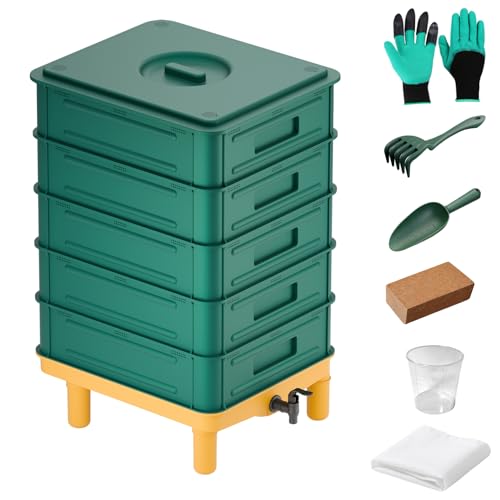
85L Worm Compost Bin, 5-Layer Worm Composter for Indoor & Outdoor, Starter Kits for Vermicomposting Starter, Garden Worm Composting Bin for Recycling Food Waste (Green)
- Large Capacity: 85L total with 5 trays
- High-Quality Material: Made of durable black PP plastic
- Fertilizer Outlet: Includes a convenient faucet for liquid fertilizer
As an affiliate, we earn on qualifying purchases.
As an affiliate, we earn on qualifying purchases.
Conclusion
Starting your composting journey might seem like a small step, but it’s like planting a seed for a greener future. Even in an apartment, you have the power to turn kitchen scraps into nourishing soil, giving new life to what you’d otherwise throw away. Remember, every bit of composting is a drop in the ocean of sustainability. With patience and care, you’re helping to grow a healthier planet—one scrap at a time.

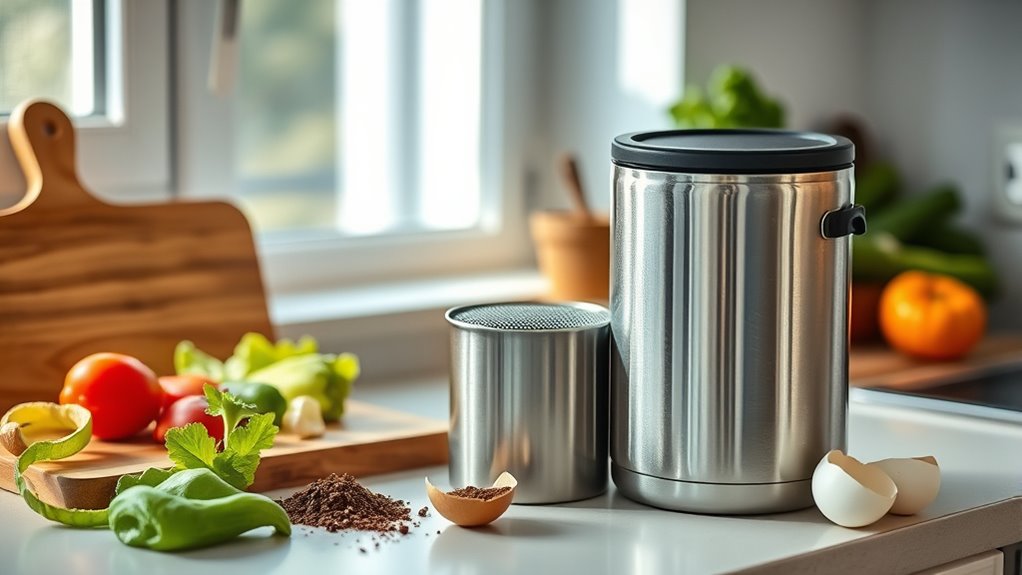
Epica Kitchen Compost Bin for Kicthen Countertops, 1.3 Galllon – Silver
- Featured in Bon Appetit & Forbes: Recognized by top magazines for quality
- Compact yet spacious design: Measures 7.16" diameter x 11" high
- Natural odor control: Airtight lid with replaceable activated charcoal filter
As an affiliate, we earn on qualifying purchases.
As an affiliate, we earn on qualifying purchases.

Underground Worm Farm, Garden Mini vermicomposting bin for use in Outdoor Gardening from Kitchen Food Waste, with Holes and lid, White (10.2×4.3×4.3IN)
- Year-round composting system: Converts waste into garden nutrients
- Enhanced airflow design: Breathable lid with 360-degree inlets
- Easy installation: Bury underground and add waste
As an affiliate, we earn on qualifying purchases.
As an affiliate, we earn on qualifying purchases.