

TL;DR

Get health and wellness essentials delivered free with Prime
- Fast, free delivery on millions of items
- Prime Video, Amazon Music and more included
- Member-only deals all year
A study in PLOS Medicine found that dementia, mild cognitive impairment, addiction and several psychiatric disorders were associated with higher estimates of brain age. Alzheimer’s disease and mild cognitive impairment showed the strongest associations; the findings do not establish that these conditions cause faster brain aging.
A study published in PLOS Medicine found that people with dementia, mild cognitive impairment, addiction and some psychiatric disorders tended to have higher estimates of brain age than controls. Alzheimer’s disease and mild cognitive impairment showed the strongest associations, while the researchers found no overall difference for people with ADHD or autism spectrum disorder. The findings show associations, not proof that the conditions cause faster brain aging.
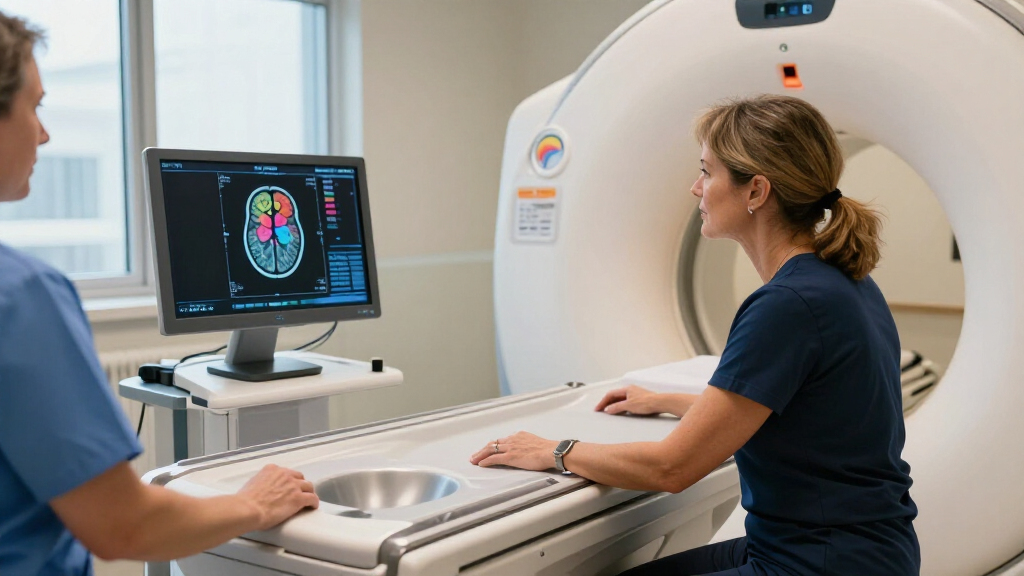
Led by Shile Qi of Nanjing University of Aeronautics and Astronautics in China, the researchers analyzed structural MRI scans from 45,900 controls in several brain imaging databases. They compared those data with scans from 2,698 people with conditions including Alzheimer’s disease, mild cognitive impairment, schizophrenia, bipolar disorder, major depressive disorder, alcohol or tobacco addiction, ADHD and autism spectrum disorder.
The team used predictive age difference (PAD), a measure comparing a person’s chronological age with an age estimate derived from brain imaging. A positive PAD means the scan appears older than expected for that person’s age. Alzheimer’s disease and mild cognitive impairment had the strongest links with higher PAD; addiction and psychiatric disorders were also associated with increased values.
The researchers also examined regional patterns. Higher PAD appeared in the prefrontal cortex across multiple disorders. Psychiatric conditions were associated with higher PAD in frontal and temporal lobes, while dementia was linked to higher PAD in frontal and occipital areas. Addiction showed a different pattern, involving the default mode and salience networks, as well as the putamen and thalamus.
Brain Age Signals Differ by Condition
The findings suggest that a single estimate of brain age may mask different patterns across conditions. The regional results could help researchers ask more specific questions about which brain systems are associated with dementia, psychiatric disorders or addiction.
The researchers also examined gene-expression patterns and reported differences associated with particular conditions. These observations may offer clues about biological processes linked to the imaging patterns, but they do not establish a mechanism or show that a PAD score can diagnose an individual. The possible value is as a research lead for future biomarker studies, not as a current clinical conclusion.
How Researchers Estimate Brain Age
Brain-age estimates are generated by comparing features in brain scans with patterns learned from imaging data. PAD expresses the gap between that estimate and a person’s actual age. A positive PAD indicates an estimate older than chronological age; it is a measurement from an imaging model, not a person’s biological age measured directly.
The study brought together scans from multiple imaging databases and several groups of people with different diagnoses or differences. That broad comparison let the team look for shared and distinct associations. The authors said their work was supported by research funding from Jiangsu Province and the National Natural Science Foundation of China; they reported that funders had no role in the study’s design, analysis, publication decision or preparation.
“Different neurological disorders appear to leave different signatures on the brain aging clock, which may help researchers better understand the neural and biological pathways involved in these conditions.”
— The study authors
Limits of the Brain Scan Findings
The analysis is correlational. It cannot determine whether a condition leads to changes captured by PAD, whether brain differences precede the condition, or whether other factors contribute to both. The study therefore does not show that any of the conditions directly cause accelerated brain aging.
Some conditions also commonly occur together, especially psychiatric disorders and addiction. The researchers cautioned that overlap can make it difficult to separate each condition’s individual association with PAD. The supplied report does not provide enough detail to assess the size of every association or how well the findings would apply to people outside the databases. It is also unclear whether these estimates could reliably track changes over time or guide care.
Testing PAD in Future Research
The authors point to further study of PAD as a possible route toward identifying biomarkers associated with common brain disorders and investigating biological pathways. That would require research beyond this comparison, including work to clarify how overlapping conditions and other influences affect the estimates.
For now, the reported results establish group-level associations in MRI data. The next research milestone is to determine whether the distinct regional patterns can be reproduced and whether they provide useful information beyond existing measures. The study report does not specify a timeline for that work.
Key Questions
Which conditions had the strongest association with higher brain age estimates?
Alzheimer’s disease and mild cognitive impairment had the strongest associations with higher PAD values among the conditions examined.
Did ADHD and autism show higher brain age estimates?
The researchers found no overall PAD difference between controls and people with ADHD or autism spectrum disorder in this analysis.
Does this study prove that these disorders cause faster brain aging?
No. The study found correlations between conditions and PAD. Its design cannot establish that a disorder causes the estimated brain-age differences.
What does a positive predictive age difference mean?
A positive PAD means that an age estimate based on brain imaging is older than the person’s chronological age. It is an imaging-based measure, not a direct diagnosis.
Source: rss
Cold & flu season Picks
humidifiers
As an affiliate, we earn on qualifying purchases.