
Lentils are called “future beef” because they provide a nutritious, sustainable alternative to traditional livestock, using less water and land. They naturally fix atmospheric nitrogen, enriching soils and reducing the need for synthetic fertilizers. Their ability to tolerate poor soils and be harvested multiple times makes them resilient in changing climate conditions. Incorporating lentils into your farming system supports soil health, crop diversity, and long-term sustainability—discover how they can revolutionize agriculture and climate resilience.
Key Takeaways
- Lentils are high-protein, plant-based crops, offering a sustainable alternative to traditional meat sources like beef.
- They require minimal water and land, making them more environmentally friendly and climate-resilient.
- Lentils fix atmospheric nitrogen, enriching soil and reducing the need for synthetic fertilizers.
- As a climate-smart crop, lentils support crop diversification, enhancing farm resilience to climate shocks.
- Incorporating lentils helps mitigate greenhouse gas emissions associated with livestock production, contributing to climate change mitigation.

Have you ever wondered how farmers can grow crops that withstand the changing climate? It’s a pressing question as weather patterns become more unpredictable, droughts intensify, and soil health declines. One effective approach is adopting sustainable farming practices, which emphasize long-term environmental health and resilience. These practices include minimizing chemical inputs, conserving water, and maintaining soil fertility. But equally important is crop diversification, which involves planting a variety of crops instead of relying on a few staples. This strategy reduces the risk of total crop failure and helps ecosystems stay balanced, making farms more adaptable to climate stress.
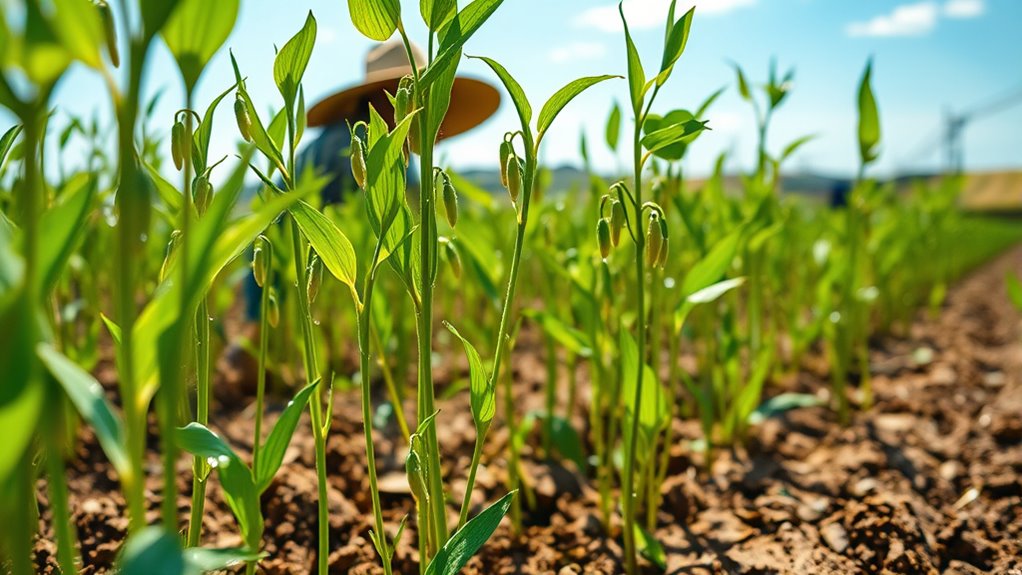
Recently, lentils have gained recognition as a climate-smart crop, often dubbed “future beef” because of their high protein content and low environmental impact. Unlike traditional livestock, lentils require minimal water and land to produce, making them a sustainable protein source for a growing global population. Their ability to fix atmospheric nitrogen through symbiosis with root bacteria enriches the soil, decreasing the need for synthetic fertilizers. This natural fertilization process not only cuts costs but also supports soil health, which is essential as climate change threatens many farming regions. Additionally, advances in low light office plants demonstrate how certain plants can thrive in less-than-ideal conditions, paralleling the resilience needed in sustainable agriculture. By incorporating lentils into crop rotations, farmers can improve soil structure, reduce pest and disease cycles, and boost yields over time.
Lentils are a climate-smart crop that enrich soil, require minimal water, and support sustainable farming practices.
Crop diversification plays a fundamental role here. Instead of planting monocultures—large expanses of a single crop—farmers are increasingly mixing lentils with other legumes, grains, or vegetables. This diversity buffers farms against the impacts of pests, drought, or disease outbreaks. If one crop struggles due to weather extremes, others may thrive, ensuring a more stable income and food supply. Additionally, diversified cropping systems attract beneficial insects and promote biodiversity, which further supports resilience to climate shocks.
Incorporating lentils into sustainable farming systems offers multiple benefits. They require less water than many traditional crops, tolerate poorer soils, and mature quickly, allowing for multiple harvests per season. These traits make lentils particularly suited for regions facing water scarcity or erratic rainfall. As more farmers recognize these advantages, they’re increasingly adopting crop diversification strategies that include lentils, building more resilient and sustainable agricultural landscapes. By doing so, they’re not only protecting their livelihoods but also contributing to the global effort to combat climate change and guarantee food security for future generations.

Todd's Seeds Sprouting Green Lentil Seeds, Heirloom, Non-GMO, Chemical Free, High Germinating (Quarter Pound)
TOP QUALITY SEEDS – Todd’s Seeds test all their seeds for high germination rates. Todd’s Seeds heirloom seeds…
As an affiliate, we earn on qualifying purchases.
As an affiliate, we earn on qualifying purchases.
Frequently Asked Questions
How Do Lentils Compare Nutritionally to Other Legumes?
When comparing lentils to other legumes, you’ll find they offer a strong nutritional profile. Their protein content is high, making them a great plant-based source of essential amino acids. Regarding nutritional comparison, lentils are comparable to chickpeas and beans but often contain more fiber and fewer calories. So, if you’re looking for a nutritious, protein-rich legume, lentils stand out as a versatile and healthy choice.
What Are the Environmental Benefits of Growing Lentils?
Imagine a gentle shift toward greener practices. Growing lentils offers significant environmental benefits, supporting sustainable farming by enriching soil health naturally and reducing the need for synthetic fertilizers. They also promote water conservation, as lentils require less water compared to other crops. By choosing lentils, you help lower greenhouse gas emissions and conserve essential resources, making them a smart, eco-friendly choice for a more sustainable future.
Can Lentils Be Cultivated in All Climate Zones?
You might wonder if lentils can grow in all climate zones. While they show good climate adaptability, cultivation challenges vary. In cooler or very hot, arid regions, growing lentils can be difficult due to temperature fluctuations and water needs. However, with proper management and selecting suitable varieties, you can cultivate lentils in many climates. Still, some zones may require specific strategies to overcome these challenges for successful growth.
How Do Lentils Impact Soil Health and Crop Rotation?
Imagine nourishing the land beneath your feet; lentils play a gentle role in soil enrichment by fixing nitrogen naturally. You can see them as a catalyst for crop diversity, helping break monocultures and improve soil health. When you rotate lentils with other crops, you promote sustainable farming practices, maintain soil fertility, and reduce reliance on chemical fertilizers. This cycle keeps your soil resilient and productive for years to come.
What Are the Main Challenges in Scaling Lentil Production Globally?
You’ll find that scaling lentil production globally faces key challenges like supply chain disruptions and limited market access. Transportation issues can delay harvests and increase costs, making it harder for farmers to reach international markets. Additionally, without better market access, farmers lack incentives to expand production. Overcoming these hurdles requires strengthening infrastructure and creating more trade opportunities, enabling lentils to become a sustainable, climate-smart crop worldwide.

Rapitest Soil Test Kit for Gardens, Vegetables, Flowers and Lawns. USA designed and assembled soil tester completely, quickly and accurately measures/analyzes soil pH acidity and garden nutrients.
Quick, at home results for Soil pH, Nitrogen, Phosphorous and Potash Innovative and inexpensive soil test kit features…
As an affiliate, we earn on qualifying purchases.
As an affiliate, we earn on qualifying purchases.
Conclusion
As you embrace climate-smart crops like lentils, remember that every little step counts. These crops not only help reduce environmental impact but also offer a sustainable future for food security. Think of it as the old saying goes, “A journey of a thousand miles begins with a single step.” By supporting such innovations, you’re contributing to a healthier planet. So, take that small step today—your choices truly matter in shaping tomorrow’s agricultural landscape.

Dry Farming: A Guide for Farming Crops Without Irrigation in Climates with Low Rainfall and Drought
As an affiliate, we earn on qualifying purchases.
As an affiliate, we earn on qualifying purchases.

AI & Sustainable Farming: How Artificial Intelligence is Revolutionizing Agriculture for a Greener Future (Tech and Innovations)
As an affiliate, we earn on qualifying purchases.
As an affiliate, we earn on qualifying purchases.