
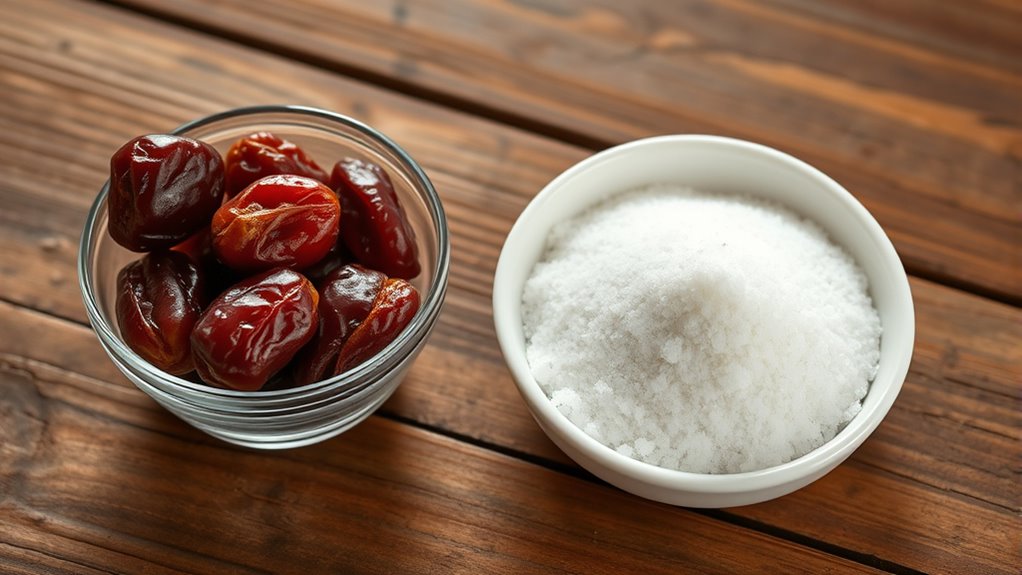

When comparing dates and refined sugar, you’ll find dates are a healthier choice because they are packed with fiber, vitamins, minerals, and antioxidants, providing essential nutrients and steady energy. Refined sugar, on the other hand, offers empty calories without nutrition, causing quick blood sugar spikes and energy crashes. Choosing dates supports better digestion and sustainable practices. If you keep exploring, you’ll discover even more about how these options impact your health and the environment.
Key Takeaways
- Dates provide fiber, vitamins, minerals, and antioxidants, offering nutritional benefits, while refined sugar offers empty calories with minimal nutrients.
- Natural sugars in dates support steady energy and blood sugar regulation, whereas refined sugar causes rapid glucose spikes and crashes.
- Dates are environmentally sustainable, requiring less processing, unlike refined sugar, which involves energy-intensive industrial steps.
- Incorporating dates into recipes is versatile and healthier than refined sugar, which is often more affordable and widely used.
- Choosing dates over refined sugar promotes better long-term health, supports eco-friendly agriculture, and reduces reliance on processed foods.
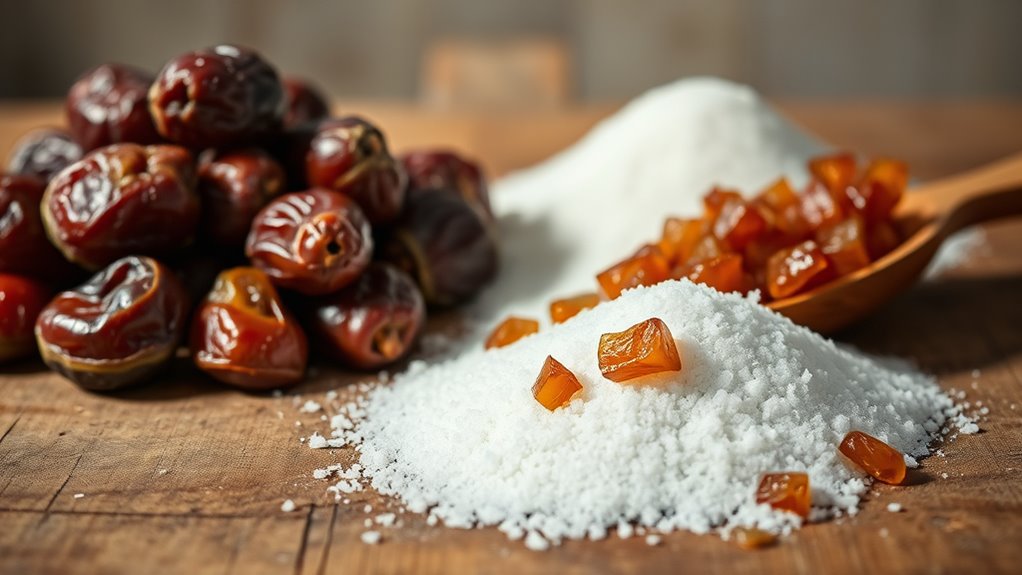
When choosing between dates and refined sugar, understanding their differences can help you make healthier dietary choices. Both are sweeteners, but they differ markedly in their nutritional profiles, health benefits, and environmental impact. Knowing these distinctions allows you to select options that support your health and align with your environmental values. Dates are naturally sweet fruits packed with nutrients like fiber, vitamins, and minerals, offering more than just sugar. They contain antioxidants that combat inflammation and promote overall health. In contrast, refined sugar is a processed product derived mainly from sugarcane or sugar beets, providing empty calories with little to no nutritional value. Consuming dates can contribute to better digestion due to their high fiber content, which slows sugar absorption and stabilizes blood sugar levels. These natural sugars are accompanied by nutrients that support energy and immune function, making them a more wholesome choice. On the other hand, refined sugar causes rapid spikes in blood glucose, which can lead to energy crashes, increased hunger, and a higher risk of developing insulin resistance and type 2 diabetes over time. From an environmental perspective, dates are generally considered more sustainable. They require less processing and often grow in regions with favorable climates, reducing energy consumption during production. Their cultivation can also support local agriculture and economies in arid areas. Conversely, the refining process for sugar involves extensive industrial steps—harvesting, extraction, refining, and processing—that consume considerable energy and water. This contributes to a larger carbon footprint and increased environmental degradation. Choosing dates over refined sugar not only benefits your health by providing essential nutrients and fiber but also aligns with eco-friendly practices. Incorporating dates into your diet can satisfy your sweet cravings naturally, reducing dependence on highly processed sweeteners. Additionally, their versatility allows you to use them in a variety of recipes—from smoothies and energy bites to salads and baked goods—making them a convenient and nutritious substitute. While refined sugar may be more affordable and widely available, the long-term health and environmental advantages of dates make them a smarter choice. As you weigh these options, consider how your choices impact your well-being and the planet. Opting for natural, nutrient-dense foods like dates supports a healthier lifestyle and contributes to sustainable agriculture. Understanding regulatory standards and how they influence food choices can further empower you to make informed decisions about sweeteners and their impact. Making informed decisions about sweeteners ultimately empowers you to enjoy sweetness without compromising your health or the environment.

Organic Medjool Dates, 32 OZ
Selected and stored fresh
As an affiliate, we earn on qualifying purchases.
As an affiliate, we earn on qualifying purchases.
Frequently Asked Questions
Are Dates Suitable for Diabetics?
Dates can be part of a diabetic-friendly sweetener plan if you use them in moderation. They contain natural sugars, so they may raise your blood sugar, but their fiber helps with blood sugar control. You should monitor your intake carefully and consult your doctor or a nutritionist. Incorporating dates thoughtfully can satisfy your sweet cravings while supporting your blood sugar management goals.
How Do Dates Impact Dental Health?
In a blink of an eye, your smile can be affected by how dates impact dental health. They contain natural sugars that can promote dental cavity formation if not properly managed. However, their fiber content also helps with plaque removal, offering oral health benefits. To prevent cavities, it’s best to consume dates in moderation and maintain good oral hygiene practices like brushing and flossing regularly.
Can Dates Replace Sugar in Baking?
Yes, dates can replace sugar in baking as a natural sweetness and a healthier alternative. You can blend dates into pastes or chop them finely to add moisture and sweetness to recipes like muffins, energy bars, or cakes. Keep in mind, they may slightly alter the texture and flavor, but they’re a great way to reduce refined sugar and incorporate more natural ingredients into your baked goods.
What Are the Storage Tips for Dates?
Think of your dates as treasured gems needing careful care. To preserve their freshness, store them in an airtight container in a cool, dark place, or refrigerate for longer shelf life. For even better freshness preservation, keep them in a sealed bag or container in the fridge, especially in warm climates. Avoid exposure to air and direct sunlight, which can cause them to dry out and lose their natural sweetness.
Are There Any Allergies Linked to Dates?
You might experience nutritional allergies or date sensitivities if you’re allergic to certain fruits or have pollen allergies. Some people notice symptoms like itching, swelling, or digestive issues after eating dates. If you have a history of allergies, start with a small amount to see how your body reacts. Always consult with a healthcare professional if you suspect any allergic reactions, especially since date sensitivities can vary from person to person.

Royal Palm Pure 100% Date Sugar – Natural Sweetener & Palm Sugar Alternative – Vegan, Gluten-Free, Non-GMO & Kosher – Ideal for Baking, Coffee & Cooking – 16 oz
Pure Natural Sweetener: Made from 100% whole dates — no fillers, carriers, or artificial ingredients, offering a wholesome…
As an affiliate, we earn on qualifying purchases.
As an affiliate, we earn on qualifying purchases.
Conclusion
Choosing between dates and refined sugar is like selecting a steady, nourishing stream over a quick, flashy splash. Dates offer natural sweetness packed with fiber, vitamins, and minerals, fueling your body more sustainably. Refined sugar, on the other hand, is a fleeting burst of energy with little to no nutritional value. By opting for dates, you’re cultivating a garden of health rather than watering your body with empty calories. Make the smarter, more vibrant choice today.

Dates Energy Snack Bundle – Coffee Date Bites & Apple Pie Protein Bars | No Added Sugar, Healthy Snack Combo, Natural Energy Bites, High Fiber, Dry Fruit Snacks, Vegan, Gluten Free Pack
Power your day with a delicious bundle of coffee date bites and apple pie protein bars, crafted to…
As an affiliate, we earn on qualifying purchases.
As an affiliate, we earn on qualifying purchases.

Date Lady Organic Date Paste (2.2 lbs) | 1 Ingredient: 100% Organic Dates | Vegan, Paleo, Gluten Free & Kosher | No Added Sugar | Substitute for Sugar in Baking, Add to Smoothies, Great Pantry Staple
One ingredient: pitted and puréed organic dates.
As an affiliate, we earn on qualifying purchases.
As an affiliate, we earn on qualifying purchases.