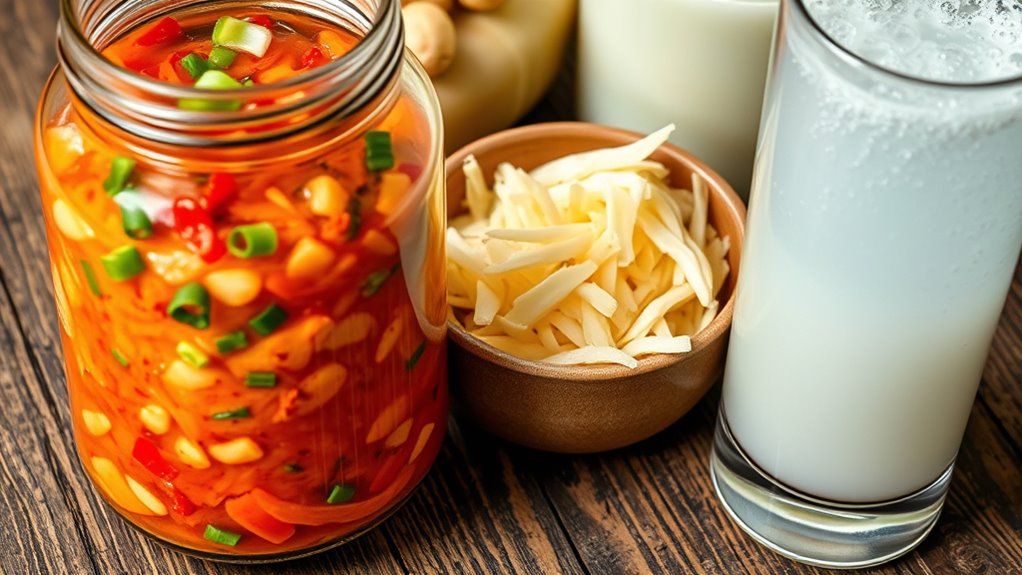
Consuming fermented foods like kimchi, sauerkraut, and kefir can markedly boost your gut health by providing live probiotics that restore balance and improve digestion. These foods also enhance nutrient absorption, support your immune system, and may reduce inflammation. Regular intake helps strengthen your gut microbiome over time, fostering a healthier digestive system. If you’re curious about the benefits and how to incorporate these into your diet, there’s more to discover that can make a real difference.
Key Takeaways
- Fermented foods like kimchi, sauerkraut, and kefir provide live probiotics that support healthy digestion and boost immunity.
- Regular consumption helps restore and maintain a balanced gut microbiome, enhancing overall gut health.
- Fermentation increases nutrient bioavailability and produces beneficial vitamins such as B12 and K.
- These foods support gut barrier strength, reduce inflammation, and alleviate bloating symptoms.
- Incorporating small servings of fermented foods into daily meals naturally nurtures gut health over time.
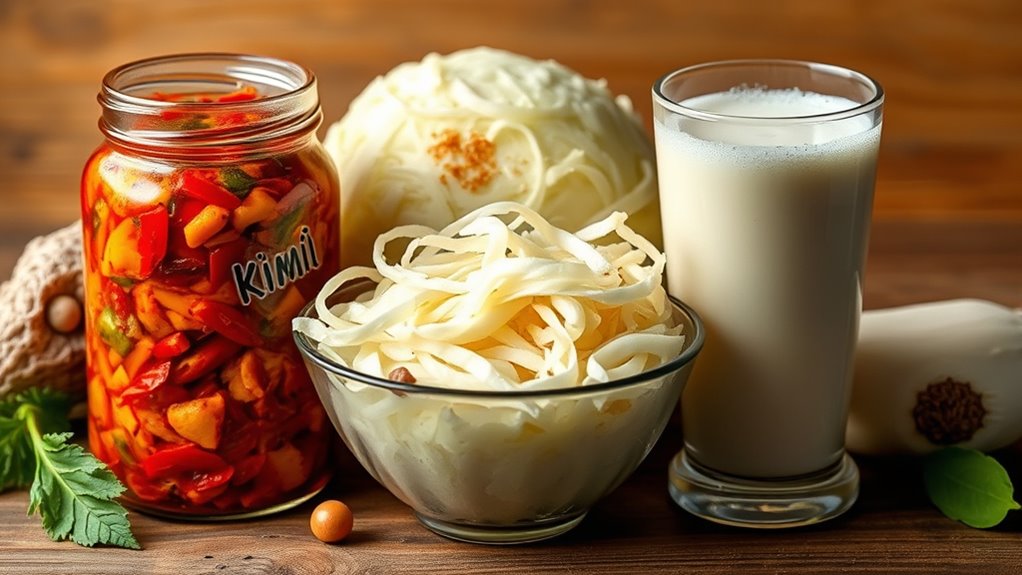
Have you ever wondered why fermented foods have been enjoyed for centuries across cultures? It’s because they offer incredible health benefits, especially when it comes to your gut. At the heart of these benefits is the fermentation process, a natural method that transforms raw ingredients into nutrient-rich foods full of probiotics. During fermentation, beneficial bacteria break down sugars and other compounds in the food, creating a lively environment packed with live microorganisms. These probiotics are essential because they help restore and maintain a healthy balance of gut bacteria, which is vital for digestion, immune function, and overall well-being.
Fermented foods boost gut health by providing live probiotics essential for digestion and immunity.
When you consume fermented foods like kimchi, sauerkraut, or kefir, you’re introducing these friendly bacteria into your digestive system. The fermentation process not only preserves the food but also enhances its nutritional profile. For example, the bacteria produce vitamins such as B12 and K, along with enzymes that aid digestion. This means that eating fermented foods isn’t just about adding flavor to your meals; it’s about actively supporting your gut health. The probiotics from these foods help crowd out harmful bacteria, reducing inflammation and promoting a more resilient digestive tract.
Understanding the fermentation process helps you appreciate why these foods are so beneficial. It involves naturally occurring bacteria and yeasts that convert sugars into acids or alcohol, creating an environment that keeps the food safe to eat while fostering probiotic benefits. This process is sustainable and requires minimal effort, making it accessible for anyone interested in boosting their health through diet. Additionally, scientific studies suggest that the gut microbiome plays a crucial role in overall health, highlighting the importance of consuming probiotic-rich foods regularly. As a result, fermented foods have become staples in many traditional diets because they are a simple, effective way to nourish your gut microbiome.
Incorporating fermented foods into your daily routine can be straightforward. Just a small serving of kimchi or sauerkraut on your lunch or dinner can markedly impact your gut health. Similarly, adding kefir to your breakfast adds probiotics that can improve digestion and even enhance your immune response. Over time, these foods help strengthen your gut barrier, reduce symptoms of bloating, and support nutrient absorption. The beauty of the fermentation process is that it naturally enhances the bioavailability of nutrients, making it easier for your body to utilize them.
In essence, the fermentation process transforms ordinary ingredients into powerful allies for your health. By consuming probiotic-rich fermented foods regularly, you give your gut the support it needs to function at its best. So, next time you enjoy a spoonful of kefir or a crunchy serving of sauerkraut, remember you’re not just savoring a tasty food—you’re nurturing your gut with the probiotic benefits of this age-old practice.

Codeage Fermented Digestive Enzymes Supplement 3-Month Supply – 14 Digestive Enzymes, Probiotics, Prebiotics, Fermented Botanicals, Plant-Based Multi Pancreatic Enzymes – 1 Capsule a Day – 90 Capsules
Comprehensive Enzyme Blend: Codeage Fermented Digestive Enzymes+ supplement offers 14 different digestive enzymes, including protease, amylase, glucoamylase, diastase,…
As an affiliate, we earn on qualifying purchases.
As an affiliate, we earn on qualifying purchases.
Frequently Asked Questions
Can Fermented Foods Cause Allergic Reactions?
Yes, fermented foods can cause allergic sensitivities in some people. If you’re prone to allergies, you should watch for reactions like itching, swelling, or difficulty breathing. While fermented foods are generally safe, their fermentation process doesn’t eliminate all allergens, so it’s important to take into account fermented safety. Always start with small amounts to see how your body reacts, and consult a healthcare provider if you have concerns.
Are There Any Risks for Pregnant Women Consuming Fermented Foods?
Think of fermented foods as a double-edged sword—beneficial yet needing caution. If you’re pregnant, you should consider fermentation safety and your dietary restrictions before consuming them. While many are safe, unpasteurized options may harbor harmful bacteria, so it’s best to consult your healthcare provider. Avoid high-sodium or alcohol-fermented products, and always choose reputable sources to protect you and your baby. Your health is the top priority, so stay informed!
How Do Fermentation Methods Vary Across Different Cultures?
You’ll notice that fermentation methods vary widely across cultures, reflecting unique techniques like using specific bacteria or herbs. For example, Korean kimchi emphasizes chili and fermentation time for bold flavors, while German sauerkraut focuses on cabbage and salt. These cultural fermentation techniques shape regional flavor profiles, giving each fermented food its distinctive taste. Exploring these differences helps you appreciate how tradition influences fermentation styles worldwide.
Can Fermented Foods Replace Probiotics Supplements Effectively?
Think of fermented foods as a vibrant symphony of probiotic diversity. They can be just as effective as supplements in boosting gut health, thanks to their natural fermentation techniques that cultivate beneficial bacteria. By regularly including kimchi, sauerkraut, and kefir in your diet, you support your gut microbiome organically. While supplements offer targeted strains, fermented foods provide a broader spectrum, making them a delicious, effective alternative.
What Is the Ideal Daily Intake of Fermented Foods?
You should aim for a daily intake of about 1 to 2 servings of fermented foods, which typically equals around 1/4 to 1/2 cup per serving. The recommended amounts help support your gut health without causing discomfort. Incorporate a variety like kimchi, sauerkraut, or kefir into your meals regularly, and listen to your body to find the right balance for your digestion and overall wellness.

Masontops Complete Mason Jar Fermentation Kit – Pickle Kit, Sauerkraut Making Kit Kimchi Container – Fermentation Airlock Lids Wide Mouth Mason Jars
MASONTOPS COMPLETE MASON JAR FERMENTATION KIT: Includes all the tools needed to turn your ordinary wide mouth mason…
As an affiliate, we earn on qualifying purchases.
As an affiliate, we earn on qualifying purchases.
Conclusion
So, go ahead and indulge in kimchi, sauerkraut, and kefir—your gut’s new best friends. Who knew that tiny bacteria could do such big things? Just remember, while they might boost your health, they won’t turn you into a superhero overnight. So, enjoy your fermented delights, but don’t expect miracles. After all, even the tiniest probiotics know that sometimes, all you need is a little patience—and a good sense of humor.

Physician's CHOICE Probiotics 60 Billion CFU – 10 Strains + Organic Prebiotics – Immune, Digestive & Gut Health – Supports Occasional Constipation, Diarrhea, Gas & Bloating – for Women & Men – 30ct
Max Strength General Purpose Probiotic: Our non-refrigerated probiotic is designed to support digestive health & gut health. A…
As an affiliate, we earn on qualifying purchases.
As an affiliate, we earn on qualifying purchases.

Pure Indian Foods, Fermented Garlic Pickle, (Achaar) Reslish/Spread/Condiment, Certified Organic – 9 oz
Family owned business since 1889
As an affiliate, we earn on qualifying purchases.
As an affiliate, we earn on qualifying purchases.