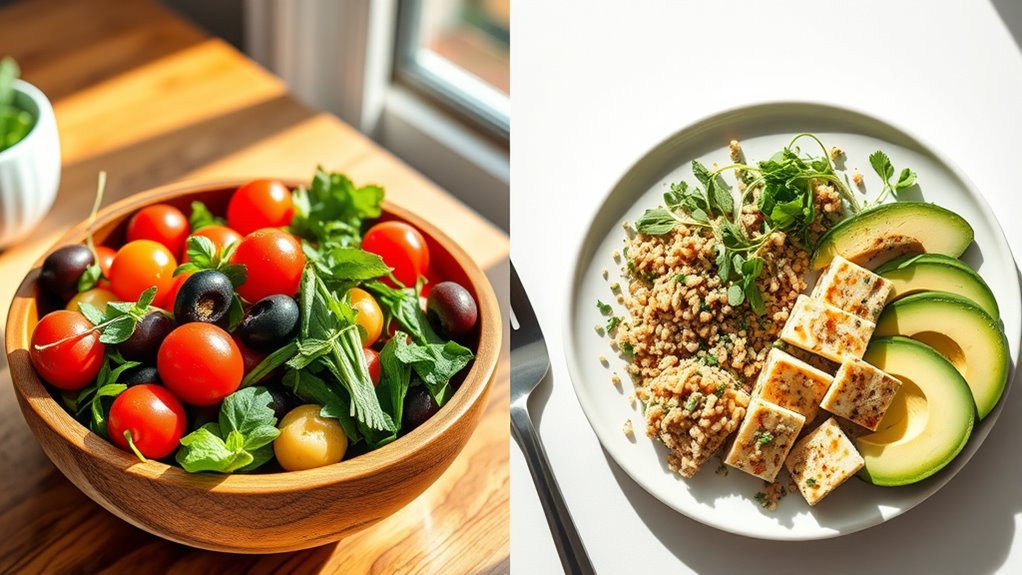

Both diets focus on plant-based foods like vegetables, fruits, grains, nuts, and legumes to promote health. The Blue Zones diet emphasizes cultural traditions and allows for moderate animal products, while veganism excludes all animal-derived ingredients for ethical reasons. Their main difference is the Blue Zones’ flexibility versus veganism’s strict stance. Exploring their shared benefits and distinctions can help you determine which approach suits your lifestyle and values more. Keep going to discover more.

Get health and wellness essentials delivered free with Prime
- Fast, free delivery on millions of items
- Prime Video, Amazon Music and more included
- Member-only deals all year
Key Takeaways
- Both emphasize plant-based foods like vegetables, fruits, grains, nuts, and seeds for health and sustainability.
- Blue Zones diet allows small amounts of animal products, whereas veganism excludes all animal-derived ingredients.
- Blue Zones diet incorporates regional traditions and cultural eating habits, while veganism is driven by ethical and environmental principles.
- Both prioritize minimally processed, nutrient-rich foods, but vegans often rely on legumes, fortified foods, and supplements to meet nutrient needs.
- Blue Zones promotes a flexible, culturally integrated approach; veganism adopts a strict ethical stance with a more rigid dietary restriction.
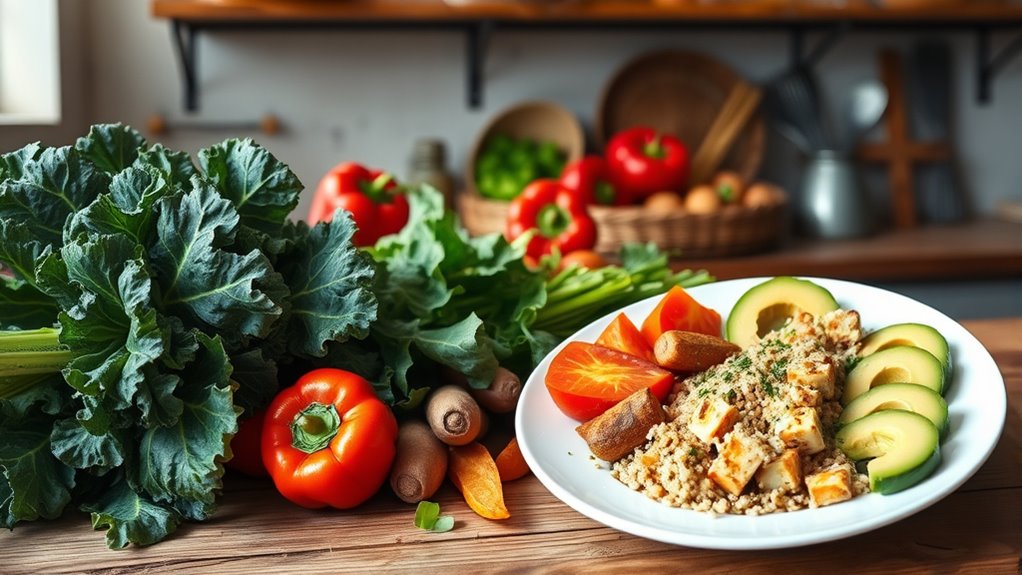
When choosing a healthy eating pattern, understanding the differences between the Blue Zones diet and modern veganism can help you make informed decisions. Both emphasize plant-based eating, but they approach it differently. The Blue Zones diet, inspired by regions where people live the longest, centers on Mediterranean staples like whole grains, vegetables, fruits, nuts, and olive oil. It encourages moderate consumption of fish and dairy, emphasizing balance and cultural eating habits rather than strict abstinence. Conversely, modern veganism adopts a plant-based ethics that excludes all animal products, driven by concerns over animal rights, environmental sustainability, and health. As a result, vegans avoid meat, dairy, eggs, and other animal-derived ingredients entirely, often choosing plant proteins like beans, lentils, and soy.
Both diets emphasize plant-based foods but differ in ethics, flexibility, and cultural focus.
Your focus on Mediterranean staples in the Blue Zones diet means you’re likely to enjoy a variety of minimally processed, nutrient-rich foods. Olive oil, in particular, plays a central role, providing healthy fats that support heart health. Fruits and vegetables are abundant, often locally sourced and seasonal, which aligns with sustainable practices. The diet also incorporates legumes, whole grains, and moderate amounts of fish—an approach that emphasizes social and cultural traditions rather than a strict ethical stance. It promotes a balanced, flexible way of eating that can be adapted to different lifestyles.
Modern veganism, on the other hand, often involves carefully planned plant-based meals that exclude all animal products for ethical reasons. If you’re motivated by plant-based ethics, you might prioritize cruelty-free, organic ingredients and avoid processed foods that contain animal-derived additives. Vegan diets often rely heavily on legumes, grains, nuts, seeds, and soy products to meet nutritional needs, including protein, iron, and B12. Many vegans also incorporate fortified foods or supplements to address potential nutrient gaps. This strict avoidance of animal products stems from a commitment to reducing harm to animals and minimizing environmental impact, making it a more ideological lifestyle choice.
While both diets emphasize plants, the Blue Zones approach is more about cultural eating patterns and sustainability, with some flexibility to include small amounts of animal products. Modern veganism, however, is rooted in a clear ethical stance that guides food choices strictly. If you’re exploring these options, recognize that the Blue Zones diet offers a balanced, culturally rich way to eat healthily, while veganism provides a principled, animal-centered approach. Understanding where they overlap and diverge helps you tailor your diet to meet your health goals, ethical values, and personal preferences.
Frequently Asked Questions
How Do Blue Zones Diets Address Animal Product Consumption?
You might wonder how Blue Zones diets handle animal product consumption. They emphasize plant-based advocacy by encouraging residents to prioritize vegetables, beans, and whole grains, often reducing but not eliminating animal products. Cultural dietary norms influence these choices, respecting local traditions while promoting moderation. This approach fosters a balanced diet that supports longevity and health, highlighting the importance of plant foods without strict vegan restrictions.
What Cultural Factors Influence Blue Zones and Vegan Practices?
You’re influenced by cultural traditions and social influences that shape how communities approach diet and lifestyle. In Blue Zones, local customs emphasize plant-based eating, communal meals, and respect for nature, which naturally promote longevity. Similarly, vegan practices are often rooted in cultural beliefs, ethical considerations, and social movements advocating for animal rights and environmental sustainability. These factors deeply impact food choices, reinforcing healthy habits across different societies.
Are Supplements Necessary in Either Diet Plan?
You might wonder if supplements are necessary for either diet plan. While both emphasize plant-based foods, achieving dietary completeness can be challenging without added nutrients. Supplements like plant-based vitamins or minerals can fill gaps, ensuring you get essential nutrients like B12, iron, or omega-3s. Depending on your diet’s variety, you may or may not need these supplements, but they can help maintain ideal health and prevent deficiencies.
How Do Both Diets Impact Environmental Sustainability?
They say, “Every little bit helps,” and when you adopt plant-based eating, you reduce your carbon footprint considerably. Both diets support environmental sustainability by promoting plant-based farming, which uses fewer resources than animal agriculture. This shift helps conserve water and reduces greenhouse gases. By choosing these diets, you’re actively contributing to a healthier planet, making sustainable choices that benefit future generations and promote environmental stewardship.
Can These Diets Be Combined for Optimal Health Benefits?
You can definitely combine these diets for ideal health benefits by embracing plant-based flexibility, allowing you to enjoy a variety of foods while maintaining nutrient synergy. Incorporate a mix of plant-based proteins, whole grains, and vegetables, and occasionally include animal products if needed. This approach maximizes nutrient absorption and supports sustainability, giving you the best of both worlds—health, flavor, and environmental impact.
Conclusion
Imagine walking through lush, vibrant gardens where colorful vegetables and fruits burst with life, nourishing your body just like in Blue Zones or modern vegan kitchens. Both emphasize plant-based foods, but Blue Zones focus on community and longevity, while veganism champions ethics and environment. By blending these approaches, you create a vibrant tapestry of health and purpose, where every meal becomes a step toward a longer, healthier, more compassionate life. Embrace the journey—your future self will thank you.
Halloween Picks
halloween
As an affiliate, we earn on qualifying purchases.