Protein remains a big topic in vegan nutrition because getting all essential amino acids without animal products is tricky. You need to understand how plant digestion works, how to combine foods like grains and legumes for complete proteins, and how fiber and plant compounds influence absorption. Proper choices and combinations help you meet your protein needs effectively. Keep exploring to discover how you can optimize your plant-based diet and guarantee you’re getting enough protein every day.

Get health and wellness essentials delivered free with Prime
- Fast, free delivery on millions of items
- Prime Video, Amazon Music and more included
- Member-only deals all year
Key Takeaways
- Plant proteins are often incomplete, requiring careful food pairing to meet essential amino acid needs.
- Achieving sufficient protein intake on a vegan diet involves understanding digestion and absorption differences.
- Combining diverse plant sources ensures a complete amino acid profile for optimal health.
- Proper food choices and combinations maximize nutrient uptake and support muscle maintenance.
- Education on plant-based protein quality and digestion is essential for balanced vegan nutrition.
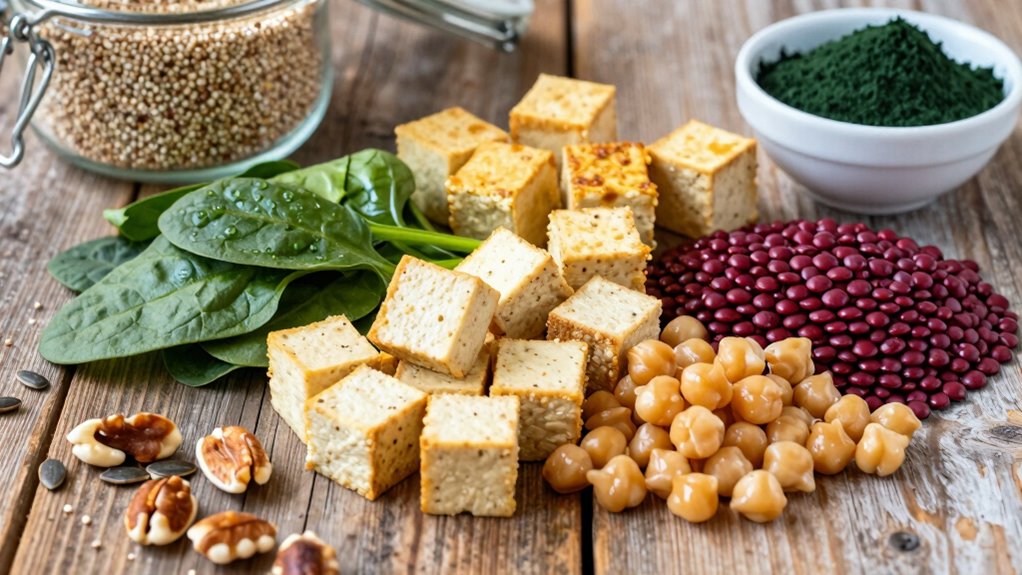
Protein plays an essential role in a balanced vegan diet, providing the building blocks your body needs for muscle growth, repair, and overall health. As a vegan, you might wonder how to meet your protein needs without animal products, especially since protein is often associated with meat and dairy. The key lies in understanding plant-based digestion and amino acid profiles. Unlike animal proteins, many plant sources contain fiber and compounds that can slow digestion, but this doesn’t mean they’re less effective. In fact, with proper planning, you can optimize your intake to guarantee your body effectively absorbs and uses the protein you consume.
Your body relies on amino acids, the fundamental units of protein, to support critical functions. While most plant proteins are considered incomplete—lacking one or more essential amino acids—you can easily combine different sources to create a complete amino acid profile. For example, pairing grains like rice or wheat with legumes such as beans or lentils supplies all essential amino acids your body needs. This concept, known as protein complementarity, is essential for vegans aiming to meet their protein demands without relying on animal products.
Combine grains and legumes to ensure complete protein intake for optimal health.
Plant-based digestion can be different from that of animal proteins because of the fiber and phytochemicals present in plant foods. These compounds can slow down digestion, leading to a more gradual release of amino acids into your bloodstream. This slow digestion is beneficial because it promotes sustained amino acid availability, which supports muscle maintenance and overall health. Additionally, understanding amino acid profiles helps in selecting the right combination of plant foods for optimal nutrition. Recognizing the importance of plant-based digestion can help vegans tailor their eating patterns for better nutrient absorption. Moreover, awareness of natural plant properties can aid in choosing foods that enhance digestion and overall nutrient uptake.
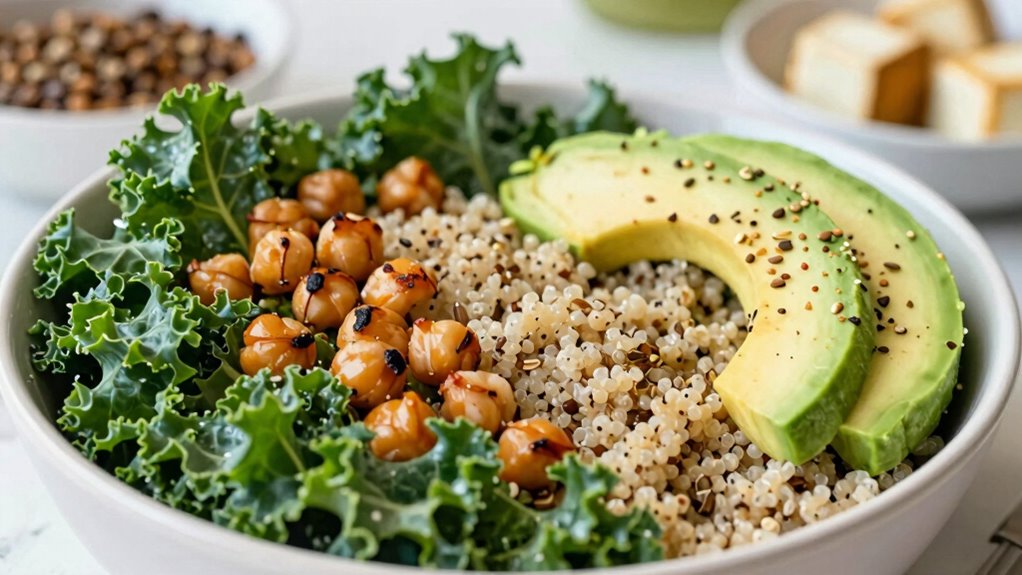
Understanding amino acid profiles is indispensable because it guides your food choices. While some plant sources are rich in certain amino acids, they might be low in others. For instance, quinoa and soy are complete proteins on their own, making them excellent staples. Meanwhile, other plant foods can be combined over the course of the day to fill in any gaps. This strategic approach helps you maximize the quality of your protein intake and guarantees your body gets all the essential amino acids it requires.
As an affiliate, we earn on qualifying purchases.
Frequently Asked Questions
Can Vegans Meet All Their Protein Needs Through Plant Sources Alone?
Yes, you can meet all your protein needs through plant sources alone. Many believe plant-based myths that vegan protein sources lack essential amino acids, but variety is key. Incorporate diverse options like beans, lentils, tofu, tempeh, and grains to make certain you’re getting complete proteins. With careful planning, your diet can provide sufficient protein, debunking myths and supporting a healthy, balanced vegan lifestyle.
How Do Plant Proteins Compare to Animal Proteins in Quality?
Plant proteins generally have lower bioavailability compared to animal proteins, meaning your body absorbs and uses fewer amino acids from plants. Animal proteins have higher digestibility, providing a complete amino acid profile more efficiently. However, you can improve plant protein quality by combining diverse sources like beans and grains. While plant proteins may be less complete individually, with careful planning, they can meet your nutritional needs effectively.
Are Protein Supplements Necessary for a Balanced Vegan Diet?
Think of your diet as a garden—variety is the key to a flourishing harvest. Protein supplements aren’t always necessary if you prioritize dietary diversity, which helps guarantee ideal protein absorption from various plant sources. Most vegans can meet their protein needs through whole foods alone, but supplements can be handy if you struggle to get enough or have higher requirements. Monitoring your intake keeps your nutritional garden thriving.
What Are the Best Plant-Based Protein Combinations for Complete Amino Acids?
You can achieve complete amino acids through smart plant-based protein combinations. Soy synergy is a powerful option, combining soy with grains like rice or wheat to boost protein quality. Legume pairing also works well—mixing beans or lentils with grains guarantees you get all essential amino acids. These combinations mimic animal protein profiles naturally, making your vegan diet more balanced without needing supplements.
How Does Protein Intake Affect Muscle Building on a Vegan Diet?
Picture your muscles as a fortress, and protein as the builder filling its walls. When you consume enough plant-based protein, your body absorbs it efficiently, fueling muscle recovery and growth. Adequate protein intake guarantees your body has the building blocks it needs to repair and strengthen muscles after workouts. Consistently, this process boosts muscle mass on a vegan diet, showing that smart protein choices can truly support your fitness goals.
plant-based complete protein sources
As an affiliate, we earn on qualifying purchases.
As an affiliate, we earn on qualifying purchases.
Conclusion
So, don’t let doubts about protein hold you back from embracing a vegan lifestyle. Remember, plant-based foods are rich in protein, just waiting to fuel your body and satisfy your cravings. Like a well-constructed puzzle, vegan nutrition fits together perfectly once you understand the pieces. With mindful choices, you’ll find that protein isn’t just a concern—it’s a cornerstone of your vibrant, compassionate life. Your journey to health and sustainability starts now—are you ready to take the first step?
vegan protein supplement for muscle growth
As an affiliate, we earn on qualifying purchases.
As an affiliate, we earn on qualifying purchases.
As an affiliate, we earn on qualifying purchases.
Halloween Picks
halloween
As an affiliate, we earn on qualifying purchases.