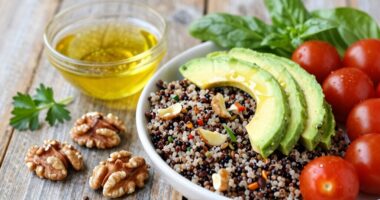
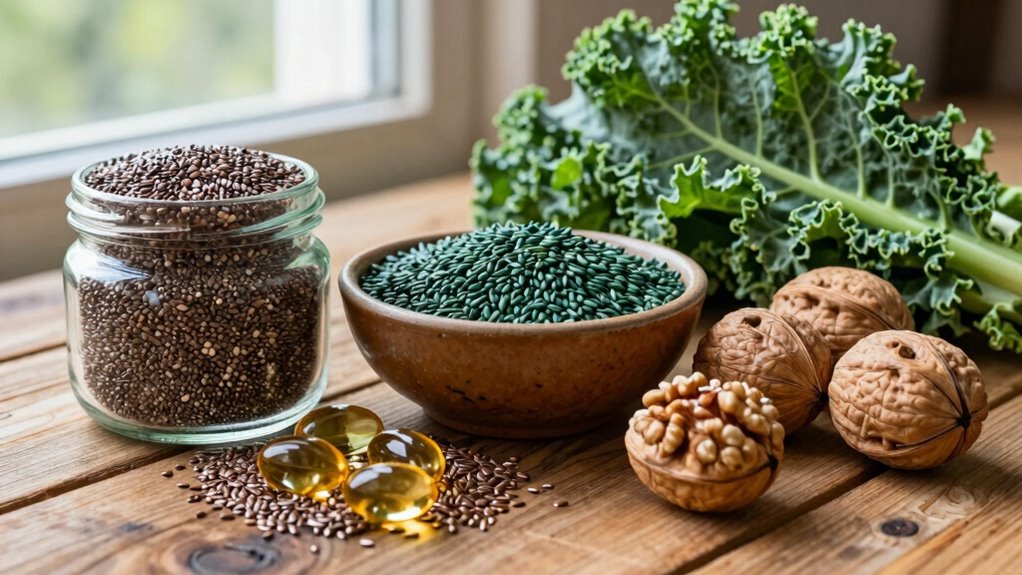

If you’re on a plant-based diet, you should know that omega-3s are essential for your heart, brain,, and joints. While plant sources like flaxseeds, chia seeds, walnuts, and hemp seeds provide ALA, your body only partially converts it to the active EPA and DHA. To meet these needs, consider supplementing with algal oil, which offers direct EPA and DHA. Keep exploring to learn more about how to effectively include omega-3s in your diet.

Get health and wellness essentials delivered free with Prime
- Fast, free delivery on millions of items
- Prime Video, Amazon Music and more included
- Member-only deals all year
Key Takeaways
- Plant-based sources provide ALA, but conversion to EPA and DHA is limited in the body.
- Flaxseeds, chia seeds, walnuts, and hemp seeds are excellent plant-based omega-3 options.
- Algal oil supplements offer direct EPA and DHA, suitable for vegans and vegetarians.
- Combining whole foods with supplements helps meet omega-3 needs effectively.
- Prioritize diverse sources and consider supplementation for optimal heart, brain, and joint health.
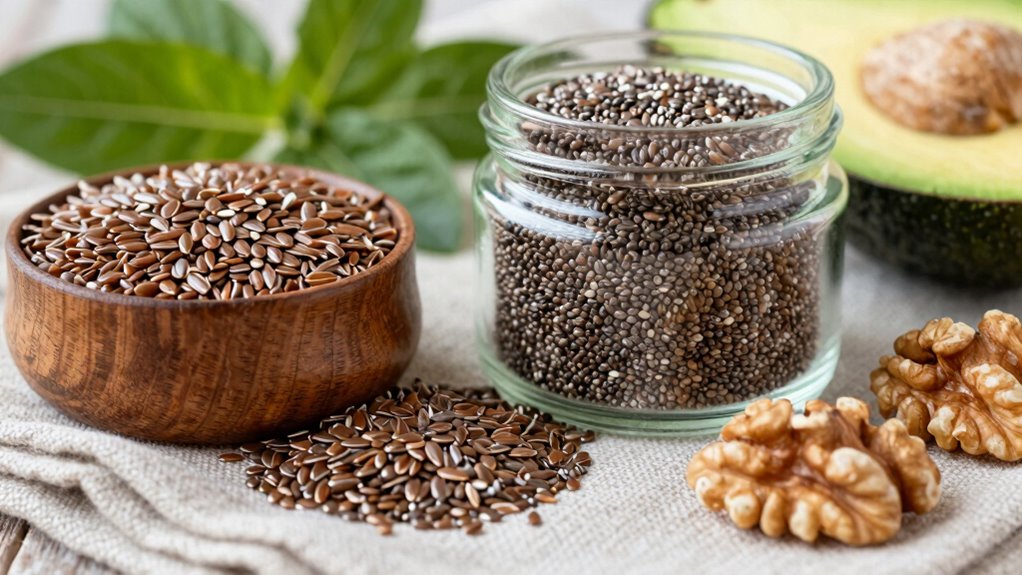
If you’re following a plant-based diet, you might wonder how to get enough omega-3 fatty acids, essential nutrients known for supporting heart, brain, and joint health. Omega 3 sources differ from traditional fish-based options, so understanding how to incorporate them into your diet is key. While fatty fish like salmon and mackerel are rich in EPA and DHA—the most active forms of omega-3s—plant-based individuals need to seek alternative sources. Flaxseeds, chia seeds, walnuts, and hemp seeds are excellent options, providing alpha-linolenic acid (ALA), a plant-based omega-3. Your body can convert some ALA into EPA and DHA, but the conversion efficiency is limited, so relying solely on these sources might not meet your needs.
To bridge this gap, plant-based supplementation becomes an effective strategy. Algal oil supplements, derived from algae, are gaining popularity because they contain EPA and DHA directly, mimicking the omega-3 profile of fish oils. Incorporating algal supplements into your routine ensures you receive the active forms without consuming animal products. This approach is especially beneficial if you’re concerned about conversion rates or want a reliable, consistent intake of omega-3s. Many brands now offer vegan-friendly capsules that are free from fish-based ingredients, making supplementation both accessible and sustainable.
When choosing omega-3 sources, consider your dietary preferences and lifestyle. Whole foods like ground flaxseeds can be easily added to smoothies, oatmeal, or baked goods, making them a convenient way to boost your intake. Chia seeds can be soaked and used in puddings or added to yogurt, while walnuts make a nutritious snack or salad topping. These foods not only provide omega-3s but also supply fiber, antioxidants, and healthy fats, supporting overall health. Additionally, incorporating landscaping techniques such as planting native, omega-3-rich plants in your garden can enhance your access to fresh, natural sources. However, relying solely on plant sources might not provide sufficient EPA and DHA levels, especially if you have increased needs, such as during pregnancy or for certain health conditions. That’s where plant-based supplementation comes into play, complementing your diet and ensuring you meet recommended omega-3 intakes. Combining whole foods with targeted supplements allows you to optimize your omega-3 status without compromising your plant-based principles. By understanding these options, you can support your heart, brain, and joint health effectively, all while sticking to your dietary preferences.
vegan algal oil omega-3 supplement
As an affiliate, we earn on qualifying purchases.
As an affiliate, we earn on qualifying purchases.
Frequently Asked Questions
Can Vegans Get Enough Omega-3s Without Supplements?
Yes, you can get enough Omega-3s without supplements by including plant-based sources like flaxseeds, chia seeds, walnuts, and hemp seeds in your diet. These foods provide ALA, a type of Omega-3 fatty acid, but your body needs to convert it to EPA and DHA, which are essential. If you’re concerned about adequate intake, plant-based supplementation with algae oil is an effective way to guarantee you meet your Omega-3 needs naturally.
Which Plant-Based Foods Have the Highest Omega-3 Content?
Think of plant-based omega-3s as hidden treasures waiting to be uncovered. Seaweed varieties top the list, offering a potent, natural source of omega-3s straight from the ocean’s bounty. Chia seeds are like tiny, mighty warriors packed with these essential fats, easily added to your meals. Incorporate these foods into your diet, and you’ll be harvesting a rich bounty of omega-3s without needing supplements.
How Do Omega-3s Benefit Mental Health and Cognitive Function?
Omega-3s boost your mental health and cognitive function by reducing inflammation and supporting brain cell communication. If you have an omega-3 deficiency, you may experience mood swings or memory issues. Including plant-based sources like flaxseeds and walnuts helps prevent cognitive decline and keeps your brain sharp. Prioritizing these foods can improve your overall mental well-being and protect against age-related cognitive issues.
Are Plant-Based Omega-3s as Effective as Fish-Based Ones?
Some might think plant-based omega-3s aren’t as effective as fish oil, but they can be, with proper omega balance. While fish oil provides EPA and DHA directly, plant sources like flaxseed and chia contain ALA, which your body converts. To maximize benefits, you should include omega-3-rich foods regularly and consider supplements if needed. With mindful choices, plant-based omega-3s can support your health just as well.
What Are the Best Ways to Incorporate Omega-3s Into a Daily Diet?
You can easily incorporate omega-3s into your daily diet with simple omega-3 meal ideas like chia pudding, flaxseed smoothies, or walnut-stuffed salads. For snacks, try roasted seaweed, hemp seed trail mix, or flaxseed crackers. These options help boost your omega-3 intake naturally, supporting your health. Just include a variety of these foods regularly, and you’ll enjoy the benefits of plant-based omega-3s effortlessly.
As an affiliate, we earn on qualifying purchases.
Conclusion
Staying informed about omega-3s means you’re ahead of the game in maintaining your health on a plant-based diet. By incorporating sources like flaxseeds, chia seeds, and walnuts, you’re covering your bases without missing out. Remember, knowledge is power—don’t put all your eggs in one basket. With a little planning, you can enjoy all the benefits these healthy fats offer. Keep your eye on the prize and nourish your body the right way.
flaxseed chia seed omega-3 supplement
As an affiliate, we earn on qualifying purchases.
As an affiliate, we earn on qualifying purchases.
vegan omega-3 fish oil alternative
As an affiliate, we earn on qualifying purchases.
As an affiliate, we earn on qualifying purchases.
Halloween Picks
halloween
As an affiliate, we earn on qualifying purchases.