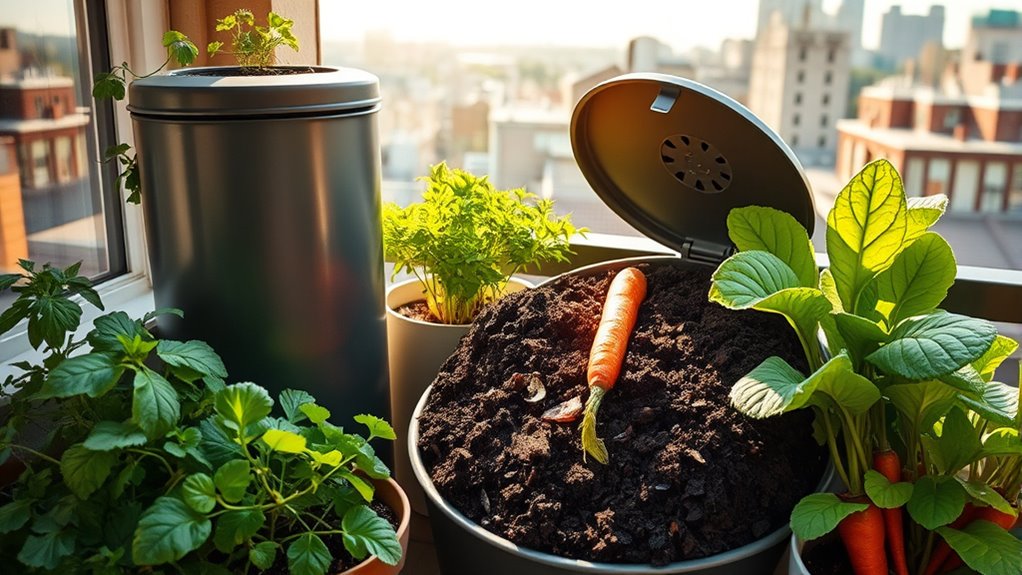

To compost at home in an urban space, choose a suitable bin or spot, layering green kitchen scraps like veggie peels with brown materials such as shredded paper. Turn the pile regularly, keep it moist, and add organic liquids like vegetable juices to keep microbes active. When the compost turns dark, crumbly, and earthy-smelling, it’s ready to use. Continue exploring these steps to turn waste into rich soil and support your eco-friendly habits.
Key Takeaways
- Select a suitable compost bin or spot considering limited urban space and set it up properly.
- Balance green and brown materials, layering them to promote airflow and efficient decomposition.
- Regularly turn and monitor moisture levels to keep compost healthy and odor-free.
- Add organic liquids like vegetable juices to boost microbial activity and speed up composting.
- Use finished compost in your garden or pots to enrich soil and support sustainable gardening practices.
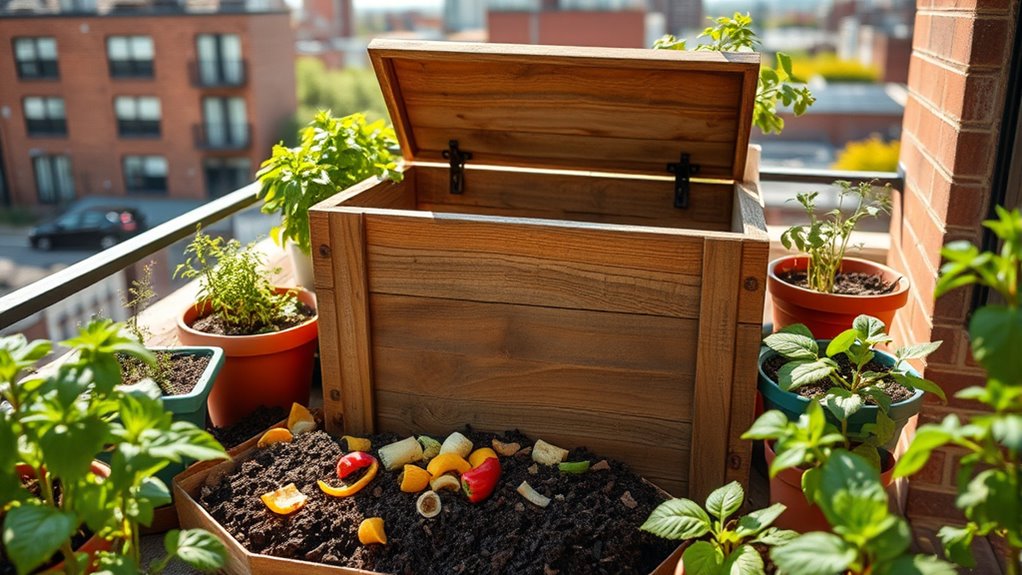
Composting at home is an easy and effective way to reduce waste and enrich your garden soil. When you start composting, you turn everyday kitchen scraps and yard waste into valuable organic matter that improves soil health. This process not only minimizes the amount of waste sent to landfills but also provides you with nutrient-rich compost that boosts plant growth. As you compost regularly, you’ll notice a noteworthy reduction in waste, making your household more eco-friendly and sustainable.
To get started, choose a suitable composting container or designate a spot in your yard or balcony. If you’re in an apartment or limited space, consider a compact bin or tumbling composter. The key is to balance green materials, like vegetable peels, coffee grounds, and fresh grass clippings, with brown materials such as dried leaves, shredded paper, or cardboard. This balance promotes efficient decomposition and prevents odors. Layering these materials correctly helps maintain airflow, which is essential for aerobic bacteria that break down waste quickly and safely.
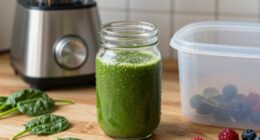
As you add waste, turn your compost regularly to aerate it. Aeration accelerates the decomposition process, ensuring that organic waste transforms into rich soil amendment faster. Keep the compost moist but not soaked; if it feels dry, add a splash of water, and if it’s too wet, add more browns to soak up excess moisture. Proper moisture levels and aeration foster a healthy environment for microbes, which are the driving force behind composting. Additionally, incorporating cold-pressed vegetable juices or organic liquids can help maintain microbial activity and boost nutrient content in your compost. Over time, your compost will become dark, crumbly, and earthy-smelling—indicators that it’s ready to use.
Using your finished compost is straightforward. Mix it into your garden beds or use it as a top dressing for potted plants. This enriches the soil, improving its structure and increasing its capacity to retain nutrients and moisture. As a result, plants grow stronger, and you notice better yields and healthier foliage. Composting at home creates a closed-loop system that reduces waste and feeds your garden naturally, diminishing your reliance on chemical fertilizers.
In addition to soil enrichment, composting considerably cuts down on household waste. Food scraps and yard waste make up a large portion of what would otherwise go to the landfill, where they produce methane—a potent greenhouse gas. By composting, you divert this waste and contribute to a cleaner environment. Plus, you gain a sustainable habit that costs nothing but time and effort, making your home more eco-conscious.

EPICA Countertop Compost Bin Kitchen | 1.3 Gallon | Odorless Composting Bin with Carbon Filters | Indoor Compost Bin with Lid | Stainless Steel Kitchen Composter for Food Scraps & Waste Recycling
FEATURED IN BON APPETIT & FORBES: Recognized by renowned magazines, EPICA’s compost bin is a perfectly sized marvel…
As an affiliate, we earn on qualifying purchases.
As an affiliate, we earn on qualifying purchases.
Frequently Asked Questions
How Do I Start Composting in a Small Apartment?
To start composting in a small apartment, you can try indoor composting using apartment-friendly methods like a compact countertop bin or a worm bin. Keep it in a well-ventilated area and avoid odors by adding browns like shredded paper. Turn it regularly, and you’ll soon have nutrient-rich compost. This eco-friendly practice reduces waste and enriches your indoor plants without taking up much space.
What Are Common Pests or Odors in Urban Composting?
Think of your compost bin as a peaceful neighborhood—pests and odors are like unwanted visitors. Common pests include fruit flies and ants; odors often come from food scraps or excess moisture. To keep pests at bay and control odors, use pest control strategies like sealing the bin tightly, burying food scraps, and maintaining proper balance of green and brown materials. Regularly aerate and avoid overfeeding to keep your compost fresh and pest-free.
Can I Compost Pet Waste Safely at Home?
You can compost pet waste at home, but you need to prioritize compost safety. It’s best to separate pet waste from other compostable materials because it can contain harmful bacteria and parasites. Use a dedicated, sealed bin and avoid using the compost on edible plants. Properly managing pet waste compost minimizes health risks, ensuring your compost remains safe while reducing waste in urban settings.
How Long Does It Take for Compost to Be Ready?
Ah, the timeless mystery of composting timelines—will it ever be ready? Typically, your finished compost reaches readiness in 3 to 6 months, depending on factors like temperature, moisture, and how often you turn it. Patience, dear urban dweller, is key. Keep an eye on your pile’s smell and texture. When it looks, smells, and feels like rich earth, congratulations—your compost is finally ready to nourish your plants!
What Are the Best Composting Methods for Limited Space?
If you’re short on space, consider vermicomposting techniques or Bokashi composting. Vermicomposting uses worms in a bin, efficiently turning food scraps into rich compost in small areas. Bokashi composting ferments organic waste quickly in airtight containers, making it ideal for compact spaces. Both methods are easy to set up and maintain, helping you recycle waste without needing a large yard. Give them a try to maximize your limited space.

VIVOSUN Outdoor Tumbling Composter Dual Rotating Batch Compost Bin, 43 Gallon Black Door
Twin chambers: Two separate chambers allow one side to finish composting while leaving the other side available to…
As an affiliate, we earn on qualifying purchases.
As an affiliate, we earn on qualifying purchases.
Conclusion
Just like the hero tending their garden in ancient tales, you hold the power to transform waste into life. With each compost pile you nurture, you join a timeless cycle of renewal—nature’s quiet hero. By composting at home, you don’t just reduce trash; you embrace a sustainable future, echoing the wisdom of those who’ve cared for the earth long before us. Now, step into your role as a steward of the planet’s future.

Utopia Kitchen Indoor Compost Bin Kitchen, Odorless Composting with Charcoal Filter, 1.3 Gallon Stainless Steel Large Composter for Countertop & Under Sink, Easy Cleaning, One Extra Filter – (Silver)
With this compost bin, you can let the scraps build up during the week without worrying about bad…
As an affiliate, we earn on qualifying purchases.
As an affiliate, we earn on qualifying purchases.

Redmon Outdoor Compost Bin with Lift Off Lid, 4-Door Access & Vent Holes, 65 Gallon, Black – Composting Bin Container for Kitchen Food Waste Recycling
Outdoor Composting Bin: Compost bin container properly vents organic materials to allow rapid and proper composting of waste…
As an affiliate, we earn on qualifying purchases.
As an affiliate, we earn on qualifying purchases.