

This guide helps beginners choose a plant-based protein powder, check its label, and mix a first serving. You will learn how to fit it into meals or snacks and adjust the amount if the taste or texture does not suit you. Allow about 15-30 minutes to compare products and make your first serving; later servings take only a few minutes.

Get health and wellness essentials delivered free with Prime
- Fast, free delivery on millions of items
- Prime Video, Amazon Music and more included
- Member-only deals all year

Orgain Organic Vegan Protein Powder, Creamy Chocolate Fudge, 2.03 lb
- ✔ Flavor: Creamy Chocolate Fudge
- ✔ Net weight: 2.03 lb
- ✔ Servings: 20

Orgain Organic Vegan Protein Powder, Vanilla Bean, 2.03 lb
- ✔ Flavor: Vanilla Bean
- ✔ Net weight: 2.03 lb
- ✔ Protein per serving: 21 g

Orgain Organic Vegan Protein Powder with 50 Superfoods, Vanilla Bean, 2.02 lb
- ✔ Flavor: Vanilla Bean
- ✔ Net weight: 2.02 lb
- ✔ Servings: 20
Difficulty: Beginner | Time: 15-30 minutes to compare products and prepare a first serving
What You’ll Need
Tools & Materials:
- A shaker bottle, blender, or cup and whisk
- Measuring scoop supplied with the powder or a kitchen scale
- Water or another drink you enjoy
Knowledge:
- Basic ability to read a nutrition and ingredient label
- Awareness of any food allergies or dietary restrictions you need to avoid
Protein needs vary with body size, age, activity, health, and overall diet. Powder is a convenient food, not a required supplement or a replacement for balanced meals. If you have kidney disease, are pregnant, take medicines affected by food supplements, or follow a medically restricted diet, ask a qualified health professional before adding a regular serving. Check with a clinician or dietitian if you are unsure how much protein is appropriate for you.
Orgain Organic Vegan Protein Powder, Creamy Chocolate Fudge, 2.03 lb
This is our most balanced choice for buyers who want a plant-based protein powder that pairs a familiar chocolate flavor with a meaningful amount of fiber. It provides 21 grams of protein and 7 grams of fiber per serving, from the same organic pea, brown rice, and chia blend used by the vanilla options. The label also lists 150 calories per serving and zero grams of sugar, details that make it easier to compare its nutrition profile with the other two products.Against the original Vanilla Bean, this version offers two more grams of fiber and a richer flavor direction, while the original lists 5 grams of organic fiber and 1 gram of sugar. Compared with the 50 Superfoods blend, chocolate keeps the formula centered on the protein and fiber rather than adding a wide mix of extras. It still needs mixing, and the 150 calories may matter to shoppers tracking their daily intake. We would skip it if we want vanilla, a simpler-tasting shake, or a powder with no need to stir or blend.
Pros:
- 21 grams of plant-based protein per serving from organic pea, brown rice, and chia
- 7 grams of fiber, including prebiotic fiber
- Zero grams of sugar per serving
- Can be used in drinks, smoothies, oats, and baked goods
Cons:
- The stated 150 calories per serving may not suit every nutrition target
- Must be mixed before use
- The description does not provide mixing proportions
Best for: Buyers who want an organic chocolate protein powder with 21 grams of protein and 7 grams of fiber per serving.
Not ideal for: Shoppers who prefer vanilla, want to avoid mixing, or need a lower-calorie option than the stated 150 calories per serving.
Bottom line: We recommend this as the most balanced starting point for organic plant protein, chocolate flavor, and substantial fiber in one powder.
“We recommend this as the most balanced starting point for organic plant protein, chocolate flavor, and substantial fiber in one powder.”
Orgain Organic Vegan Protein Powder, Vanilla Bean, 2.03 lb
The original Vanilla Bean is the straightforward pick for buyers who want plant protein and fiber without a superfood blend. Its 21 grams of protein and 5 grams of organic fiber come from organic peas, brown rice, and chia seeds, and it has 1 gram of sugar per serving. It also avoids dairy, soy, artificial flavors, colors, and preservatives, making its dietary exclusions especially clear in the supplied details.Compared with the chocolate version, this powder has two grams less fiber and one gram more sugar, but its vanilla flavor may be easier to carry across oats, smoothies, or baking. The 50 Superfoods vanilla also provides 21 grams of protein, but adds 50 organic superfoods and lists 8 grams of prebiotic fiber. That makes the original the more restrained choice, though the product details do not specify serving size or mixing proportions. Buyers who want a sweeter powder or more fiber per serving may prefer one of the other formulas.
Pros:
- 21 grams of protein and 5 grams of organic fiber per serving
- Only 1 gram of sugar per serving
- Made without dairy, soy, artificial flavors, colors, or preservatives
- Suitable for drinks, smoothies, oats, and baking
Cons:
- Provides less fiber than either the chocolate or 50 Superfoods option
- The description does not state serving size or mixing proportions
- The low sugar content may not suit shoppers seeking a sweeter powder
Best for: Shoppers seeking an organic vanilla protein powder with a short, clearly stated set of dietary exclusions and everyday uses.
Not ideal for: Those prioritizing the highest listed fiber, a chocolate flavor, or a sweeter taste.
Bottom line: We’d choose this vanilla when a simpler organic formula matters more than maximizing fiber or adding a superfood blend.
“We’d choose this vanilla when a simpler organic formula matters more than maximizing fiber or adding a superfood blend.”
Orgain Organic Vegan Protein Powder with 50 Superfoods, Vanilla Bean, 2.02 lb
This version is for buyers who want their protein powder to include more than the core protein blend. Alongside 21 grams of protein from pea, brown rice, and chia, it adds 50 organic superfoods and lists 8 grams of prebiotic fiber per serving. Its 1 gram of sugar and vanilla flavor keep it close to the original vanilla on those points, while the extra ingredients define its role in the lineup.Compared with the original vanilla, the superfoods option raises prebiotic fiber by two grams and brings a wider ingredient mix; compared with chocolate, it trades that flavor for vanilla and a more elaborate formula. The stated 160 calories per serving are also higher than the chocolate option’s 150 calories, though nutrition values can vary by flavor according to the description. Chia seeds are part of its protein sources, so it is not a fit for someone avoiding chia. We would choose it when the added blend is a genuine preference, not just because a longer ingredient list sounds like an automatic improvement.
Pros:
- 21 grams of plant-based protein per serving
- 8 grams of prebiotic fiber per serving
- Includes 50 organic superfoods
- Can be added to drinks, smoothies, oats, or baked goods
Cons:
- Includes chia seeds, which some buyers may avoid
- At 160 calories, it is above the chocolate option’s stated 150 calories
- Nutrition values may vary by flavor
Best for: Buyers who specifically want a vanilla plant protein with 50 organic superfoods and 8 grams of prebiotic fiber.
Not ideal for: Anyone avoiding chia, preferring a simpler formula, or wanting the lowest stated calories among these options.
Bottom line: We’d pick this when the 50 superfoods blend and highest listed prebiotic fiber are priorities, while accepting the more complex formula.
“We’d pick this when the 50 superfoods blend and highest listed prebiotic fiber are priorities, while accepting the more complex formula.”
As an Amazon Associate we earn from qualifying purchases.
Before You Start
Decide when you are likely to use the powder: for example, in a smoothie, stirred into oatmeal, or as a snack alongside fruit. Read the package directions before measuring because serving sizes and mixing instructions vary by brand. Check the ingredient list for allergens such as soy, peas, nuts, or ingredients processed on shared equipment. If you have a serious allergy, contact the manufacturer when the label does not clearly answer your question. Do not assume that a product labeled plant-based is free of every allergen or suitable for every diet.
Step-by-Step Instructions
Step 1: Set your priorities
Write down what matters for your intended use: protein per serving, ingredients to avoid, taste, price, and whether you want an unflavored powder for cooking or a flavored powder for drinks. Decide whether you prefer a single protein source, such as pea or soy, or a blend. A blend may combine sources such as pea, rice, or seed proteins, but the ingredient list and nutrition label matter more than the style of the product.
Tip: Think of the powder as one part of your usual food pattern. Choose a product you can afford and enjoy using, rather than picking one based on a single marketing claim.
Check: You have a short list of requirements to compare against product labels.
Step 2: Compare labels and ingredients
Compare the serving size, protein amount, calories, and ingredient list on several products. Check whether the stated protein amount is per full serving and note how many scoops make that serving. Look for ingredients you need to avoid, and check for added sugar or sweeteners if those matter to you. If a product makes a nutrition or quality claim, read the package details rather than treating the claim as proof that it is right for your needs.
Tip: Plant powders can differ in flavor, texture, and protein content. There is no single protein amount that suits everyone, so compare products in the context of your diet rather than chasing the highest number.
Check: You can identify a product whose serving information and ingredients fit your preferences and restrictions.
Step 3: Choose a product and confirm the serving
Select a product that meets your priorities and read its preparation directions. Find the serving size in grams or scoops, then use the supplied scoop only if the label describes that scoop as the serving measure. Scoops can vary in size, so do not assume one scoop always equals one serving. Check the use-by date and make sure the package is sealed and intact before opening.
Tip: If you are new to the product or sensitive to a particular ingredient, start with a smaller amount than a full serving and see how you tolerate it. Follow package directions and do not exceed the stated serving just to increase protein quickly.
Check: You know the package serving size, how to measure it, and whether the product is within its date.
Step 4: Measure the liquid first
Pour the amount of water or other liquid listed on the package into your shaker, blender, or cup. Adding liquid first usually helps prevent dry powder from sticking at the bottom. For a first try, use the package ratio so you have a useful baseline; you can change the amount slightly in later servings to adjust thickness.
Tip: Use a liquid you already enjoy drinking. Unsweetened milk alternatives can add flavor and some nutrients, but their protein and calorie content varies, so check their labels if you track those amounts.
Check: The liquid is measured and ready before you add the powder.
Step 5: Add powder and mix thoroughly
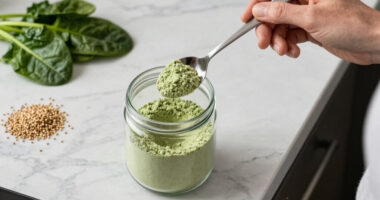
Measure the package serving, or your chosen smaller first amount, and add it to the liquid. Close the shaker securely and shake until no dry clumps remain, or blend according to the appliance instructions. If mixing by hand, whisk steadily and scrape the sides and bottom of the cup. Let the drink sit briefly, then stir or shake again if powder settles.
Tip: Do not fill a shaker to the brim; leave room for the liquid to move. If using a blender, keep the lid in place and follow its safety directions.
Check: The drink looks evenly mixed, with no dry pockets stuck to the cup or shaker.
Step 6: Taste and adjust the next serving
Take a few sips and note the sweetness, flavor, thickness, and any digestive discomfort. If it is too thick, add a little more liquid and mix again. If it tastes too strong, use less powder next time or blend it into a smoothie with fruit or another suitable ingredient. If you are comfortable with the serving and prefer a different texture, change only one variable at a time so you can tell what helped.
Tip: Some plant powders have a grainier texture than dairy-based powders. Chilling the drink or blending it with a banana or berries may improve the texture and flavor.
Check: You have a preparation you can tolerate and a clear adjustment to try if needed.
Step 7: Fit it into a meal or snack
Use the prepared drink as a snack or alongside food, or mix the powder into a suitable recipe if the package permits it. Consider what else the meal provides, such as fiber, carbohydrates, fats, and other nutrients. Do not rely on protein powder as your main source of nutrition across the day. Keep portions aligned with the package directions and your personal dietary needs.
Tip: If adding powder to hot oatmeal or batter, mix it with a little cool liquid first to make a paste, then stir it in. Heat and recipe moisture can change the texture, so start with a small amount.
Check: The powder supplements a meal or snack without displacing the variety of foods you normally eat.
Step 8: Store the product safely
Close the package firmly after use and store it as directed on the label, usually in a cool, dry place. Keep the scoop clean and dry, and do not put a wet scoop back into the powder. Wash the shaker, cup, whisk, and blender parts promptly after preparing a serving. Follow the package guidance after opening and discard the product if its smell, appearance, or condition changes unexpectedly.
Tip: Write the opening date on the container if you tend to forget when you opened it. Keep the package away from moisture and heat.
Check: The powder is sealed and dry, and all equipment that touched the drink has been washed.
Common Mistakes to Avoid
- Assuming one scoop is always one serving. — Read the serving size and scoop directions on the specific package; use a scale if you need a more precise measurement.
- Buying a product without checking allergens or shared-equipment statements. — Read the full ingredient and allergen information before purchase, and contact the manufacturer if a serious allergy is not clearly addressed.
- Adding powder to too little liquid and expecting it to mix smoothly. — Start with the package’s liquid ratio, add liquid before powder, and shake or blend thoroughly.
- Treating protein powder as a substitute for most meals. — Use it as a supplement to meals or snacks that include a variety of foods, and seek dietary guidance if you need a prescribed plan.
Troubleshooting
Problem: The drink has lumps or dry powder at the bottom.
Solution: Add liquid before powder next time, leave headroom in the shaker, and shake longer. For the current drink, pour it back into a blender or whisk it thoroughly.
Problem: The texture feels gritty or too thick.
Solution: Add more liquid a little at a time, chill the drink, or blend it with fruit. Try a different product if the texture remains unpleasant.
Problem: The flavor is too sweet or strong.
Solution: Use less powder or more liquid, and combine it with a plain ingredient such as unsweetened milk alternative or oatmeal. Check whether the product comes in an unflavored version.
Problem: You develop digestive symptoms after drinking it.
Solution: Stop using the product for now and check its ingredients for a potential trigger. Do not retry it if you suspect an allergic reaction; seek urgent care for severe symptoms such as trouble breathing or swelling. Ask a health professional for advice if symptoms persist or recur.
What Success Looks Like
You have selected a powder whose ingredients and serving directions fit your preferences and restrictions. A correctly prepared serving is evenly mixed, tastes acceptable to you, and fits into a varied eating pattern. You can identify the package serving size, store the powder dry and sealed, and clean the equipment after use.
Next Steps
Use the product according to its label and notice how it fits your meals, taste preferences, and digestion over several servings. Keep the container dry, check its date and condition, and replace it only if it continues to suit your needs. If you need to meet a specific protein target for a health or training reason, ask a registered dietitian or clinician to help set a suitable amount and plan.
Frequently Asked Questions
When should I drink plant-based protein powder?
Choose a time that fits your routine, such as with breakfast or as a snack. Timing can depend on your overall diet and activity; follow any advice from your clinician or dietitian if you have a specific plan.
Can I mix it with water?
Yes. Water is a simple option, though some powders taste or mix better with a milk alternative. Start with the package’s liquid amount and adjust the texture to your preference.
Can I add protein powder to hot food?
Check the package directions first. To reduce clumping, blend the powder with a small amount of cool liquid before stirring it into oatmeal or another dish. Heat may change the texture.
Is plant-based powder suitable for someone with a food allergy?
Only if its ingredients and manufacturing information meet that person’s needs. Plant-based products may contain soy, peas, nuts, or other allergens, and shared equipment may pose a risk. Check the label and contact the manufacturer when needed.
How much protein powder should I use each day?
There is no single daily amount for everyone. Follow the serving instructions and consider protein from all foods and drinks in your diet. Ask a health professional for an individualized target if you have a medical condition or a specific nutrition goal.