
TL;DR
Plant-based protein powder is a convenient way to add protein, with products commonly offering about 15–30 grams per serving. Compare the source, serving size, ingredients, allergens, and any independent testing; a varied diet can supply essential amino acids across the day, so you do not need one perfect powder.
Your smoothie can look like a bowl of berries and still leave you wondering how much protein it contains. A scoop of plant-based protein powder can make that answer easier, but the tubs on the shelf differ in more than flavor: their protein sources, serving sizes, sweeteners, and textures can all change what ends up in your glass.

Get health and wellness essentials delivered free with Prime
- Fast, free delivery on millions of items
- Prime Video, Amazon Music and more included
- Member-only deals all year
Plant protein powders are supplements made from protein-rich plant ingredients, such as peas, soy, rice, hemp, and pumpkin seeds. Some use one source; others combine several. This guide explains how those choices affect protein quality and taste, what to look for on the label, and how to use a powder as one part of your eating routine—not a replacement for meals or a shortcut to a particular health outcome.
You’ll also find practical examples for comparing products and answers to common questions about muscle building, digestion, and daily use. The useful starting point is simple: read the serving size and ingredients, then choose a powder you can comfortably fit into your usual food and budget.
Products commonly offer about 15–30 grams of protein per serving, but compare scoop size and protein grams together.
Soy is a complete protein; pea is relatively low in methionine, and pea-and-rice blends can provide a broader amino-acid profile.
A varied diet can supply essential amino acids over the day; you usually do not need a specific combination in every meal.
Check added sugars, sweeteners, fiber, allergens, and independent quality information before buying.
A powder can add convenience, but it does not guarantee muscle gain or replace a balanced diet.
What Plant-Based Protein Powder Adds to Your Routine
Plant-based protein powder is a supplement made from protein-rich plants, including peas, soy, rice, hemp, or seeds. A serving commonly provides about 15–30 grams of protein, though the scoop size and amount vary by product. That range matters because the words “one scoop” don’t describe a consistent dose: one product may use a larger scoop or deliver less protein per scoop than another. Compare the stated serving weight and protein grams to understand what you’re actually adding.
The main benefit is convenience. A powder can help make a snack or meal more protein-rich when cooking or planning isn’t practical, much as frozen berries make a smoothie quicker without washing and chopping fresh fruit. For example, if you blend banana, oats, and milk alternative before work, a scoop might add protein without turning breakfast into a cooking project. The drink still benefits from other foods that contribute energy, fiber, and variety; protein powder supplies protein, but it does not make the rest of the meal unnecessary.
These products are supplements, not complete meal plans. A powder cannot tell you whether you’ve eaten enough vegetables, grains, or other foods across the day. “Plant-based” also does not automatically mean low in sugar or minimally processed. Sweeteners and other additions can change both the taste and how the product fits your preferences, so scan the nutrition panel and ingredient list rather than relying on the front label.
Some products combine rich plant ingredients for taste or a varied protein profile; others keep the recipe focused on one source. A blend may offer a broader amino-acid profile, but that feature is useful only if it suits your diet and you like the product. If you’re comparing what a product offers, focus on grams of protein per stated serving, check whether the scoop in your hand matches the serving size, and weigh those details against cost, taste, and ingredients.
Products Worth Considering

Therabody SmartGoggles 2nd Gen Heated Eye and Temple Massager

Levoit Core 400S-P Smart Air Purifier for Large Rooms

Levoit Eleva 300X Air Purifier with Fully Sealed HEPA Filtration and Smart Control
As an affiliate, we earn on qualifying purchases.
How Pea, Soy, Rice, and Blends Compare
Plant protein powders differ by source, and that can affect their amino-acid profile as well as taste and texture. Soy provides a complete protein, meaning it contains all essential amino acids. Pea is rich in several essential amino acids but relatively low in methionine. Combining pea with rice can provide a broader amino-acid profile than either source alone. These differences help explain why formulas vary, but they do not by themselves identify the best product: your overall diet, serving size, allergy needs, digestion, and willingness to use the powder matter too.
| Source | What to know | A practical example |
|---|---|---|
| Soy | A complete protein; soy is a common allergen. | Check the label carefully if soy causes an allergy for you. |
| Pea | Contains several essential amino acids and is a popular option. | Try a small tub first if you’re unsure about its earthy flavor. |
| Rice | Often used alone or in blends; compare the full nutrition panel. | Mix into oats if you find the texture too noticeable in water. |
| Blends | Several sources can provide a broader amino-acid profile. | A pea-and-rice mix may suit someone who wants a combined formula. |
There isn’t one best plant powder for everybody. Imagine two shoppers: one wants a smooth shake after a workout, while the other wants an unflavored scoop for porridge. They may prefer different products even if both tubs show a similar protein amount. A blend might appeal to someone prioritizing a broader profile, while a single-source powder may have a simpler ingredient list or suit someone avoiding a particular ingredient. Those are practical tradeoffs, not a ranking of products.
You also don’t need to match particular plant proteins at every meal to make a varied diet useful. Amino acids are the building blocks of protein; your body uses them from the foods you eat, and your diet can provide a range across the day. This makes the whole pattern of eating more relevant than finding a perfect combination in one scoop. If you’re comparing powders, the amino-acid profile is one consideration alongside the amount of protein, ingredients, and whether you can comfortably use it. If you have a restricted diet or a health concern affecting food choices, ask a qualified health professional for personal guidance.
How to Read the Label Before You Buy
To compare plant-based protein powders, check protein per serving, the serving size, ingredients, added sugars, allergens, and any independent quality information. These details reveal more about the product than a large “plant-powered” claim on the front. They also help you judge the tradeoffs: a powder with more protein per scoop might cost more, while a lower-protein serving may still suit a snack if you get protein elsewhere. Two tubs can look similar yet differ in how much protein you get per scoop and what else comes with it.
- Match the serving size to the protein grams. Note whether the label calls one scoop a serving and how much powder that scoop weighs. A bigger scoop can account for a higher protein number, so comparing grams without serving weights can give a misleading impression of which product is more concentrated.
- Scan the ingredient list. Check for sweeteners, flavorings, fiber, gums, sugar alcohols, and ingredients you avoid. These additions may make a shake sweeter, thicker, or easier to mix, but they can also change the taste or be unwelcome if you prefer a simpler formula.
- Look for allergen information. Soy is a common allergen, and some products are made in facilities that handle other allergens. If a potential exposure matters for your health, the ingredient list alone may not answer every question, so check the manufacturer’s allergen statement.
- Check quality claims carefully. Independent testing or a credible certification can offer information about identity, contaminants, or label accuracy; it does not prove the powder works for every purpose. It can help narrow uncertainty about what’s in the product, but it cannot tell you whether its taste, ingredients, or serving size fit your needs.
- Consider taste and cost per serving. A tub you dislike or cannot afford to replace may not suit your routine. Comparing cost per labeled serving is a useful start, but consider how much protein that serving provides and whether you will actually use it.
For example, one shopper may pick a chocolate powder with added sweetener for a quick drink, while another chooses an unflavored version to stir into savory food. Neither choice is automatically better. Compare the actual ingredients and nutrition for your own priorities, including whether the sweetened version’s taste is worth the added ingredients to you.
Supplements are not regulated like medicines in many countries. That makes clear labels and independent quality information useful, while leaving room for uncertainty: a certification is not a promise of a health result. Be wary of claims that one scoop guarantees muscle gain, cures a condition, or replaces balanced meals.
Use a Scoop Without Letting It Take Over Your Meals
A powder can help you add protein to a meal or snack, but it works best as a convenient ingredient within an otherwise varied eating pattern. Start with the serving on the product label, then think about what else the food provides. The label’s serving is a product reference, not a personal requirement; whether it is useful depends on your meals, appetite, and needs. The powder is a supporting player, not the whole kitchen.
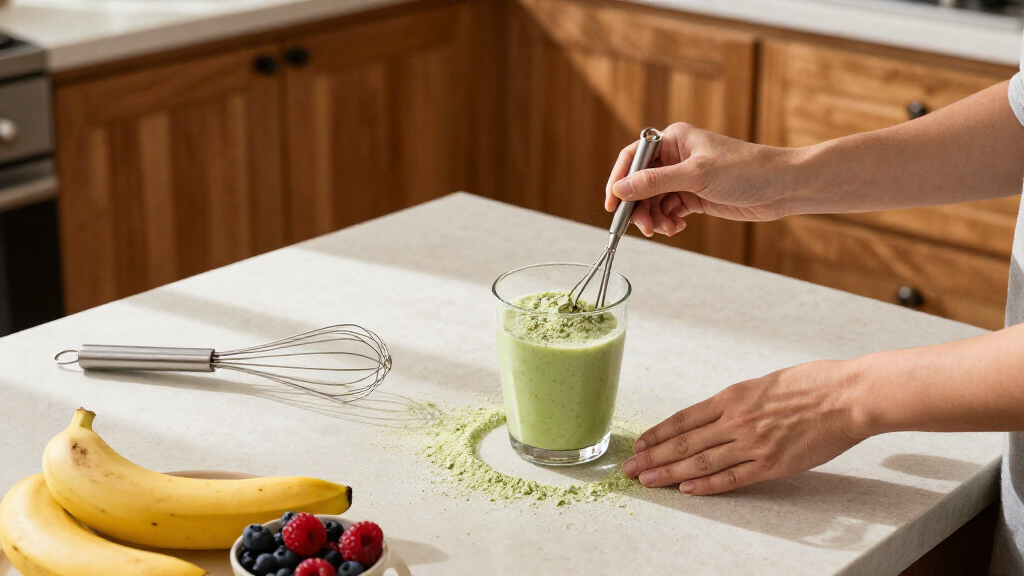
On a busy morning, you might blend a serving into a smoothie with banana, berries, and oats. On a colder day, stir an unflavored powder into porridge and add fruit or nuts for texture. These combinations show the practical role of a powder: it can add protein while other ingredients provide flavor, energy, and variety. If the powder tastes chalky in water, the thicker texture of a smoothie or oatmeal may make it easier to enjoy; taste varies, so experiment with a small amount before committing to a large tub.
For people who strength train, resistance training and enough total food and protein across the day matter more than finding a magic scoop. A powder can help fill a practical gap if a meal falls short, but it is not required to build muscle. Think of it like adding a spare tool to a toolbox: handy for a particular job, while the result still depends on the full setup. If your meals already provide the protein and food you need, adding a powder may offer convenience without a clear benefit.
Needs differ with body size, activity, health, and goals, so there is no single serving target that suits everyone. Use the label as product information, not an individual prescription. If you have a medical condition, allergy, or specific dietary need, a qualified health professional can help you decide whether a supplement fits your situation.
Make Digestion and Taste Part of Your Choice
Some people find a plant protein powder causes bloating or other digestive discomfort, and the source, serving size, fiber, sweeteners, or added ingredients may play a part. That matters because a powder that looks suitable on paper may be difficult to use regularly if it leaves you uncomfortable. A product’s texture and flavor can also affect whether you want to use it. There’s no guarantee that a different brand will solve a problem, but checking the formula can help you identify possible differences.
For instance, you try a large shake before a commute and feel uncomfortable afterward. The serving size, a gum, a sugar alcohol, or another ingredient could be relevant; the experience alone doesn’t confirm the cause. You could review the label and, if appropriate for you, try a smaller amount or a simpler formula. Changing one thing at a time can make it easier to notice whether a pattern emerges, though it still cannot establish the cause. If symptoms continue or worry you, speak with a qualified health professional rather than treating the powder as the only possible explanation.
Taste deserves the same practical attention. Pea powders can have an earthy note, while flavorings and sweeteners can make some blends sweeter than expected. A powder that tastes good in a shake may be less suited to porridge, so consider how you plan to use it. Mix a small serving into familiar food first—such as oats or a smoothie—before buying a large container. It’s like adding a strong spice to soup: a little can work well, but more does not always improve the bowl.
Choose a powder your body tolerates and you enjoy using. If you have an allergy, read allergen statements closely and contact the manufacturer if the label leaves an important question unanswered. People with medical conditions or specific dietary needs should seek individualized advice before relying on a supplement.
Know What the Research Can—and Can’t—Promise
Plant protein can support muscle growth when your overall protein intake and resistance training are adequate, but results depend on the product and the person. Some plant proteins may be less digestible or have a less balanced amino-acid profile per serving than other sources. That means equal scoop sizes do not necessarily provide identical usable protein or amino acids. Research often finds smaller differences when protein intake is matched, but that does not make every powder interchangeable; source, formulation, serving, and the person’s overall diet still matter.
A useful comparison is two people following similar strength programs: one gets protein from meals, while the other uses a powder to fill a gap. The tub alone cannot explain either person’s progress. Training, total food intake, recovery, and the amount and kind of protein all matter, so product claims should not promise that a scoop guarantees a particular result. The powder’s value is therefore practical: it can make adequate intake easier for someone who needs that convenience, while offering little advantage to someone whose routine already meets their needs.
This category has expanded beyond basic soy and rice products to include more pea, fava bean, pumpkin seed, and multi-source blends. Brands also emphasize taste, mixability, fewer added ingredients, or certifications. Those trends can make shopping more interesting, but a new source or attractive label doesn’t by itself show that a product is more effective. A blend may be designed to broaden the amino-acid profile, for example, while a simpler formula may better suit someone avoiding certain ingredients; the label and your priorities determine which tradeoff matters.
Research continues on how processing and formulation affect digestibility, amino-acid availability, and muscle-building outcomes. Broad category trends are not a substitute for checking a particular product or a current study. The practical takeaway is steady: use evidence and the label to set expectations, and consult a qualified professional for medical decisions.
Frequently Asked Questions
Is plant protein as effective as whey?
Plant protein can support muscle growth when your overall protein intake and training are adequate. Some sources differ in digestibility and amino-acid profile, so the product, serving, and total diet matter. Research often finds smaller differences when protein intake is matched, though results depend on the study and powder.
Which plant protein powder is best?
There is no single best choice for everyone. Soy offers a complete protein, pea is a popular source, and blends may combine complementary amino-acid profiles. Taste, allergies, digestion, price, and your food preferences also matter.
Can plant-based protein powder help build muscle?
It can help you meet protein needs alongside resistance training and adequate overall food intake. A powder is optional; it does not build muscle by itself or guarantee a specific result.
Do I need a complete protein at every meal?
Most people eating a varied diet do not need to combine particular plant proteins at every meal. Eating a range of protein sources over the day is a practical approach, though individual needs can differ.
Can plant protein powder cause bloating?
Some people experience digestive discomfort, which may relate to the source, serving size, fiber, sweeteners, or other ingredients. Reviewing the label or trying a smaller amount may help you spot a pattern, but ongoing or concerning symptoms are a reason to seek qualified health advice.
Is it safe to use plant protein powder every day?
For many healthy adults, a product used as directed can fit into a balanced diet. That does not make every product right for every person. If you have a medical condition, allergy, or specific dietary need, ask a qualified health professional for individualized guidance.
Conclusion
Choose a plant-based protein powder by checking the protein per serving, source, ingredients, and allergen information, then try a format you’ll actually enjoy in a smoothie, oats, or another familiar food. Treat it as a convenient addition to your eating routine, not a promise of a particular health or fitness result.
The right scoop should fit your day like a well-used mug: easy to reach for, comfortable in your hand, and no more complicated than it needs to be.