
By choosing plant-based diets, you support regenerative farming practices that rebuild soil health and boost biodiversity. These methods focus on crop diversity, cover cropping, and minimal tillage, which protect the land and prevent erosion. Your food choices can encourage farmers to adopt sustainable techniques that restore ecosystems and reduce environmental harm. Keep exploring how your diet can make a difference for the planet’s future and develop a deeper understanding of this powerful relationship.
Key Takeaways
- Plant-based diets reduce demand for resource-intensive animal agriculture, encouraging sustainable farming practices that restore soil health.
- Supporting regenerative farms promotes techniques like cover cropping and composting, which enhance soil vitality and biodiversity.
- Diverse plant cultivation in regenerative systems prevents soil degradation, supports ecosystem balance, and increases crop resilience.
- Consumer choices influence farming practices, fostering a shift towards land stewardship that prioritizes long-term soil and environmental health.
- Adoption of plant-based foods cultivated with regenerative methods helps mitigate environmental impacts and promotes ecological sustainability.
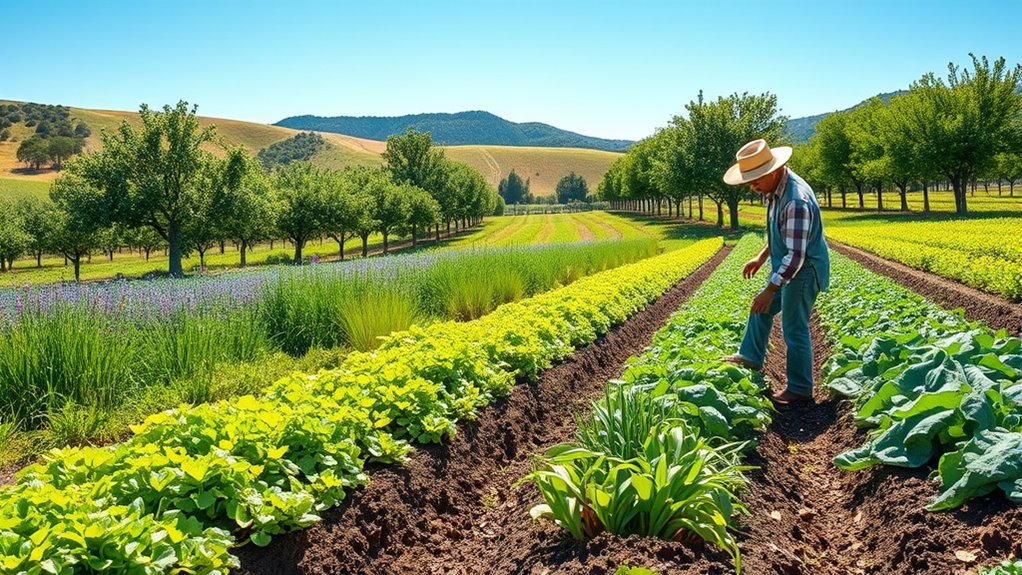
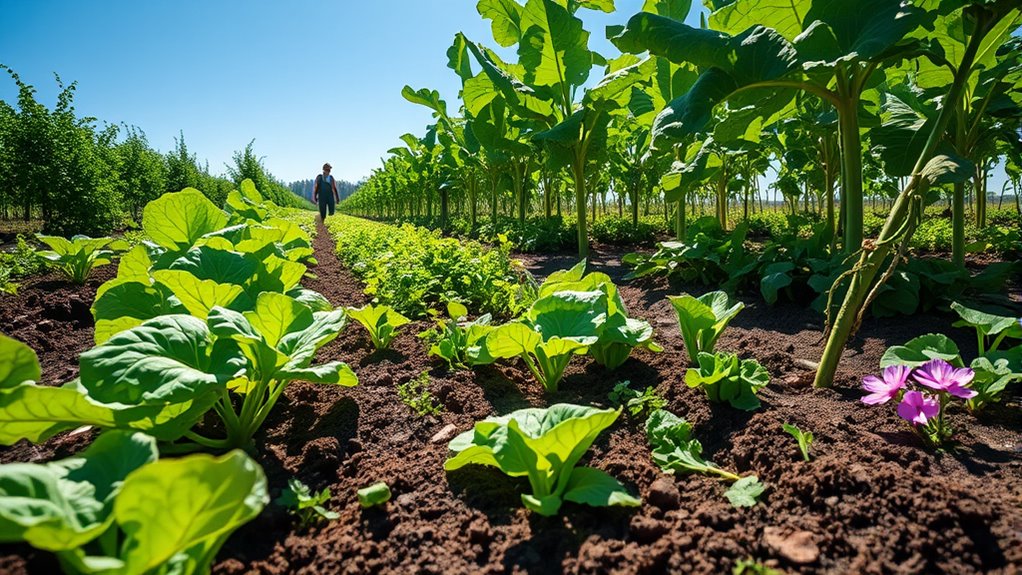
As awareness of environmental issues grows, many people are turning to regenerative farming and plant-based diets as practical solutions to heal the planet. You might be surprised to learn how closely these strategies are linked, especially when it comes to improving soil health and increasing crop diversity. By adopting plant‑based diets, you’re supporting a shift away from resource‑intensive animal agriculture, which often depletes soil nutrients and reduces biodiversity. Likewise, regenerative farming practices emphasize restoring soil vitality and fostering diverse crop systems that work in harmony with nature. Healthy soil is the foundation of sustainable agriculture. When you choose plant-based foods, you’re encouraging farming methods that prioritize soil conservation. Unlike conventional farming, which can strip nutrients and lead to soil erosion, regenerative practices focus on maintaining and enhancing soil health through cover cropping, composting, and minimal tillage. These techniques help retain moisture, boost microbial activity, and improve soil structure, making the land more resilient to droughts and floods. As you opt for plant-based options, you’re supporting farms that prioritize soil regeneration, which in turn creates a more stable and productive environment for crops. Additionally, understanding the science behind soil health can deepen your appreciation for how regenerative techniques contribute to long-term agricultural sustainability. Crop diversity plays a fundamental role in this process. When farmers cultivate a variety of plants instead of monocultures, they create a more balanced ecosystem that naturally controls pests and diseases. This diversity also enriches the soil, as different plants have unique nutrient requirements and contributions. Your choices as a consumer can influence this shift; by purchasing from farms that grow diverse crops, you’re promoting agricultural systems that mimic natural ecosystems. This diversity also safeguards against crop failures, ensuring a more reliable food supply. Moreover, adopting a plant-based diet reduces the demand for large-scale monocultures of crops like soy and corn, which often lead to soil degradation when cultivated intensively. Supporting farms that practice crop rotation and intercropping helps maintain soil fertility over the long term. When you make mindful food choices, you’re encouraging farmers to adopt methods that protect the land for future generations. This symbiotic relationship between diet and farming practices fosters a healthier planet, where soil remains rich and resilient, and crop systems thrive in harmony with the environment. In essence, your dietary decisions can have a tangible impact on soil health and crop diversity. By choosing plant-based foods cultivated through regenerative methods, you actively participate in restoring ecosystems, reducing environmental harm, and promoting sustainable agriculture. It’s a cycle where your preferences help shape farming practices that nurture the earth, creating a future where food production is both nourishing and ecologically sound.
Frequently Asked Questions
How Does Regenerative Farming Impact Global Climate Change Mitigation?
Regenerative farming helps mitigate climate change by increasing soil carbon, which traps more CO2 and improves overall soil health. You can contribute by supporting and adopting practices that boost climate resilience, like cover cropping and reduced tillage. These methods not only lower greenhouse gas emissions but also strengthen ecosystems against extreme weather. Your choices in supporting regenerative farming directly impact global efforts to combat climate change and build a sustainable future.
Can Plant-Based Diets Alone Support Sustainable Food Security Worldwide?
Think of a lush garden, thriving with diverse plants—your plate can be that garden. Plant-based nutrition plays a crucial role in dietary sustainability, but it can’t stand alone like a sturdy tree. To support global food security, you need a balanced approach combining plant-based diets with regenerative farming practices. Together, they create a resilient ecosystem, ensuring food remains abundant and healthy for future generations.
What Are the Economic Benefits for Farmers Adopting Regenerative Practices?
By adopting regenerative practices, you boost your economic resilience, reducing costs linked to synthetic inputs and soil degradation. These methods open up new market opportunities, especially with increasing demand for sustainable products. You’ll find that healthier soils lead to higher yields and better crop quality, increasing your profitability. Ultimately, regenerative farming helps you build a more stable, sustainable income stream, making your farm more adaptable to economic fluctuations.
How Do Regenerative Farms Influence Local Biodiversity?
You’ll see regenerative farms boost local biodiversity by improving soil health, which creates a richer environment for native species. As these farms reduce chemical use and promote diverse plantings, native insects, birds, and pollinators thrive. This natural balance helps maintain ecosystem stability, making your area more resilient. By supporting soil vibrancy, regenerative practices foster a vibrant habitat where native species can flourish, benefiting the entire local environment.
Are There Any Challenges in Transitioning to Plant-Based Diets Globally?
Yes, shifting globally faces challenges like cultural barriers that influence food choices. You might find that consumer awareness is limited, making it harder for people to understand the benefits of plant-based diets. Overcoming these obstacles requires education and respectful engagement with diverse traditions. When you stay informed and open-minded, you can help promote healthier, more sustainable eating habits worldwide, supporting both environmental and cultural diversity.
Conclusion
By embracing regenerative farming and plant-based diets, you’re not just making a difference—you’re revolutionizing the planet on a scale so enormous, it’s almost unbelievable. Every meal you choose has the power to heal ecosystems, restore soil, and fight climate change like a superhero on a mission. Imagine a world where your choices create a ripple so mighty that it transforms Earth into a lush, thriving paradise. Your actions could be the biggest, most incredible change the world has ever seen!