
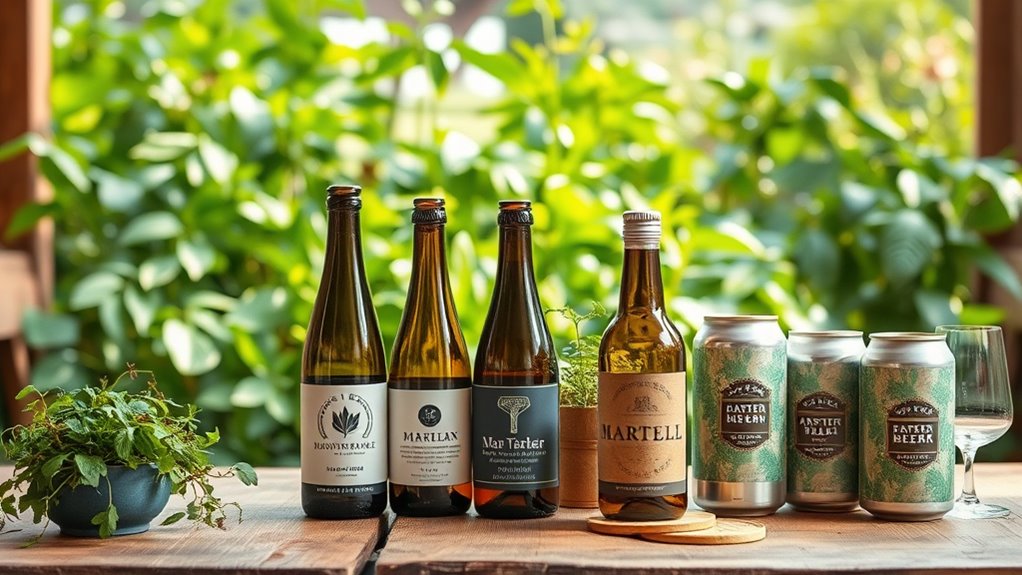

Choosing low-impact wines and craft beers lets you enjoy your favorites while supporting eco-friendly practices. These beverages are made with organic ingredients that avoid synthetic chemicals and pesticides, helping to protect soil and water. Producers often use renewable energy and sustainable farming methods, reducing their carbon footprint. By opting for these options, you contribute to a healthier planet and a greener future. Keep exploring to discover how brands are making their processes even more eco-conscious.
Key Takeaways
- Many low-impact wines and craft beers use organic ingredients, avoiding synthetic chemicals and pesticides that harm the environment.
- Production often relies on renewable energy sources like solar, wind, or hydro power to reduce carbon emissions.
- Sustainable brands implement eco-friendly practices such as water conservation, biodegradable packaging, and waste composting.
- Transparency about farming and energy use encourages consumers to choose environmentally responsible beverages.
- Supporting these products promotes a market shift towards eco-friendly practices and a healthier planet.

Have you ever wondered if your favorite drink could be eco-friendly? It’s a valid question, especially as more people become conscious of their environmental impact. When it comes to sustainable booze, the focus often falls on how the drinks are produced and what practices minimize harm to the planet. One key factor is organic farming, which avoids synthetic chemicals, pesticides, and fertilizers that can pollute soil and water. Choosing wines and craft beers made from organically farmed ingredients means you’re supporting methods that nurture the land rather than deplete it. Organic farming also promotes biodiversity and healthier ecosystems, which are essential for a sustainable future. Additionally, many eco-conscious producers rely on renewable energy sources—solar, wind, or hydro—to power their operations, further reducing their carbon footprint. This shift toward renewable energy is critical because traditional brewing and winemaking processes can be energy-intensive, contributing notably to greenhouse gas emissions. By harnessing clean energy, producers cut down on fossil fuel use and make their products more environmentally friendly.
As you explore low-impact wines and craft beers, you’ll find that many brands prioritize sustainability at every step. They often work with local farmers who employ organic farming practices, ensuring the ingredients are grown without harming the environment. These companies also invest in energy-efficient equipment and facilities, which not only reduces their emissions but often results in higher-quality products. Some wineries and breweries even go further by implementing water conservation measures, composting waste, or using biodegradable packaging. When you choose beverages from such brands, you’re not just enjoying a drink—you’re supporting a circular economy that values resourcefulness and environmental health.
Furthermore, embracing innovations like renewable energy in production methods is increasingly becoming a standard in the industry, demonstrating a commitment to reducing carbon footprints. Moreover, the story of sustainable booze is about transparency and accountability. Many brands openly share their farming and energy production methods, allowing consumers like you to make informed choices. By selecting low-impact options, you contribute to a market that rewards environmentally responsible practices and encourages others to follow suit. Ultimately, opting for products made through organic farming and renewable energy isn’t just a trend; it’s a meaningful way to enjoy your favorite drinks while reducing your ecological footprint. When you pick these sustainable options, you’re helping foster a cleaner, greener planet, ensuring future generations can also raise a glass to good health and good habits.
Top picks for "sustainable booze impact"
Open Amazon search results for this keyword.
As an affiliate, we earn on qualifying purchases.
Frequently Asked Questions
How Do Sustainable Wines Compare in Taste to Conventional Options?
Sustainable wines often taste similar to conventional options, as many producers prioritize flavor profiles that appeal to your palate. You might notice subtle differences, but they’re usually on par with traditional wines. Producer transparency helps you understand how these wines are crafted, ensuring eco-friendly practices don’t compromise taste. So, when you choose sustainable wines, you’re likely to enjoy a flavorful experience while supporting environmentally responsible methods.
What Certifications Indicate a Truly Eco-Friendly Craft Beer?
Think of eco labels as the gold standard for eco-friendly craft beers. Certifications like USDA Organic, Rainforest Alliance, and Organic Certifications indicate a beer meets strict eco label standards through thorough certification processes. These badges show that the brewery prioritizes sustainable practices, from sourcing ingredients responsibly to reducing waste. By choosing beers with these certifications, you’re supporting brands that genuinely care about the planet—making your choice a win for all.
Are Organic Ingredients Always Used in Low-Impact Wines and Beers?
Not always. While many low-impact wines and beers prioritize organic farming and ingredient sourcing, some producers still use non-organic ingredients to meet specific flavor profiles or production needs. It’s important to check labels and certifications, like USDA Organic, to confirm organic ingredients. By doing so, you guarantee you’re supporting products that truly emphasize eco-friendly practices through responsible ingredient sourcing and sustainable farming methods.
How Does Packaging Affect the Sustainability of Alcoholic Beverages?
Did you know packaging accounts for up to 40% of a product’s environmental impact? You can make a difference by choosing alcoholic beverages with recyclable packaging and biodegradable labels, which reduce landfill waste and pollution. These eco-friendly choices help lower carbon footprints and promote sustainability. By supporting brands that prioritize sustainable packaging, you contribute to a healthier planet while enjoying your favorite drinks.
Can Sustainable Booze Be More Affordable Than Traditional Options?
Sustainable booze can often be more affordable than traditional options, especially as cost comparison factors improve with increased production and demand. You might find that eco-friendly wines and craft beers become more consumer affordable over time, thanks to streamlined sustainable practices and local sourcing. As sustainability gains popularity, prices tend to decrease, making it easier for you to enjoy low-impact drinks without sacrificing quality or breaking the bank.
Conclusion
By choosing low-impact wines and craft beers, you support environmentally friendly practices and reduce your carbon footprint. Did you know that the wine industry accounts for about 10% of global agricultural emissions? Every sip you take can make a difference. So next time you shop, pick options that prioritize sustainability. Your choices not only taste good but also help protect the planet for future generations. Cheers to greener drinking habits!