Using ugly produce is a smart way to reduce food waste and save money. Imperfect fruits and vegetables are just as nutritious and tasty as their perfect counterparts, so don’t shy away from bananas with brown spots or misshapen carrots. You can turn these into smoothies, sauces, or preserves, and even use scraps for broths or composting. Embracing these practices not only benefits your wallet but also supports a more sustainable, responsible food system—discover how to get started now.
Key Takeaways
- Incorporate imperfect produce into smoothies, soups, and stews to maximize flavor and hide blemishes.
- Use overripe or misshapen fruits for homemade jams, sauces, or dried snacks, extending their shelf life.
- Utilize vegetable scraps and peels for broths or composting, reducing waste and creating nutritious base ingredients.
- Purchase ugly produce at lower prices to save money while supporting sustainable shopping practices.
- Get creative with recipes to turn imperfect produce into tasty, nourishing meals, reducing food waste and environmental impact.
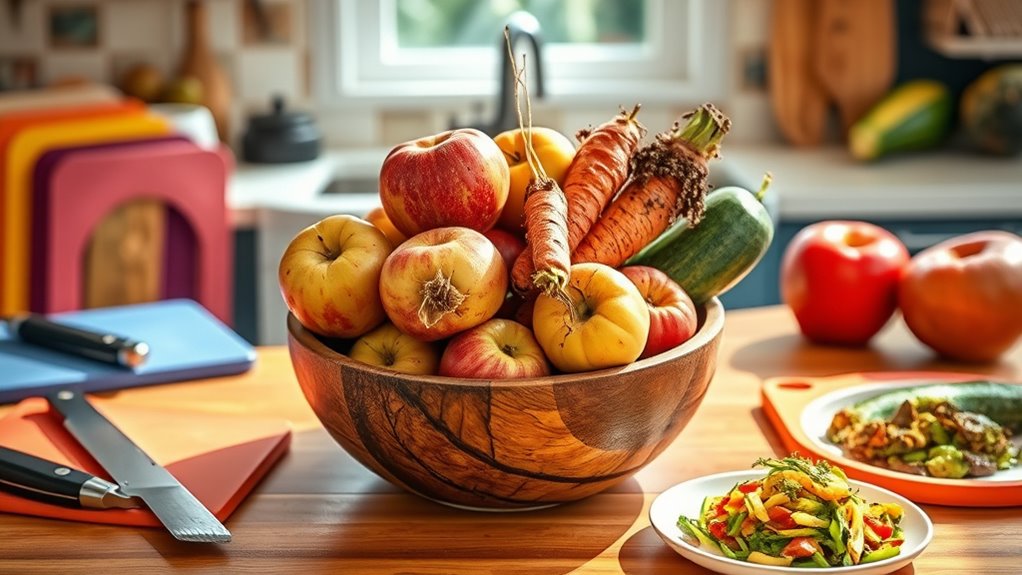
Ugly produce often gets overlooked at the grocery store, but it’s just as nutritious and flavorful as its perfect-looking counterparts. Many people pass by these imperfect fruits and vegetables because they don’t meet the typical standards of beauty, yet they still offer the same vitamins, minerals, and taste. Choosing to buy ugly produce is a simple yet impactful way to practice sustainable shopping, reducing food waste and making the most of available resources. When you opt for these less-than-perfect items, you’re supporting a more responsible food system that minimizes waste and encourages farmers and suppliers to sell produce that might otherwise be discarded.
Using ugly produce can also be a great way to improve your food preservation skills. Since these items are often discounted or sold at lower prices, you might find yourself with more produce than you can consume immediately. That’s where techniques like freezing, pickling, canning, or drying come into play. Preserving food not only extends its shelf life but also helps you reduce waste by preventing spoilage. For example, overripe tomatoes or slightly misshapen berries can be turned into sauces, jams, or dried snacks, ensuring nothing goes to waste. These methods also allow you to enjoy seasonal flavors year-round, making your kitchen more resilient and self-sufficient.
When you incorporate ugly produce into your shopping routine, you’re making a conscious choice that benefits the environment. Reducing waste means fewer resources are used in the production and disposal processes, which is a key element of sustainable shopping. Plus, it often costs less, helping you stick to a budget while still eating healthy. To make the most of these imperfect items, get creative in the kitchen. Think smoothies, soups, and stews that hide minor blemishes or irregular shapes. Use vegetable scraps and peels to make broths or compost, closing the loop on food waste. The more you experiment, the more you’ll see how versatile and delicious ugly produce can be.
Ultimately, embracing ugly produce is a simple act that can have a big impact. Not only are you helping to reduce food waste, but you’re also contributing to a more sustainable and equitable food system. When you shop with intention and a bit of creativity, you turn what might seem like imperfect produce into nourishing, tasty meals. This mindset encourages mindful consumption and reminds you that beauty isn’t always what’s on the outside—what matters most is the nourishment and sustainability behind each piece of food.
Top picks for "ugly produce tackl"
Open Amazon search results for this keyword.
As an affiliate, we earn on qualifying purchases.
Frequently Asked Questions
How Can I Identify Safe, Edible Ugly Produce?
You can identify safe, edible ugly produce by performing a visual inspection and smell test. Look for firm, smooth skin without mold or large, soft spots. Smell the produce; it should have a fresh, earthy scent, not sour or rotten. If it passes both tests, it’s likely safe to eat. Trust your senses—if anything seems off, discard it. This way, you reduce waste while enjoying nutritious food.
Are There Specific Recipes Best for Certain Types of Ugly Produce?
Yes, certain recipes work better for specific types of ugly produce, thanks to their recipe versatility and flavor enhancement potential. For instance, squishy or blemished tomatoes are perfect for sauces or soups, where their flavor intensifies during cooking. Root vegetables like carrots and potatoes excel in roasting or mashing, enhancing their natural sweetness. By choosing recipes that suit the produce’s condition, you maximize flavor and minimize waste, making your meals more sustainable.
How Do I Store Ugly Produce to Extend Freshness?
Imagine your ugly produce as treasures needing special care. Wrap delicate items with breathable wrapping techniques like paper towels, and place sturdier ones in airtight storage containers. Keep fruits and veggies in the crisper drawer or cool, dark spots for longer freshness. Regularly check for ripeness or spoilage, and adjust wrapping or container choices accordingly. These simple steps help your produce stay vibrant, saving it from the waste bin.
Can Ugly Produce Be Used in Smoothies or Raw Dishes?
Absolutely, you can use ugly produce in smoothies or raw dishes. For smoothies, blend overripe or imperfect fruits with greens, yogurt, or juice for tasty, nutritious ideas. In raw dishes, chop and toss blemished vegetables into salads or wraps—just wash and peel as needed. Ugly produce adds flavor and texture, so don’t shy away from experimenting with smoothie ideas or raw dish tips to minimize waste and enjoy fresh flavors.
What Are Creative Ways to Disguise Ugly Produce in Dishes?
Did you know that 35% of produce gets wasted before it reaches your plate? To disguise ugly produce, focus on visual presentation and flavor masking. Blend or puree blemished fruits into smoothies or sauces to hide imperfections. Incorporate them into baked goods or stir-fries, where their appearance isn’t as noticeable. Spices and strong flavors can also help mask any odd tastes, making ugly produce just as delicious as perfect-looking items.
Conclusion
Don’t let the appearance of produce stop you from making delicious, nutritious meals. Ugly fruits and veggies might not look perfect, but they taste just as good and help reduce food waste. Plus, by choosing imperfect produce, you’re supporting sustainable practices and saving money. So next time you shop, embrace the unconventional—your taste buds, wallet, and the planet will thank you. Why not turn flaws into fabulous dishes today?