
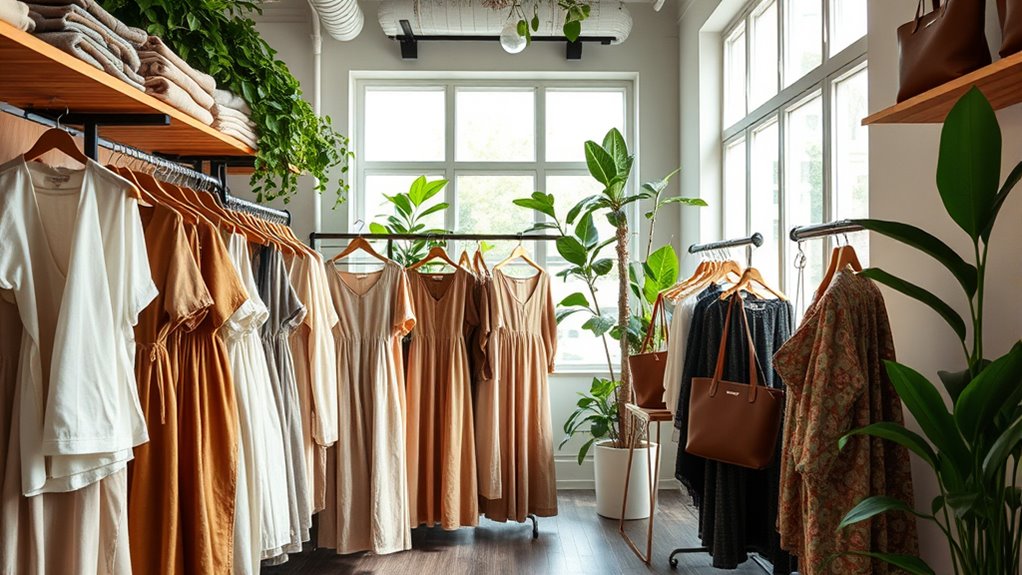

Creating a sustainable wardrobe with vegan fashion and ethical fabrics means choosing clothing that avoids animal products and supports eco-friendly production. Look for brands that use plant-based materials like cork, recycled polyester, or organic cotton, and prioritize transparent supply chains. Opt for high-quality pieces to last longer and support ethical labor practices. Proper care extends garment life, making your wardrobe more sustainable overall. If you continue exploring, you’ll discover even more ways to shop consciously and style responsibly.
Key Takeaways
- Choose brands that prioritize vegan fashion, using animal-free materials like plant-based leathers, cork, and recycled synthetics.
- Opt for ethical fabrics such as organic cotton, hemp, Tencel, and recycled fibers to ensure sustainable and cruelty-free sourcing.
- Support companies with transparent supply chains and fair labor practices to promote social responsibility in your wardrobe.
- Incorporate high-quality, timeless pieces to reduce frequent replacements and extend your sustainable wardrobe’s lifespan.
- Use eco-friendly garment care methods, like cold washing and air drying, to maintain clothing durability and reduce environmental impact.
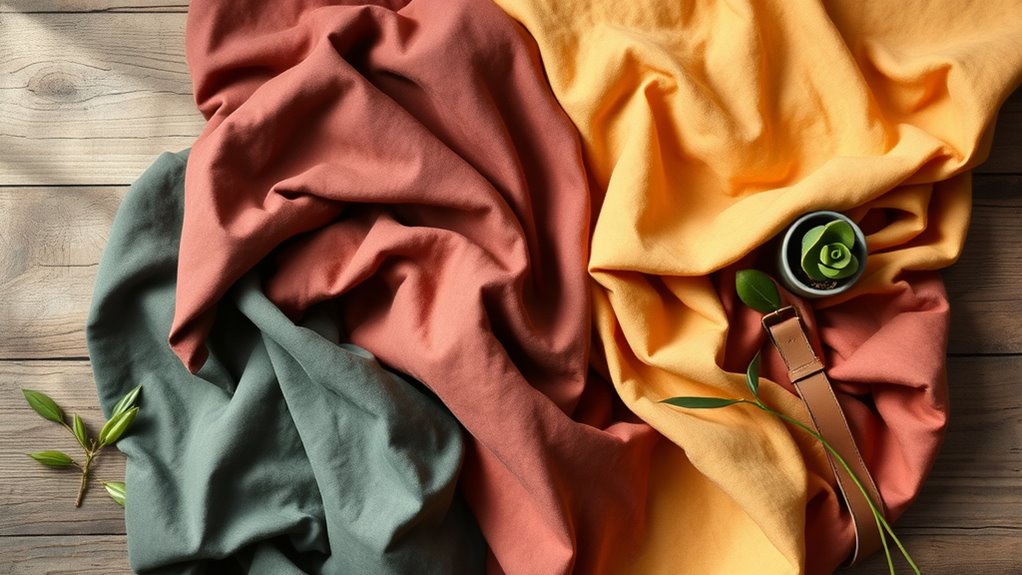
Building a sustainable wardrobe starts with making thoughtful choices about what you buy and how you care for your clothes. When you focus on upcycling trends, you’re giving new life to garments that might otherwise be discarded, reducing waste and minimizing environmental impact. Upcycling allows you to transform old or worn-out pieces into stylish, unique items, keeping fashion circular and eco-friendly. It’s a creative way to express your style while supporting a more sustainable industry. Alongside this, prioritizing ethical sourcing is essential. When you select brands that emphasize fair labor practices and transparent supply chains, you’re ensuring that the clothes you wear aren’t just good for the planet but also for the people who make them. Ethical fabrics, like organic cotton, hemp, Tencel, or recycled fibers, are produced with minimal environmental harm and often come from sources committed to social responsibility. By choosing these materials, you contribute to reducing pollution, conserving water, and supporting workers’ rights.
Incorporating vegan fashion into your wardrobe is another impactful step. Vegan fabrics exclude animal-derived materials, opting instead for innovative alternatives like plant-based leathers, cork, and recycled polyester. These options help you avoid contributing to animal cruelty while still enjoying stylish, durable clothing. Many brands now focus on creating vegan collections that don’t compromise on quality or design, making it easier for you to make conscious choices.
To truly create a sustainable wardrobe, you need to combine these elements. Look for clothing brands that champion upcycling trends and prioritize ethical sourcing. When shopping, ask about the origins of fabrics and the brand’s sustainability policies. Remember, every purchase should align with your values. Investing in timeless, high-quality pieces reduces the need for frequent replacements, which also supports sustainability. Proper care, like washing clothes in cold water and avoiding dryers, extends the lifespan of your garments, further reducing waste. Incorporating sustainable fabrics such as organic cotton and recycled fibers can significantly lower your wardrobe’s environmental footprint.
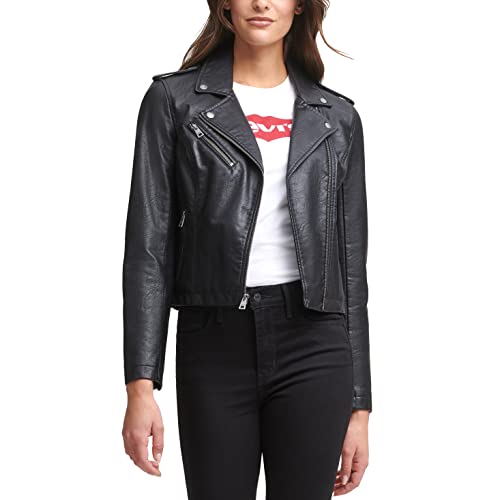
Levi's Women's Faux Leather Classic Motorcycle Jacket (Regular and Plus Sizes), BLACK, Large
Wardrobe Essential: A timless staple in your closet, elevate your look from day to night.
As an affiliate, we earn on qualifying purchases.
As an affiliate, we earn on qualifying purchases.
Frequently Asked Questions
How Can I Identify Truly Ethical Fashion Brands?
You can identify truly ethical fashion brands by checking their supply chain transparency and commitment to fair labor practices. Look for brands that openly share where and how their products are made, ensuring workers are paid fairly and work in safe conditions. Research their certifications, read reviews, and visit their websites to see if they prioritize ethical sourcing and transparency. This helps you support brands genuinely dedicated to social and environmental responsibility.
Are Vegan Fabrics as Durable as Traditional Ones?
Vegan fabrics can be just as durable as traditional ones if you choose high-quality materials and follow proper maintenance tips. Fabric longevity depends on how you care for them—wash gently, avoid harsh chemicals, and store properly. While some vegan fabrics like cork or Tencel are naturally resilient, others may need extra care. With proper handling, vegan fabrics can last a long time and stay looking great.
What Are the Best Ways to Care for Vegan Clothing?
To care for vegan clothing, follow specific laundry tips like washing in cold water and avoiding harsh detergents. Always check the care label for guidance. Use gentle cycle settings to prevent damage. Store your vegan pieces properly with storage solutions such as hanging or folding in a cool, dry place to maintain their quality. By taking these steps, you prolong their lifespan and keep them looking fresh and new.
How Do Vegan Fabrics Impact Environmental Sustainability?
Vegan fabrics positively impact environmental sustainability by being more biodegradable, which reduces long-term waste in landfills. They often require less water to produce, helping conserve this essential resource. When you choose vegan textiles, you’re supporting water conservation efforts and decreasing pollution associated with traditional fabric manufacturing. These fabrics promote eco-friendly practices, making your wardrobe not only stylish but also more sustainable for the planet.
Can Vegan Fashion Be Affordable for Everyone?
Yes, vegan fashion can be affordable for everyone. You can compare costs easily, noticing that vegan fabrics often cost less than traditional materials, making fashion accessible. By choosing affordable vegan options, you support sustainability and ethical practices without breaking the bank. Embrace budget-friendly vegan brands, shop smartly, and prioritize quality over quantity—ensuring that sustainable fashion fits your lifestyle and budget just as well as conventional options.

Womens Organic T Shirt | Fair Trade Scoop Neck Tee | Certified Organic 100% Cotton Shirt | Eco Friendly | Black or White (Small, 1, White)
Super soft and Breathable 100 percent Cotton Scoop Neck T-shirt
As an affiliate, we earn on qualifying purchases.
As an affiliate, we earn on qualifying purchases.
Conclusion
Building a sustainable wardrobe isn’t just a trend; it’s a commitment to the planet and future generations. By choosing vegan fashion and ethical fabrics, you make a positive impact with every purchase. Remember, “The best time to plant a tree was 20 years ago. The second best time is now.” Start today, and watch your conscious choices grow into a stylish, eco-friendly wardrobe that truly makes a difference.
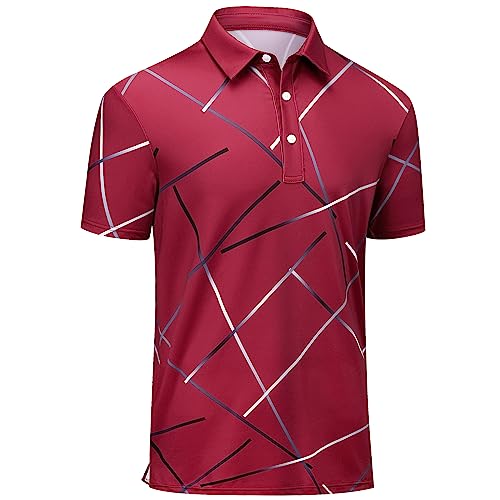
Golf Shirt for Men, Recycled Polyester Activewear Clothes Red Magenta S
Recycled Material: These golf polos for men are made with a recycled polyester.Moisture-wicking materials move perspiration away from…
As an affiliate, we earn on qualifying purchases.
As an affiliate, we earn on qualifying purchases.

Amazon Plant-Based Leather Case- Lightweight, Protective Cover Designed with Sustainability in Mind for Kindle Paperwhite and Kindle Colorsoft
Created with sustainability in mind – Experience the feel of soft and supple Plant-based leather, with an improved…
As an affiliate, we earn on qualifying purchases.
As an affiliate, we earn on qualifying purchases.