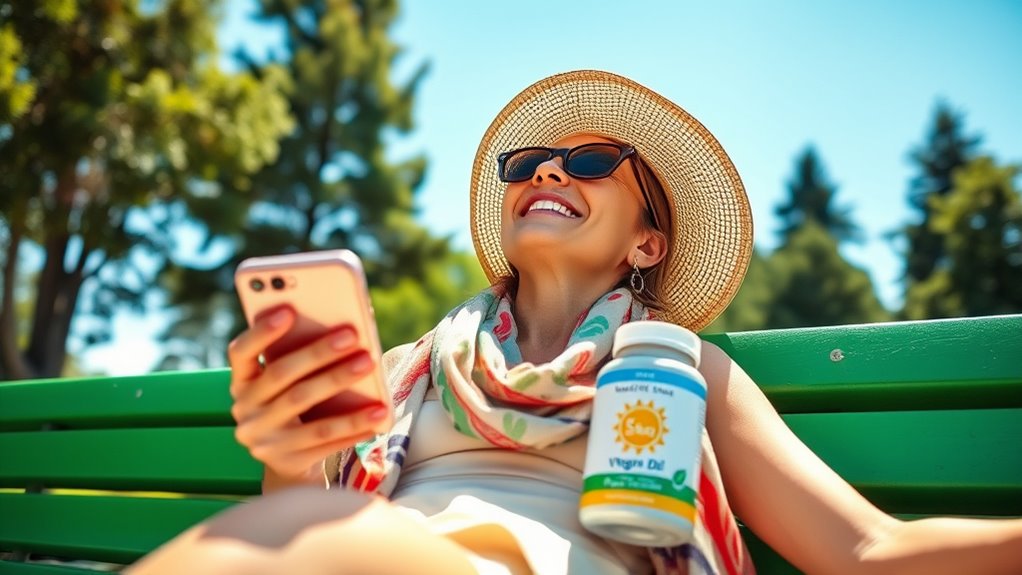
To balance vitamin D as a vegan, use a sun exposure calculator to determine how long you need outdoors safely, but remember that factors like season and skin type affect production. Incorporate fortified plant-based foods and UV-exposed mushrooms into your diet to fill gaps. If sunlight and diet aren’t enough, supplements—vegan D2 or D3—can guarantee steady levels. Discover more about integrating these strategies effectively for ideal health in the full guide.
Key Takeaways
- Sun exposure calculators estimate safe outdoor time for vitamin D synthesis based on location, skin type, and season.
- Supplements provide a reliable, consistent vitamin D source when sun exposure and fortified foods are insufficient.
- Combining sun exposure with fortified foods and supplements optimizes vitamin D levels for vegans.
- Seasonal and environmental factors can limit sun-based vitamin D production, making supplementation more practical.
- Regular monitoring helps balance sun exposure and supplement intake to prevent deficiency and support health.
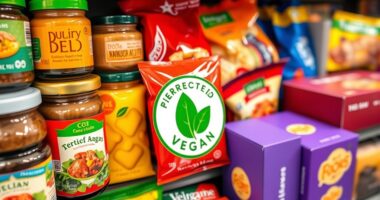
Many vegans struggle to get enough vitamin D because it’s primarily found in animal-based foods and fortified products. Since animal sources like fatty fish, eggs, and dairy are off-limits, you need to be strategic about how you obtain this essential nutrient. Fortified foods can help fill the gap, but it’s important to choose wisely. Look for plant-based options such as fortified plant milks, cereals, and orange juice, which are often enriched with vitamin D2 or D3 derived from lichen, a herbal source suitable for vegans. These products can be convenient and effective, but their vitamin D content varies, so reading labels is vital. Relying solely on fortified foods isn’t enough, especially if you don’t consume them daily, which makes it necessary to examine other sources.
Herbal sources of vitamin D are limited, but some mushrooms, particularly UV-exposed varieties, are among the few plant-based options rich in vitamin D2. These mushrooms can be a valuable addition to your diet, especially if they’ve been exposed to sunlight or UV light during cultivation. Incorporating such mushrooms into your meals provides a natural, herbal source of vitamin D that aligns with vegan principles. However, the amount of vitamin D in mushrooms varies, and you might need to eat them regularly to meet your daily needs. This highlights the importance of monitoring your intake and supplementing if necessary.
While sunlight remains a natural way to produce vitamin D in your skin, many factors influence how much vitamin D your body synthesizes, including your location, skin type, time of day, and season. Using a sun exposure calculator can help you determine how long you need to spend outdoors to produce enough vitamin D safely, without risking skin damage. But relying solely on sun exposure isn’t always practical or sufficient, especially during winter months or if you spend most of your time indoors. That’s where supplements come into play. A well-planned supplement strategy, often involving vitamin D2 or vegan D3, guarantees you meet your needs consistently, particularly if your diet and sun exposure fall short.
Additionally, understanding the environmental impacts of your choices can motivate more sustainable supplementation and lifestyle adjustments. Balancing sun exposure, fortified foods, herbal sources, and supplementation helps you maintain ideal vitamin D levels. Regularly evaluating your intake and adjusting your strategy based on lifestyle, season, and personal health needs can prevent deficiency. By combining these approaches, you support your bone health, immune function, and overall well-being without compromising your vegan principles.

DEVA Vegan Vitamin D3 Supplement – Once-Per-Day Tablet with 1000 IU – Cholecalciferol – Lichen Plant Derived – 90 Small Tablets
ESSENTIAL DAILY DOSE OF D3 – Nutritionists and health professionals recommend maintaining normal Vitamin D levels for healthy…
As an affiliate, we earn on qualifying purchases.
As an affiliate, we earn on qualifying purchases.
Frequently Asked Questions
Can Vegans Get Enough Vitamin D Through Diet Alone?
You might wonder if vegans can get enough vitamin D through diet alone. While some dietary sources like fortified foods and certain plant-based options provide vitamin D, it’s often challenging to meet your needs without sun exposure or supplements. If you live in low sunlight areas or spend little time outdoors, relying solely on diet may not suffice. Consider fortified foods or supplements to guarantee adequate vitamin D levels.
How Does Skin Tone Affect Vitamin D Synthesis?
Your skin tone considerably influences vitamin D synthesis because melanin absorption varies with pigmentation. Darker skin, with higher melanin levels, absorbs more UV rays, reducing your skin’s ability to produce vitamin D. Conversely, lighter skin allows for more efficient vitamin D synthesis due to less melanin. So, if you have darker skin, you might need more sun exposure or supplementation to maintain ideal vitamin D levels, especially in less sunny climates.
Are There Risks Associated With Excessive Sun Exposure?
Exposing your skin to too much sun can lead to risks like skin damage and increased photosensitivity. Overexposure can cause sunburns, accelerate aging, and raise skin cancer chances. To protect yourself, limit your time in direct sunlight, especially during peak hours, and wear protective clothing or sunscreen. Staying mindful of these risks helps you enjoy sunlight safely while maintaining healthy vitamin D levels.
Can Vitamin D Supplements Interfere With Other Nutrients?
When you take vitamin D supplements, you might wonder if they interfere with other nutrients or affect supplement absorption. The truth is, nutrient interactions can happen, sometimes reducing the absorption of calcium, magnesium, or vitamin K. You should balance your intake, space out supplements, and consult a healthcare professional to optimize absorption and prevent nutrient imbalances. Staying informed helps you manage your nutrient interactions effectively.
How Often Should Vegans Test Their Vitamin D Levels?
You should test your vitamin D levels regularly to ensure your intake stays ideal. The testing frequency depends on your current levels and risk factors, but generally, testing every 3 to 6 months is recommended. This helps you assess whether your sun exposure or supplements are effective. Adjust your strategy based on the results, and consult your healthcare provider for personalized guidance on optimal intervals to maintain healthy vitamin D levels.

Organic Vitamin D3 5,000 IU – 100% Whole Food & Plant-Based Cholecalciferol Form, 100% Vegan Vitamin D – Enhanced with Prebiotic & Superfood Complex – Organic, Vegan, GMO & Gluten Free (60 Capsules)
ORGANIC, PLANT-BASED VITAMIN D3: Plant-D3 is Organic Vitamin D3 derived from sun-grown algae delivered in the optimal Cholecalciferol…
As an affiliate, we earn on qualifying purchases.
As an affiliate, we earn on qualifying purchases.
Conclusion
So, while you might think soaking up the sun or popping a supplement is the easy fix, remember that even vegans need to stay vigilant about their vitamin D. Ironically, in our quest for a healthy lifestyle, the very choices we make—like avoiding animal products—can make us more vulnerable to deficiency. So, next time you skip the sun or ignore the pill, just know you’re playing a risky game with your health—no matter how “natural” it seems.

Real Mushrooms Vitamin D2 from Shiitake & Agaricus – Vegan Mushroom-Based D Supplement – Vitamins for Overall Wellness Support– Organic, Non-GMO, 1000 IU – 120 Count Functional Mushroom
Vegan Vitamin D2 from Organic Mushrooms: D2 sourced from UV-exposed organic shiitake and agaricus mushrooms—made only from fruiting…
As an affiliate, we earn on qualifying purchases.
As an affiliate, we earn on qualifying purchases.

B002XZLLXU
As an affiliate, we earn on qualifying purchases.
As an affiliate, we earn on qualifying purchases.