
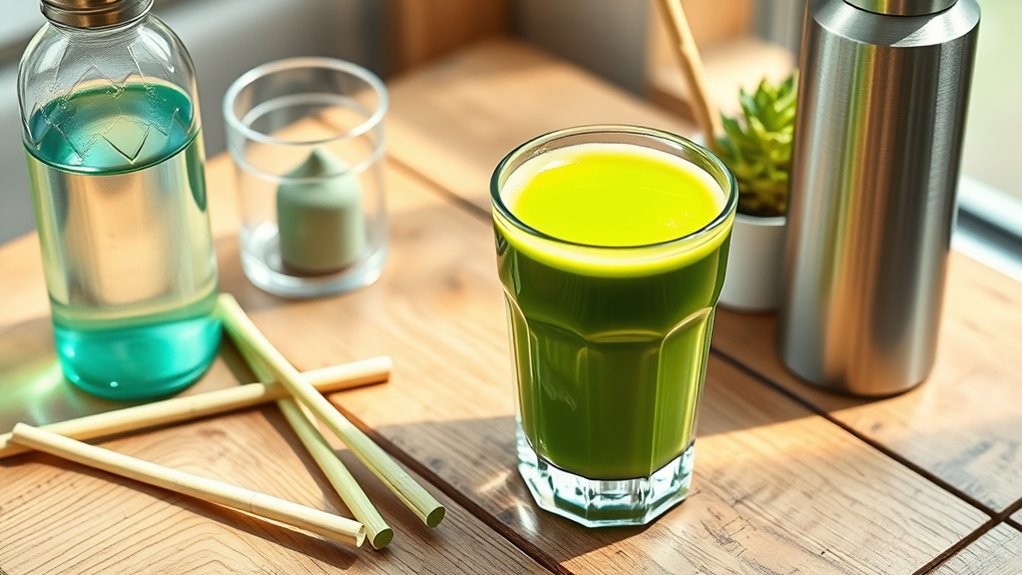

Choosing eco-friendly beverages made with plant-based ingredients helps cut down your environmental footprint by lowering greenhouse gas emissions and conserving water and land. Opt for drinks packaged in biodegradable containers that break down naturally, minimizing waste and pollution. Supporting brands with sustainable practices and certifications ensures your choices are ethically sourced and eco-conscious. Want to discover more ways to make your sips greener? Keep exploring to find simple steps toward a more sustainable lifestyle.

Get health and wellness essentials delivered free with Prime
- Fast, free delivery on millions of items
- Prime Video, Amazon Music and more included
- Member-only deals all year
Key Takeaways
- Choosing plant-based drinks like almond or oat milk reduces water use and greenhouse emissions compared to dairy.
- Eco-friendly packaging such as biodegradable cups and bottles minimizes landfill waste and pollution.
- Supporting brands with certifications like Organic or Fair Trade ensures sustainable sourcing and ethical practices.
- Industry trends show increased adoption of biodegradable materials driven by consumer demand for sustainability.
- Environmentally conscious choices promote sustainable agriculture and help reduce the carbon footprint of beverage consumption.
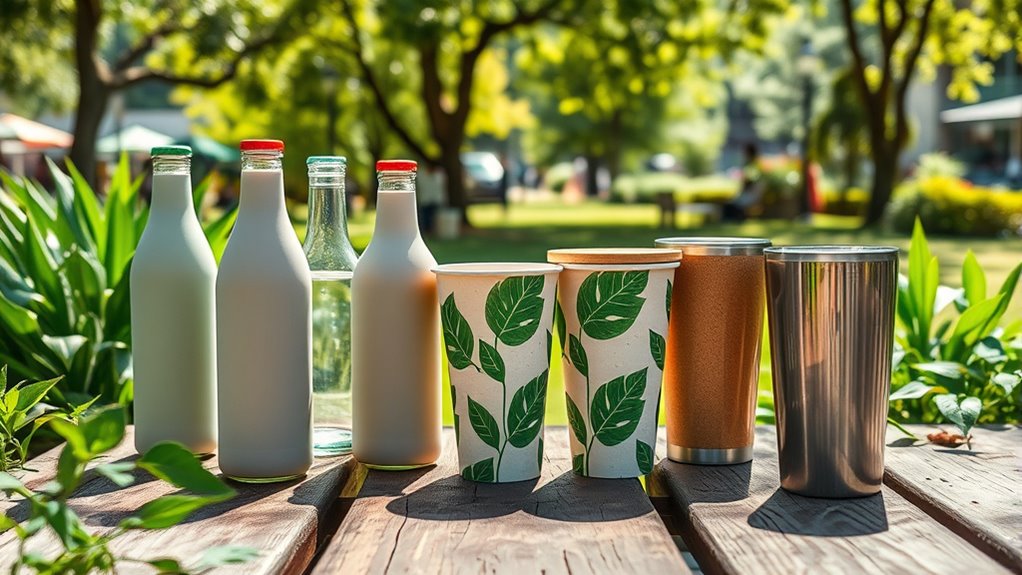
Have you ever wondered how your drink choices can impact the environment? Every sip you take has the potential to make a difference, especially when you choose beverages made with plant-based ingredients. These ingredients, sourced from nature, not only reduce reliance on fossil fuels but also lower greenhouse gas emissions compared to animal-based products. For example, plant-based milks like almond, oat, or soy milk often require less water and land than traditional dairy, making them a more sustainable option. By opting for drinks crafted from these ingredients, you support agricultural practices that are kinder to the planet. Plus, many eco-conscious brands emphasize sourcing ingredients locally or organically, further reducing their carbon footprint. It’s a simple change that can substantially contribute to a greener future.
But it’s not just what’s inside your drink that counts—how it’s packaged plays an equally important role. More companies are turning to biodegradable packaging, which breaks down naturally without leaving harmful residues. Unlike conventional plastics, biodegradable containers are designed to decompose within months, especially when exposed to composting conditions. This reduces the amount of waste that ends up in landfills and oceans, helping to combat the pollution crisis. When you choose beverages in biodegradable packaging, you’re actively reducing plastic waste and supporting innovations that prioritize environmental health. It’s encouraging to see brands increasingly adopting eco-friendly materials like compostable cups, bottles, and straws, knowing that your choices can influence industry standards.
In addition to selecting plant-based ingredients and biodegradable packaging, you can look for certifications that verify eco-friendly practices. Labels like Organic, Fair Trade, or B Corporation signal that a company adheres to sustainable and ethical standards. These certifications often ensure responsible sourcing, reduced environmental impact, and fair treatment of workers. By paying attention to these details, you’re not only making healthier choices for yourself but also endorsing a more sustainable food and beverage industry. Incorporating eco-friendly tea packaging options, such as biodegradable or reusable containers, can further enhance your positive environmental impact.
As an affiliate, we earn on qualifying purchases.
Frequently Asked Questions
What Are the Environmental Impacts of Biodegradable Beverage Packaging?
Biodegradable beverage packaging reduces landfill waste and lowers pollution, but you should know about recycling challenges. These materials often need specific conditions to break down properly, and improper disposal can still harm the environment. Additionally, material durability varies; some biodegradable options might not withstand handling or storage, leading to breakage or leakage. So, while eco-friendly, you need responsible disposal to truly minimize environmental impacts.
How Do Reusable Beverage Containers Compare in Carbon Footprint?
Reusable beverage containers usually have a lower carbon footprint than single-use ones, especially when you participate in recycling programs and practice water conservation. By using a reusable bottle, you reduce waste and the energy needed to produce new containers. Remember to clean them regularly and recycle them properly—these actions help minimize environmental impact and support sustainability efforts. Your choices can make a real difference for the planet.
Are There Health Risks Associated With Eco-Friendly Beverage Packaging Materials?
You might worry about health risks from eco-friendly beverage packaging, but generally, these materials are safe when properly tested. However, there’s a small chance of chemical leaching, which could cause allergenic reactions in sensitive individuals. To stay safe, check for certifications and avoid packaging with questionable chemicals. Using reputable brands helps assure you’re not exposed to harmful substances, making your eco-friendly choice both sustainable and safe.
How Can Small Businesses Adopt Sustainable Beverage Packaging Practices?
You can easily embrace sustainable packaging by starting with simple recycling initiatives and prioritizing sustainable sourcing. Opt for biodegradable or recyclable materials, and educate your team and customers on proper disposal. Partner with suppliers committed to eco-friendly practices and consider innovative packaging solutions that reduce waste. Small steps like these not only benefit the environment but also enhance your brand’s reputation, showing your commitment to a greener future.
What Innovations Are Emerging in Eco-Friendly Beverage Delivery Methods?
You’re seeing innovations like smart delivery systems that optimize routes to reduce emissions, making eco-friendly beverage delivery more efficient. Additionally, eco labeling initiatives are gaining traction, helping consumers easily identify sustainable options. These advancements encourage you to adopt greener practices, minimize waste, and support environmentally conscious choices. By embracing smart delivery and eco labels, you contribute to a more sustainable beverage industry and help protect the planet.
As an affiliate, we earn on qualifying purchases.
Conclusion
By choosing eco-friendly beverages and packaging, you help reduce waste and protect the planet. Did you know that the beverage industry produces over 1 million tons of plastic packaging annually? Switching to sustainable options not only benefits the environment but also encourages companies to innovate greener practices. Every small step you take counts—so next time you sip, remember that your choices can make a real difference for a greener future.
As an affiliate, we earn on qualifying purchases.
As an affiliate, we earn on qualifying purchases.
Cold & flu season Picks
humidifiers
As an affiliate, we earn on qualifying purchases.