
Choosing plant-based foods over animal products can markedly cut your carbon footprint. Plant-based diets require less energy, water, and land, and they produce much fewer greenhouse gases, especially compared to beef and dairy. By shifting your meals to vegetables, grains, and legumes, you help reduce deforestation, emissions, and resource use. If you want a better understanding of how different foods impact the environment, there’s much more to explore.
Key Takeaways
- Plant-based foods generally have a significantly lower carbon footprint than animal-based foods.
- Producing plant foods requires less land, water, and energy compared to livestock farming.
- Animal agriculture, especially beef and dairy, emits higher greenhouse gases like methane and nitrous oxide.
- Shorter supply chains for plant foods reduce transportation-related emissions.
- Reducing animal-based food consumption can substantially decrease an individual’s overall greenhouse gas emissions.
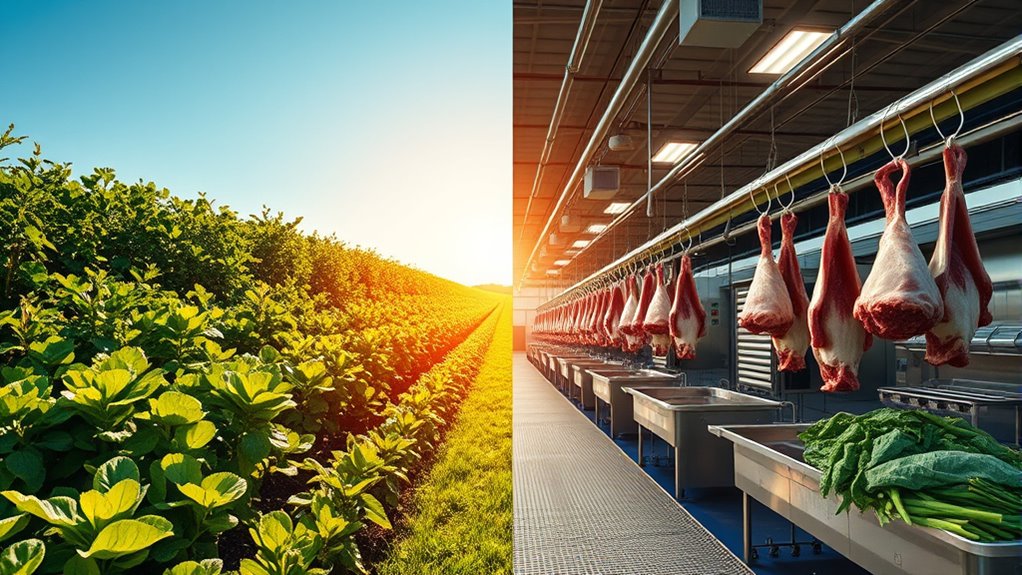
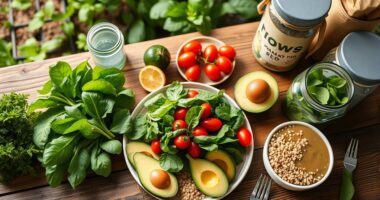
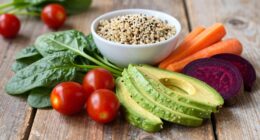
When you choose what to put on your plate, you’re also impacting the environment. Every decision about what to eat influences the carbon footprint associated with your food. Plant-based diets generally have a lower environmental impact because they rely on foods that require less energy, water, and land to produce. This shift toward plant-based eating promotes sustainable farming practices, which aim to minimize environmental damage while producing nutritious foods. By opting for vegetables, grains, fruits, and legumes, you’re supporting agricultural methods that are less resource-intensive and more focused on conserving natural ecosystems. These practices often involve crop rotation, reduced use of chemical inputs, and soil preservation techniques, all of which contribute to a more sustainable approach to farming.
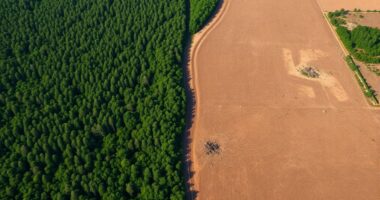
Your dietary impacts extend beyond just the environmental footprint; they also influence the sustainability of the entire food system. Animal agriculture, especially for beef and dairy, tends to produce considerably higher greenhouse gas emissions compared to plant-based foods. Livestock farming requires large amounts of feed, water, and land, often leading to deforestation and habitat loss. When you choose plant-based options, you’re helping reduce these pressures. Additionally, plant foods generally have a shorter supply chain, meaning they often travel fewer miles from farm to table, further cutting down on transportation-related emissions. This makes your food choices more eco-friendly overall.
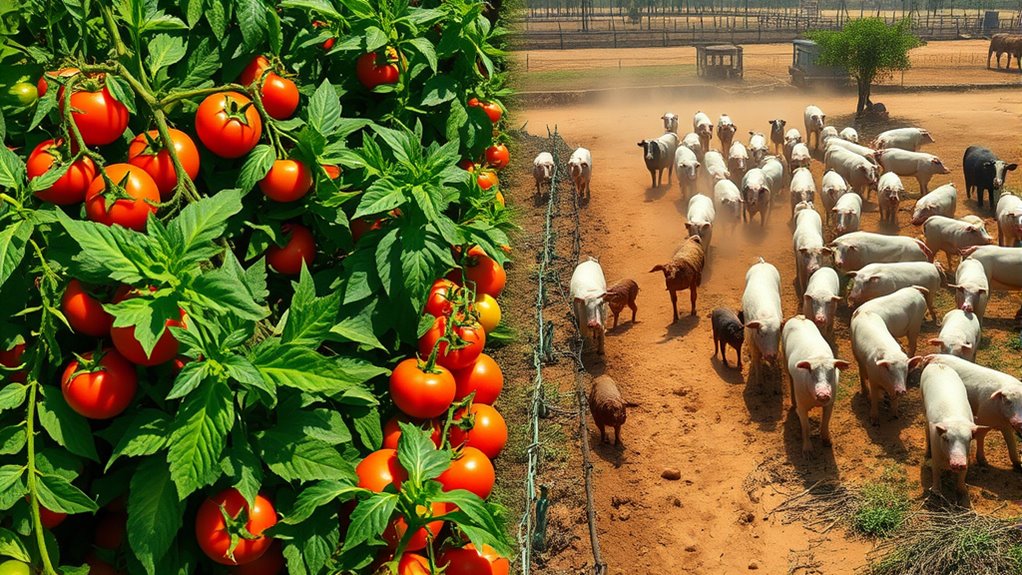
The contrast between plant-based and animal-based foods highlights how dietary impacts can shape environmental outcomes. Eating more plant-centered meals supports sustainable farming techniques that aim to balance human nutrition with ecological preservation. Reducing meat consumption, especially red meat, not only cuts your personal carbon footprint but also encourages a shift in agricultural priorities toward more sustainable practices. It’s a way to lessen reliance on intensive animal farming, which is a major contributor to greenhouse gases like methane and nitrous oxide—gases that trap heat in the atmosphere and accelerate climate change.
In essence, your food choices are influential. They influence farming practices, resource use, and greenhouse gas emissions. By choosing plant-based foods, you’re supporting a shift toward sustainable farming that benefits both the environment and future generations. Your decision can set an example and motivate others to consider the broader impacts of their diets. Making conscious choices about what to eat doesn’t just improve your health; it also helps build a more sustainable food system that aligns with environmental conservation and climate goals.

100 Piece (50 Pack) Meal Prep Containers with Lids, 28 oz Cornstarch Food Storage Containers Plant-based Lunch Box for Salad,BPA Free Plastic Take Out Containers Microwave and Freezer Safe
✅ Corn Starch-Based Plant Containers & Lids: Set includes 50 containers and 50 matching lids. Odor-Free Lunch Box!…
As an affiliate, we earn on qualifying purchases.
As an affiliate, we earn on qualifying purchases.
Frequently Asked Questions
How Do Transportation Methods Affect the Carbon Footprint of These Foods?
Transportation methods markedly impact the carbon footprint of foods. When you choose local delivery, it reduces emissions by cutting down on freight transportation distances. Large-scale freight transportation, like trucks or ships, releases more greenhouse gases, especially for animal-based foods that require longer supply chains. By prioritizing local options and efficient freight methods, you help lower the overall carbon footprint of your food choices and support a more sustainable system.
What Role Do Farming Practices Play in Emissions Differences?
You can’t judge a book by its cover, and farming practices reveal much about emissions. Better soil management reduces tillage and boosts carbon storage, while efficient fertilizer use cuts nitrous oxide emissions. When you adopt sustainable practices, you help lower the carbon footprint of both plant-based and animal-based foods. Your choices in farming methods make a real difference, turning the tide toward greener, more responsible food production.
Are Processed Plant-Based Foods More Eco-Friendly Than Fresh Ones?
Processed plant-based foods can be more eco-friendly than fresh ones because they often require less land and water, reducing their overall carbon footprint. However, processing energy can increase emissions and affect nutritional quality. You should weigh these factors; if the processing preserves nutrients well and uses efficient energy, processed options might still be a greener choice. Always consider both environmental impact and nutritional value when choosing foods.
How Does Water Usage Compare Between Plant-Based and Animal-Based Foods?
You’ll find plant-based foods use considerably less water—up to 200 times less per calorie—compared to animal-based foods. This showcases their superior water efficiency, making them a smarter choice for resource conservation. By choosing plants, you help reduce water consumption and support sustainable practices. Switching to plant-based options can make a meaningful difference in conserving essential water resources and lowering your environmental impact.
What Are the Long-Term Environmental Impacts of Adopting Plant-Based Diets?
Switching to a plant-based diet supports sustainable agriculture by reducing land and water use, helping combat deforestation and climate change. It promotes better dietary health, lowering your risk of chronic diseases. Long-term, this shift can decrease greenhouse gas emissions and preserve biodiversity. By choosing plant-based foods, you contribute to a healthier planet and a more sustainable future, making a positive environmental impact for generations to come.

Brieftons 5-Blade Vegetable Spiralizer: Best Zucchini Spiral Slicer & Veggie Noodle Maker, Japanese Steel Blades, Strong Suction Cup, Blade Caddy, 4 Recipe eBooks | Low Carb, Vegan, Paleo, Gluten-Free
MAKE ZUCCHINI NOODLES & VEGGIE PASTA IN UNDER 2 MINUTES — Turn zucchini, carrots, sweet potatoes, beets, cucumbers,…
As an affiliate, we earn on qualifying purchases.
As an affiliate, we earn on qualifying purchases.
Conclusion
So, steer toward sustainable, plant-based choices to considerably shrink your carbon footprint. By choosing chickpeas over chicken or lentils over lamb, you’re making a mindful move for Mother Earth. Small steps in selecting plant-based products can substantially suppress your environmental impact. Remember, your mindful meal decisions matter — making a meaningful change begins with manageable, motivated modifications. Switch, sip, and savor a sustainable, supportive, and simple shift for a healthier planet.

ComSaf Airtight Glass Jars with Lids 0.6 Gallon Set of 3, Food Storage Canister Square-Storage Container with Clear Preserving Seal Wire Clip Fastening for Kitchen Canning Flour, Cereal, Pasta, Bean
Airtight Mason Jars: Glass jars with airtight lid is made of food-graded glass; Each kitchen canisters for countertop…
As an affiliate, we earn on qualifying purchases.
As an affiliate, we earn on qualifying purchases.
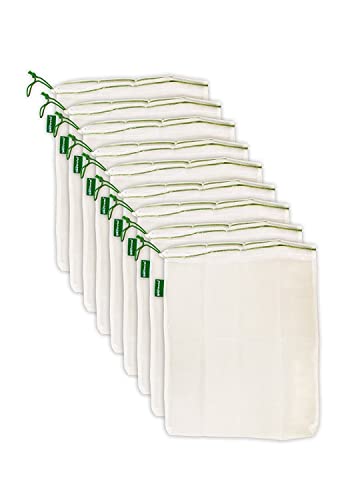
Earthwise Reusable Mesh Produce Bags – Washable Set of 9 Premium Bags, TRANSPARENT Lightweight, Strong SEE-THROUGH Mesh for shopping, transporting and storing fruits and veggies.
SUPER VALUE – You will receive a total of 9 Mesh Produce Bags! SIZE: Each Bag Measures 11"…
As an affiliate, we earn on qualifying purchases.
As an affiliate, we earn on qualifying purchases.