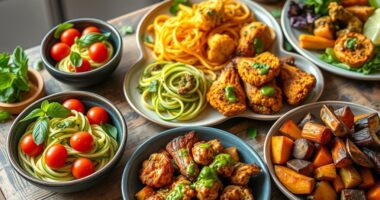
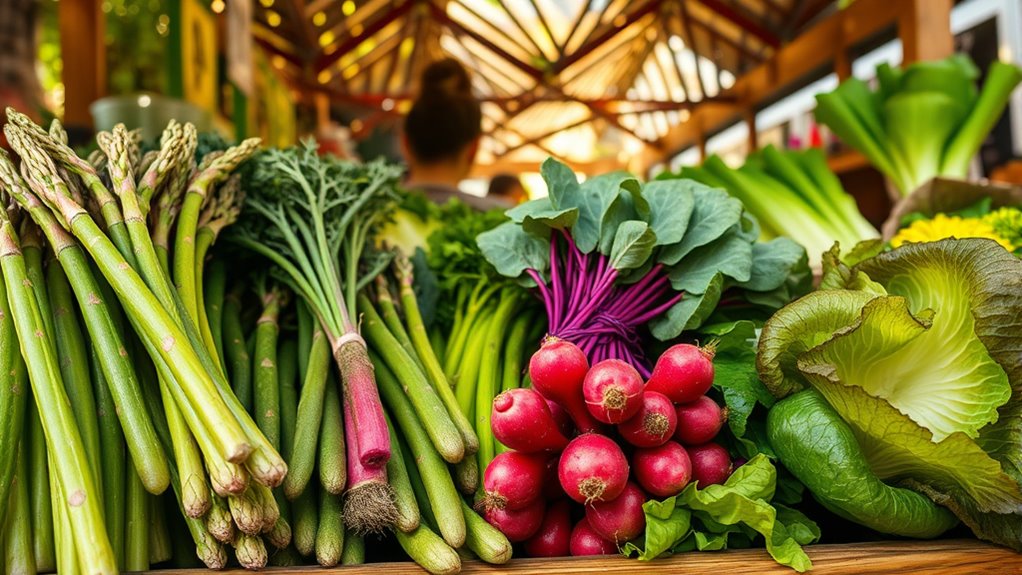
Eating seasonal spring vegetables like asparagus, peas, radishes, and spinach can slash your grocery bills by up to 25%. These fresh, peak-season produce options are more affordable because they require less transportation and energy to grow. Plus, they’re packed with nutrients and flavor, making your meals healthier and tastier. Focusing on local, seasonal foods supports sustainable farming and strengthens your community. Keep exploring to discover even more ways to save and eat well this spring.
Key Takeaways
- Buying spring vegetables like asparagus, peas, radishes, and spinach at peak season reduces costs by up to 25%.
- Seasonal produce is cheaper due to lower transportation and energy costs associated with local farming.
- Shopping at local markets ensures direct farm-to-consumer sales, cutting middlemen costs.
- Fresh, in-season vegetables maximize flavor and nutrients, reducing the need for costly supplements or processed foods.
- Supporting local, sustainable farms promotes community economy and environmentally friendly practices, further lowering overall grocery expenses.
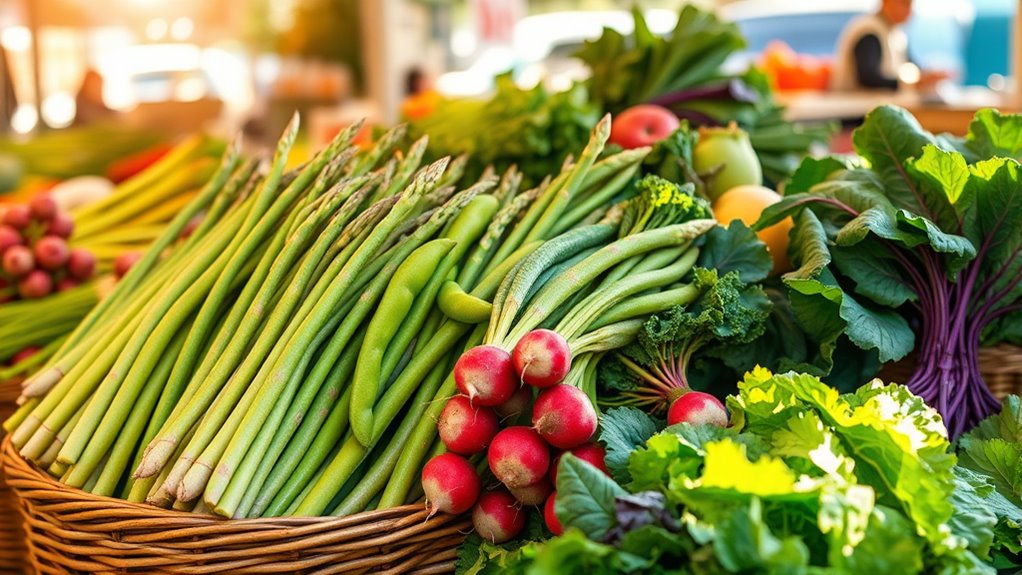
Eating with the seasons isn’t just about enjoying fresh flavors; it also benefits your health and the environment. When you choose to consume spring vegetables that are in season, you’re supporting sustainable farming practices that prioritize soil health, water conservation, and reduced chemical use. These practices help lower your carbon footprint because they often involve less transportation and energy consumption compared to out-of-season produce shipped from distant locations. Visiting local markets during spring is your best way to access these seasonal picks. Not only do local markets offer fresher produce, but they also foster stronger connections with farmers who grow their crops using sustainable methods. By shopping at these markets, you’re actively supporting community-based agriculture, which tends to be more environmentally friendly and transparent about how their food is produced. Supporting local food systems is another way to ensure the sustainability of your produce choices.
Eating seasonal produce supports sustainable farming, reduces your carbon footprint, and strengthens community connections.
Spring vegetables like asparagus, peas, radishes, and spinach are abundant and affordable during their peak. Because they’re in season, they are more plentiful, which means they cost less than out-of-season options that require long-distance transportation or energy-intensive greenhouse growing. When you buy directly from local vendors, you cut out the middleman, often leading to even greater savings—sometimes slashing grocery bills by up to 25%. Plus, the freshness of spring produce means you get all the nutrients and flavors at their peak, making your meals more delicious and nutritious without the added expense of supplements or supplements.
Eating seasonal also encourages you to be more creative in the kitchen. You’ll find yourself experimenting with simple, wholesome recipes that highlight the natural flavors of spring vegetables. This not only improves your diet but also helps you reduce reliance on processed foods, which tend to be more expensive and less healthy. As you embrace seasonal eating, you’ll notice how your grocery bills decrease because you’re purchasing what’s locally available and affordable. Over time, this habit becomes second nature, and you’ll become more aware of how seasonality influences food prices and quality.
Moreover, supporting sustainable farming and local markets aligns with a conscious lifestyle. It fosters a sense of community and promotes eco-friendly practices that preserve the environment for future generations. When you choose seasonal produce, you’re making a statement that you value fresh, ethically grown food—one that benefits your wallet, your health, and the planet. So, this spring, head to your local market, pick up those fresh vegetables, and enjoy the combined benefits of better taste, lower costs, and a healthier planet.

Spring Chef Premium Swivel Vegetable Peeler, Soft Grip Handle and Ultra Sharp Stainless Steel Blades – Perfect Kitchen Peeler For Veggie, Fruit, Potato, Carrot, Apple – Black
Smooth, Effortless Peeling – Dual Stainless Steel blades stay ultra sharp and swivel to glide along fruits and…
As an affiliate, we earn on qualifying purchases.
As an affiliate, we earn on qualifying purchases.
Frequently Asked Questions
How Do Seasonal Prices Vary Across Different Regions?
Regional price fluctuations happen because climate impact varies across areas, affecting seasonal produce. In warmer regions, you might find spring vegetables cheaper and more abundant, while colder areas see higher prices due to limited growing seasons. You can capitalize on these differences by shopping locally or adjusting your purchase timing. Being aware of how climate impacts regional markets helps you save money and enjoy fresh, seasonal produce all year round.
What Are Some Beginner Tips for Seasonal Shopping?
Imagine your shopping cart as a well-tuned orchestra, where seasonal ingredients play the sweet melodies. To master seasonal shopping, visit farmers markets early for fresh finds and better deals. Keep a list of seasonal recipes to inspire your choices. Focus on vibrant, local produce, and don’t shy away from asking vendors for tips. These simple steps turn shopping into a delightful dance, saving you money and enriching your meals.
Can Seasonal Eating Improve Meal Variety and Flavor?
Seasonal eating definitely boosts your meal variety and flavor by introducing fresh, local ingredients that you might not usually try. You get to experience the local flavor at its peak, which keeps your meals exciting and vibrant. Plus, it sparks your culinary creativity, inspiring you to experiment with new recipes. By focusing on seasonal produce, you’ll enjoy richer flavors and more diverse dishes, making mealtime both enjoyable and adventurous.
How Do I Preserve Spring Vegetables for Later Use?
You can preserve spring vegetables for later use by using freezing techniques or pickling methods. For freezing, blanch the veggies briefly, then pack them in airtight containers and freeze. For pickling, submerge your vegetables in a vinegar-based brine and store in sterilized jars. Both methods extend freshness, so you can enjoy spring flavors year-round while saving money and reducing waste.
Are There Any Common Misconceptions About Seasonal Produce?
Did you know that many believe seasonal produce is always less expensive, but that’s a misconception? People often assume local food is pricier, yet farm-to-table options can actually save you money and ensure freshness. A common myth is that seasonal means limited variety, but spring offers a vibrant selection of veggies. Embracing local food not only supports farms but also helps you enjoy peak flavor and nutrition year-round.

Ahyuan Reusable Cotton Mesh Grocery Bags Cotton String Bag Net Shopping Mesh Bags Pack of 3 (Beige)
Light Weight & Foldable: These reusable net tote bags can be easily stuffed in your pocket, purse, or…
As an affiliate, we earn on qualifying purchases.
As an affiliate, we earn on qualifying purchases.
Conclusion
By embracing spring’s vibrant produce, you gently steer your grocery bills toward calmer waters while delighting your taste buds. Seasonal eating isn’t just about saving; it’s about inviting freshness into your life without the hefty price tag. So, let these colorful vegetables be your secret ingredient to a more flavorful, budget-friendly season. After all, sometimes the best treasures are found in nature’s quietest, sweetest offerings—just waiting for you to discover them.

OXO Good Grips Stainless Steel Steamer With Extendable Handle
Removable handle extends and locks into position for filling and transporting and retracts to accommodate pot lids while…
As an affiliate, we earn on qualifying purchases.
As an affiliate, we earn on qualifying purchases.
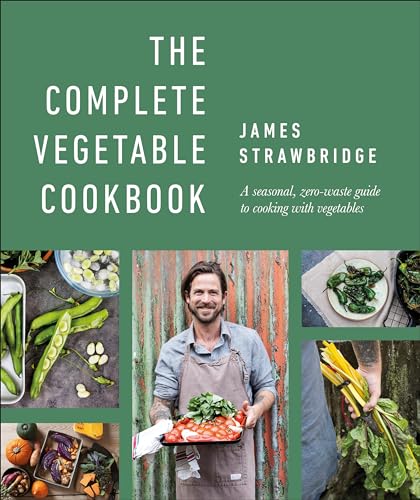
The Complete Vegetable Cookbook: A seasonal, zero-waste guide to cooking with vegetables
As an affiliate, we earn on qualifying purchases.
As an affiliate, we earn on qualifying purchases.