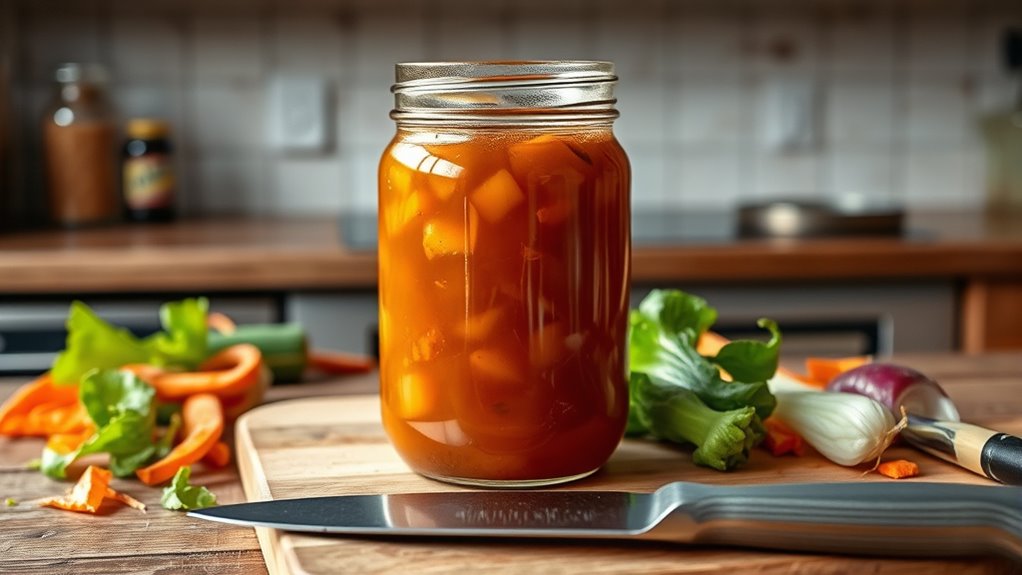

Turning kitchen scraps into upcycled veggie stock is a smart way to reduce waste and boost flavor in your cooking. Collect onion peels, carrot tops, celery ends, and mushroom stems, then simmer them in water for about an hour. Strain the solids, and you’ll have a fragrant, homemade broth perfect for soups, rice, or stews. This eco-friendly approach saves money and minimizes waste—if you stay with us, you’ll learn all the tips to make it your kitchen staple.
Key Takeaways
- Collect vegetable scraps like onion peels, carrot tops, and celery ends, then freeze until ready to make stock.
- Simmer scraps in water for about an hour, adding herbs or seasonings for enhanced flavor.
- Strain solids to produce a fragrant, homemade vegetable stock that reduces waste and saves money.
- Use the stock in soups, stews, grains, or risottos to boost flavor and promote sustainable cooking.
- Customize with herbs or spices and build a scrap collection over time for continuous, eco-friendly broth making.

Instead of tossing vegetable scraps into the compost or trash, you can transform them into flavorful upcycled veggie stock. This simple shift is a powerful step toward sustainable cooking and zero waste recipes. By using scraps like onion peels, carrot tops, celery ends, and mushroom stems, you turn what would usually be waste into a rich, homemade broth. Not only does this reduce your kitchen waste, but it also enhances your cooking with a depth of flavor that store-bought stocks often lack. Making upcycled veggie stock is easy, cost-effective, and eco-friendly, aligning perfectly with a zero waste lifestyle.
To start, gather scraps from your daily cooking—onion skins, garlic peels, herb stems, and vegetable trimmings. Keep a dedicated stash in the freezer, so you’re always ready to make stock without extra trips to the store. When you have enough, roughly chop the scraps and add them to a large pot. Cover them with water, add a splash of salt or herbs if you like, and bring everything to a boil. Then, lower the heat and let it simmer for about an hour, allowing the flavors to meld and intensify. Strain out the solids, and what you’re left with is a fragrant, nutritious broth ready to use in soups, stews, risottos, or grains.
This approach promotes sustainable cooking because it minimizes food waste and maximizes every ingredient. Using kitchen scraps to make stock is a zero waste recipe that makes the most of what you already have. It’s also a cost-effective way to reduce reliance on store-bought options, which often contain preservatives and additives. Using kitchen scraps to create homemade broth not only saves money but also reduces your environmental footprint. It’s a practice that not only saves money but also reduces your environmental footprint. Plus, homemade veggie stock contains fewer preservatives and additives compared to store-bought alternatives, making it a healthier choice for you and your family. You can customize the flavor profile by adding herbs, peppercorns, or a bay leaf, tailoring it to suit your dish.
Over time, you’ll build a collection of scraps, making the process even more efficient. The more you practice, the more you’ll appreciate the versatility and flavor that upcycled veggie stock brings to your cooking. It’s an easy way to incorporate sustainability into your daily routine, turning kitchen waste into something valuable. So next time you prep vegetables, remember that those peels and ends aren’t trash—they’re a resource for delicious, eco-conscious cooking. Embracing this habit helps reduce waste and makes your kitchen more sustainable, one batch of upcycled veggie stock at a time.

Eselect 20" Seafood Boil & Steamer Bags – Pack of 100, Seafood Boiling Bags for Crab, Crawfish, Shellfish – Low Country Boil, Clambake, Crab Boil, Soup Stock Socks, Vegetable Storage Bags
Proudly Made in the USA: Enjoy a seafood feast at home with this 100-pack 20" seafood boil bags,…
As an affiliate, we earn on qualifying purchases.
As an affiliate, we earn on qualifying purchases.
Frequently Asked Questions
How Long Can I Store Upcycled Veggie Stock Safely?
You can store upcycled veggie stock safely for up to 4 to 5 days in the refrigerator. To prevent spoilage, make sure you keep it in an airtight container and cool it quickly after cooking. For longer storage, freeze the stock in portions, which can last up to 3 months. Proper storage duration and spoilage prevention are key to enjoying your homemade veggie stock without risks.
Can I Use Fruit Scraps for Veggie Stock?
Yes, you can use fruit scraps in your veggie stock to add flavor enhancement. Incorporating peels, cores, or bits of citrus, apple, or berry scraps infuses your broth with a subtle sweetness and depth. Just be sure to remove any seeds or overly strong-tasting peels to avoid bitterness. Using fruit scraps is a great way to maximize kitchen scraps, making your veggie stock more flavorful and eco-friendly.
Is There a Difference in Flavor Between Homemade and Store-Bought Stock?
Think of homemade stock as a warm, inviting fire that fills your kitchen with rich, complex aroma, while store-bought stock is like a quick, flickering flame. You’ll notice a deeper flavor comparison in homemade versions, often more vibrant and nuanced. Nutritional differences also matter—homemade stocks usually contain more nutrients and fewer preservatives. So, your homemade stock truly offers a richer, more wholesome experience, elevating every dish you create.
How Do I Prevent Mold Growth in Stored Scraps?
To prevent mold growth on stored kitchen scraps, you should focus on mold prevention and follow proper storage tips. Keep scraps in an airtight container and refrigerate or freeze them promptly. Make sure to remove excess moisture by patting scraps dry before storage. Regularly check for signs of mold, and discard any spoiled scraps immediately. Proper storage and moisture control are key to keeping your scraps fresh and mold-free.
Can I Reuse the Same Veggie Scraps Multiple Times?
You can reuse the same veggie scraps multiple times, but beware—a delicate balance exists. As you reintroduce scraps, the flavor retention diminishes, leaving you with a weaker, less vibrant stock. Each reuse pulls more from your ingredients, gradually draining their essence. If you notice the flavor fading, it’s time to freshen your scraps or start anew, ensuring every batch captures that rich, savory depth you crave.
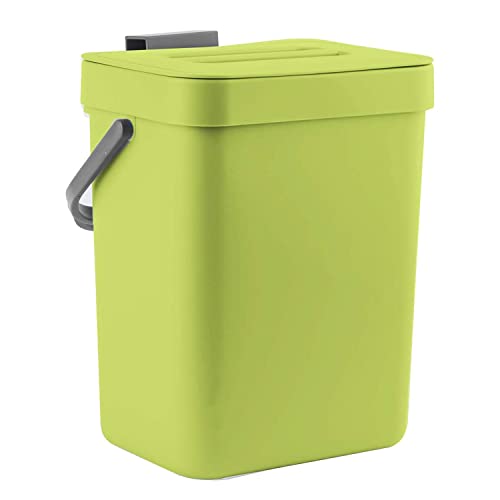
LALASTAR Food Waste Basket Bin for Kitchen, Small Countertop Compost Bin with Lid, Odor-Free Food Scrap Container, Wall Mounted Garbage Can, 3L/0.8 Gal, Green
Hangable & Mountable: The small trash can with lid can be easily hung on the doors of kitchen…
As an affiliate, we earn on qualifying purchases.
As an affiliate, we earn on qualifying purchases.
Conclusion
Next time you toss vegetable scraps, remember they might just be your secret ingredient. It’s funny how a simple habit—saving those ends and peels—can turn into flavorful veggie stock. That forgotten celery root or onion skin could unexpectedly boost your recipes. So, keep your kitchen scraps handy; you never know when a little upcycling could surprise you with delicious, homemade stock. Turns out, good things really do come from the most unexpected places.

GreenLife 6QT Nonstick Stockpot with Straining Lid, Soft Grip, PFAS-Free Ceramic, Pour Spout, Multipurpose Cooking Pot, Sauces & Soups, Milk Pan, Stay-Cool Handles, Dishwasher & Oven Safe, Turquoise
HEALTHY CERAMIC NONSTICK: Our healthy and easy-to-clean ceramic nonstick coating is derived from sand and delivers effortless release…
As an affiliate, we earn on qualifying purchases.
As an affiliate, we earn on qualifying purchases.

HIC Kitchen Herb Infuser Pod, 18/8 Stainless Steel Mesh, For Herbs, Spices, and Loose Teas
HIC Kitchen’s Mesh Herb Infuser Pod keeps herbs together to create flavorful infusions without any unwanted bits left…
As an affiliate, we earn on qualifying purchases.
As an affiliate, we earn on qualifying purchases.