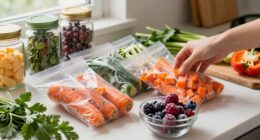


In a zero-waste vegan kitchen, you can compost organic scraps like peels and stems to enrich your soil and reduce landfill waste. Get creative with leftovers by transforming them into new meals, snacks, or broths, minimizing food waste. Reuse containers and switch to sustainable packaging to cut down on waste and support a circular economy. If you explore further, you’ll discover simple, effective ways to keep your kitchen eco-friendly and resourceful.
Key Takeaways
- Set up a dedicated compost bin for vegetable peels, stems, and overripe fruits to create nutrient-rich soil.
- Use vegetable scraps to make homemade broths, reducing waste and enhancing flavor.
- Repurpose stale bread into croutons, bread pudding, or breadcrumbs to extend its usability.
- Incorporate leftovers into new vegan recipes like smoothies, veggie patties, or stir-fries to minimize food waste.
- Choose reusable containers and sustainable packaging to store leftovers and reduce single-use waste in the kitchen.
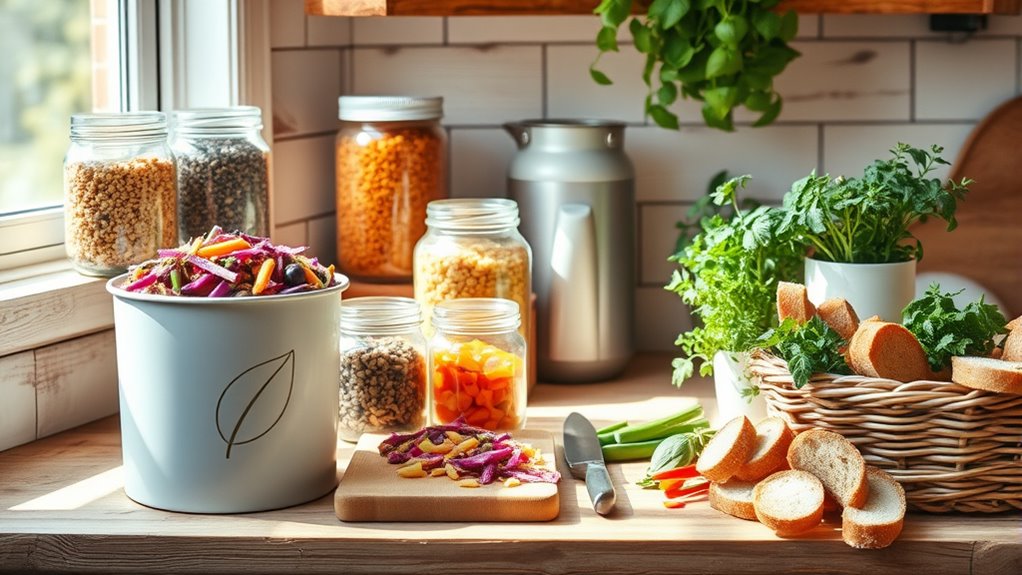
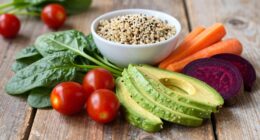
Creating a zero-waste vegan kitchen is a powerful way to reduce your environmental impact while enjoying plant-based meals. One of the key steps is minimizing packaging waste by choosing sustainable packaging options whenever possible. Opt for reusable containers, cloth bags, and bulk bins to buy ingredients, which drastically cuts down on single-use plastics and cardboard. This not only helps the planet but also encourages you to become more mindful of your consumption habits. When shopping for plant-based proteins like lentils, chickpeas, or tofu, look for suppliers that prioritize eco-friendly packaging or offer bulk options. This way, you can refill your jars and reduce packaging waste, aligning your kitchen practices with your ethical values.
Reduce packaging waste by choosing reusable containers, bulk options, and eco-friendly packaging for a more sustainable vegan kitchen.
Incorporating sustainable packaging into your routine supports a circular economy. Instead of relying on plastic wrap or foil, consider reusable beeswax wraps or silicone covers to store leftovers and ingredients. These alternatives are durable, washable, and reduce reliance on disposable options. As you build your pantry, focus on buying in bulk, which not only minimizes waste but also tends to be more economical. Keep your bulk bins organized in glass jars or stainless-steel containers, which can be reused indefinitely. This setup makes it easier to access ingredients and keeps your kitchen clutter-free. When it’s time to dispose of packaging, always opt for recycling or composting if possible, ensuring that waste is diverted from landfills. Incorporating waste reduction strategies further enhances your commitment to sustainability.
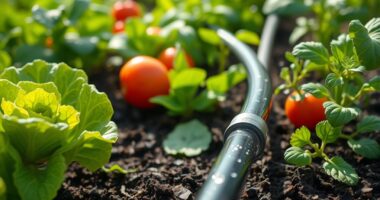
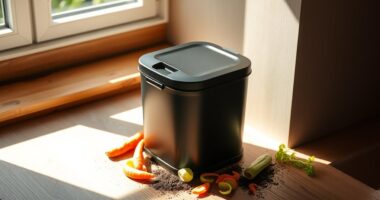
A creative way to reduce leftovers and prevent food waste is to repurpose scraps into new dishes or compost. Vegetable peels, stems, and overripe fruits can be turned into flavorful broths or added to compost bins, nourishing your garden instead of ending up in the trash. Composting is essential in a zero-waste kitchen, as it transforms organic waste into nutrient-rich soil, closing the loop on your food cycle. To make this easier, set up a compost bin in your kitchen or yard, and educate yourself on what can and cannot be composted. This not only reduces waste but also enriches your garden, making it a sustainable cycle from start to finish.
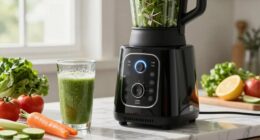
Leftovers are another opportunity for creativity. Instead of tossing them, get inventive with new recipes or snacks. For example, leftover cooked veggies can be blended into smoothies or turned into veggie patties. Stale bread becomes croutons or bread pudding. By thinking creatively, you extend the life of your food and cut down on waste. Combining leftovers into new meals saves money and reduces the need to buy additional ingredients. Plus, it’s satisfying to see how versatile plant-based ingredients can be when repurposed thoughtfully. Ultimately, this approach cultivates a mindful kitchen that respects resources and minimizes waste, making your vegan lifestyle even more sustainable.

Reusable Silicone Stretch Lids for Food Storage in Fridge – Elastic Heat-Resistant Bowl Covers, Cups, Cans, Jars – Universal Food Grade Lid for Round and Rectangle Containers – Dishwasher Safe -7 Pack
Effortless Seal: Our adaptable Silicone Lids fit various containers, simplifying food storage and eliminating the search for matching…
As an affiliate, we earn on qualifying purchases.
As an affiliate, we earn on qualifying purchases.
Frequently Asked Questions
How Can I Start Composting in an Apartment?
You can start indoor composting in your apartment by setting up a small, odor-proof bin with a lid. Use it to collect your kitchen waste, like vegetable scraps and coffee grounds. Turn it regularly to aerate, and consider adding dry materials like paper or sawdust. This way, you turn apartment waste into compost without mess, making eco-friendly choices easy and convenient right in your home.
What Are Some Creative Ways to Reuse Leftover Vegetable Scraps?
You can reuse leftover vegetable scraps by sprouting seeds from peels and ends, turning them into new plants. Use tougher scraps like carrot tops or onion skins to make flavorful broth, reducing waste. Additionally, blend softer leftovers into smoothies or pestos, and compost the rest to keep your kitchen zero-waste. This approach saves money, reduces waste, and adds fresh flavors to your meals.
Is Composting Suitable for All Types of Vegan Food Waste?
Composting isn’t suitable for all types of vegan food waste, especially those with high oil, salt, or processed ingredients, which can create composting limitations. You should avoid composting dairy, meat, or oily scraps. Instead, focus on plant-based fertilizers like vegetable peels and coffee grounds. By understanding these limitations, you can guarantee your compost stays healthy and effective, turning your leftovers into rich, nourishing soil for your garden.
How Long Does It Take for Kitchen Compost to Decompose?
Did you know that kitchen compost typically takes 3 to 6 months to fully decompose? The composting timeline varies based on factors like temperature, moisture, and waste type. During the decomposition process, microbes break down organic material, turning it into rich soil. To speed this up, chop waste into smaller pieces and turn the compost regularly. Patience and proper management will reward you with nutrient-dense compost for your garden.
Can Composting Attract Pests, and How Can I Prevent It?
Yes, composting can attract pests if you don’t practice pest prevention. To avoid this, regularly maintain your compost bin by turning it to aerate, keeping it covered, and avoiding meat or oily scraps. Proper compost bin maintenance helps control odors and discourages pests like flies or rodents. Also, add browns like dry leaves or paper to balance greens and reduce attraction, ensuring your compost remains pest-free.

Utopia Kitchen Indoor Compost Bin Kitchen, Odorless Composting with Charcoal Filter, 1.3 Gallon Stainless Steel Large Composter for Countertop & Under Sink, Easy Cleaning, One Extra Filter – (Silver)
With this compost bin, you can let the scraps build up during the week without worrying about bad…
As an affiliate, we earn on qualifying purchases.
As an affiliate, we earn on qualifying purchases.
Conclusion
By embracing a zero-waste vegan kitchen, you turn your cooking into a symphony of sustainability, where every scrap sings a second chance. Composting and creative leftovers become your tools for nourishing both your body and the planet, transforming waste into wonder. With each mindful choice, you’re planting seeds of change, making your kitchen a vibrant garden of eco-friendly habits. Together, you’re not just cooking—you’re cultivating a greener, more compassionate world.
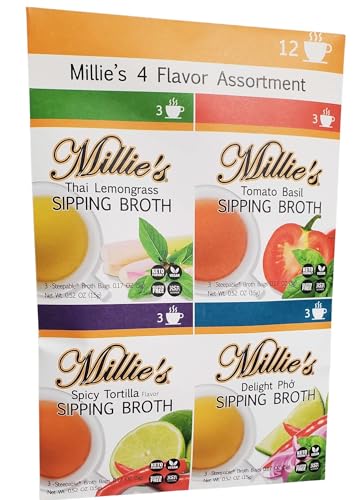
MILLIE'S SIPPING BROTH Steepable Vegetable Broth with Savory Seasonings for Snack Urges | Vegan, Keto, Gluten Free, Intermittent Fasting, and natural | (4 Pack Assortment – 12 Broth Bags Total)
4 Incredible flavors you’ll crave with comfort that fits in a mug
As an affiliate, we earn on qualifying purchases.
As an affiliate, we earn on qualifying purchases.

Jiva Organics Organic Red Lentils Split 4 LB LARGE Bag – Masoor Dal – Non-GMO, Vegan, Non-Irradiated
❤️️ You'll love our Certified USDA Organic Pure Split Red Lentils Dry (also known as Masoor Dal). Here's…
As an affiliate, we earn on qualifying purchases.
As an affiliate, we earn on qualifying purchases.