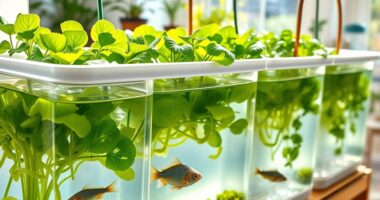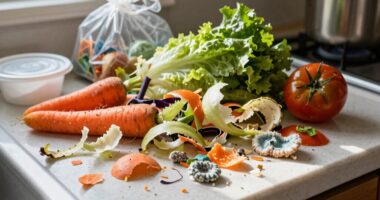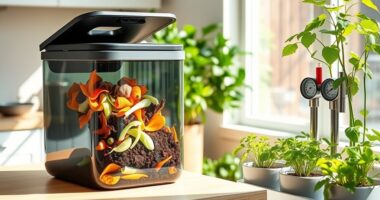


In a circular economy, food waste like peels and pulp is collected and processed into sugars through fermentation. You then use these sugars to produce bioplastics such as PLA, which are biodegradable and eco-friendly. This process reduces landfill waste, cuts reliance on fossil fuels, and promotes resource reuse. By turning organic waste into sustainable materials, industries can minimize environmental impact. Keep exploring to discover how this innovative approach is shaping a greener future.
Key Takeaways
- Food waste is collected and processed into sugars through fermentation, serving as renewable raw materials.
- Sugars derived from organic waste are transformed into biodegradable monomers like lactic acid.
- These monomers are polymerized to produce bioplastics such as PLA, suitable for eco-friendly applications.
- The process promotes circular economy principles by reusing waste and reducing reliance on fossil fuels.
- Bioplastics created from food waste help decrease plastic pollution and support sustainable manufacturing.

As the world seeks sustainable solutions, turning food waste into bioplastics exemplifies how the circular economy can reduce waste and create valuable materials. This innovative process embodies sustainable manufacturing by transforming what would otherwise be discarded into useful, eco-friendly products. Instead of letting food scraps rot in landfills or be burned, waste valorization allows you to extract maximum value from this organic material, promoting resource efficiency and reducing environmental impact.
The process begins with collecting food waste, which can include leftovers, peels, pulp, and other organic residues. These materials are rich in sugars and cellulose, making them ideal feedstocks for bioplastic production. Through enzymatic or microbial fermentation, you break down complex carbohydrates into simpler compounds like glucose. This step is *essential* because it converts raw waste into a form that can be used as a base for bioplastic synthesis. By doing so, you’re not only diverting waste from landfills but also creating a raw material that supports sustainable manufacturing practices.
Once the sugars are obtained, they serve as the foundation for producing bioplastics such as polylactic acid (PLA) or other biodegradable polymers. Using fermentation technology, you convert these sugars into monomers that are then polymerized into bioplastics. This method is energy-efficient and relies on renewable feedstocks, aligning with the principles of the circular economy. The resulting bioplastics can be used in packaging, agriculture, and various other industries, providing a biodegradable alternative to traditional plastics made from fossil fuels.
Turning food waste into bioplastics also helps close the loop in product life cycles. Instead of products becoming waste after use, they can be composted or broken down into bioplastics again, fostering a more sustainable material cycle. This reduces reliance on non-renewable resources and minimizes plastic pollution. By embracing this approach, you support a system where resources are reused and recycled continuously, embodying the core principles of the circular economy. Additionally, advancements in projector technology demonstrate how innovation can promote sustainable practices across industries, highlighting the importance of integrating eco-friendly solutions into various sectors.

Biobased Products from Food Sector Waste: Bioplastics, Biocomposites, and Biocascading
As an affiliate, we earn on qualifying purchases.
As an affiliate, we earn on qualifying purchases.
Frequently Asked Questions
What Are the Environmental Benefits of Bioplastics Compared to Traditional Plastics?
Bioplastics offer significant environmental benefits over traditional plastics by enhancing recycling benefits and promoting material sustainability. You help reduce plastic pollution and lower greenhouse gas emissions since bioplastics often originate from renewable resources and biodegrade more efficiently. Using bioplastics supports a circular economy, decreasing reliance on fossil fuels and minimizing waste. This shift helps protect ecosystems and conserves resources, making it a smarter choice for a healthier planet.
How Scalable Is the Process of Converting Food Waste Into Bioplastics?
Did you know that the bioplastics market is expected to grow at a CAGR of over 20% through 2027? When it comes to converting food waste into bioplastics, scalability challenges like limited manufacturing capacity can slow progress. However, advancements in technology and increased investment are improving production processes, making it more feasible to scale up. You can expect ongoing innovations to address these hurdles and expand the process’s reach.
Are Bioplastics Made From Food Waste Biodegradable and Compostable?
You’ll find that bioplastics made from food waste are generally biodegradable and compostable, but it’s essential to verify specific standards. They typically pass biodegradability tests and meet composting standards, meaning they break down naturally without harming the environment. However, not all bioplastics are equal—some require industrial composting facilities to fully decompose. Always verify product certifications to ensure they align with established biodegradability tests and composting standards.
What Types of Food Waste Are Most Suitable for Bioplastic Production?
Imagine you’re a chef with surplus ingredients—fruit peels and vegetable scraps—that can transform into valuable bioplastics. These types of food waste are ideal because they’re rich in sugars and starches, making them perfect for conversion. You’ll find that citrus peels, banana skins, and potato peels work especially well. By repurposing this waste, you help reduce environmental impact and create sustainable materials, just like alchemists turning waste into treasure.
How Does the Cost of Bioplastics From Food Waste Compare to Conventional Plastics?
You’ll find that the cost comparison between bioplastics from food waste and conventional plastics varies. Bioplastics often have higher production expenses initially due to specialized processes and limited economies of scale. However, as technology advances and demand grows, these costs tend to decrease. While conventional plastics remain cheaper today, investing in bioplastics can be more sustainable long-term, especially as environmental regulations tighten and eco-friendly options become more valued.
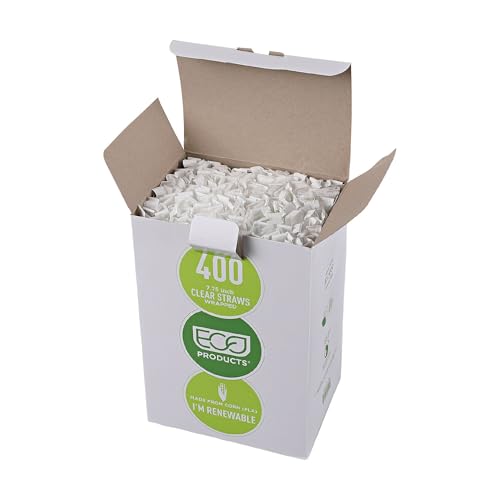
Eco-Products Compostable Paper Wrapped Plastic Straws, 7.75" Long, 5mm Diameter, Box of 400, Clear Disposable Plant Based PLA Plastic, Standard Sized Drinking Straws, ASTM Compliant, BPI-Certified
- Quantity: Box of 400 straws
- Material: Plant-based compostable PLA plastic
- Design: Clear with white paper wrapper
As an affiliate, we earn on qualifying purchases.
As an affiliate, we earn on qualifying purchases.
Conclusion
By transforming food waste into bioplastics, you’re helping turn the cycle of waste into a symbol of renewal. Just as a seed blooms into new life, your actions plant the seeds for a sustainable future. Every piece of discarded food becomes a beacon of hope, illuminating the path toward a circular economy. Embrace this change—because when waste becomes opportunity, you’re nurturing a world that’s resilient, thriving, and beautifully reborn.

Aricsen Disposable 100 Pack 9×6 Inch Takeout Lunch Box Containers with Lids
- Eco-Friendly Material: Made from FSC-certified biodegradable paper
- Heavy-Duty & Versatile: Strong, oil-resistant, waterproof, microwave-safe
- Safe & Sustainable: Free from harmful chemicals, decomposes in 3-6 months
As an affiliate, we earn on qualifying purchases.
As an affiliate, we earn on qualifying purchases.

SUPERBIO 1.6 Gallon Compostable Food Scrap Bags For Counter Top Bin
- Capacity: 1.6 gallons (6L)
- Bag Dimensions: 16.1 x 19.3 inches
- Thickness: 0.63 mil
As an affiliate, we earn on qualifying purchases.
As an affiliate, we earn on qualifying purchases.