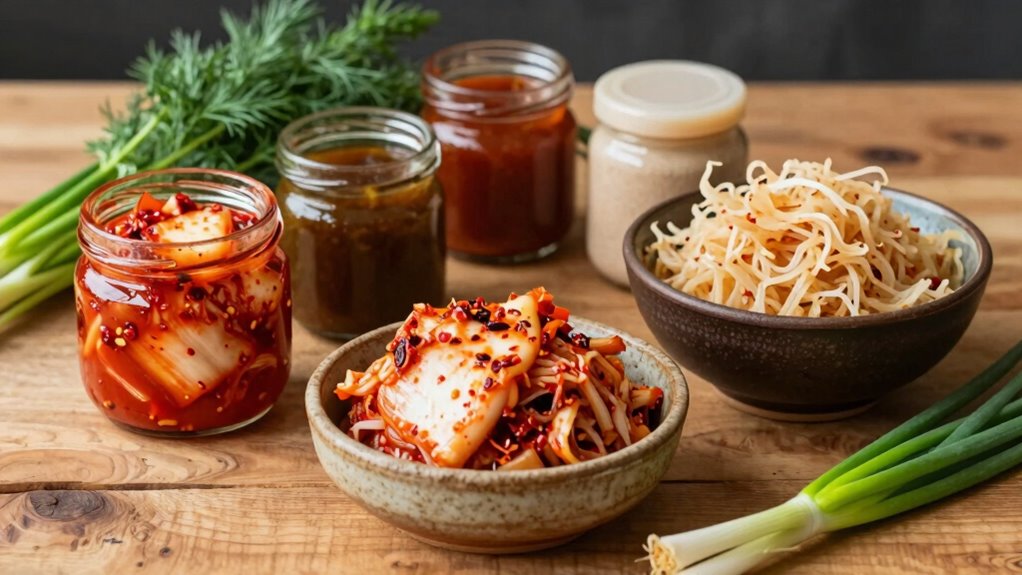

To use fermented foods in your vegan diet without overdoing it, start with small servings of options like sauerkraut, kimchi, or kombucha, and observe how your body reacts. Gradually increase intake if you feel good, balancing them with fiber-rich fruits, vegetables, and grains. Avoid over-fermenting or consuming too much at once to prevent bloating or gas. Following these tips helps you enjoy probiotic benefits safely—there’s more to discover about optimizing your fermented foods approach.

Get health and wellness essentials delivered free — and shop member deals
- Fast, free delivery on millions of items
- Access to Prime Big Deal Days deals on October 6–7
- Prime Video, Amazon Music and more included
Key Takeaways
- Start with small portions of fermented foods and gradually increase to monitor your body’s response.
- Rotate different fermented foods to ensure probiotic diversity and prevent over-reliance on one source.
- Balance fermented food intake with fiber-rich vegetables, fruits, and grains for overall digestive health.
- Pay attention to signs of bloating or discomfort, and adjust consumption accordingly.
- Use proper fermentation techniques and taste-test to avoid over-fermentation and overly sour flavors.
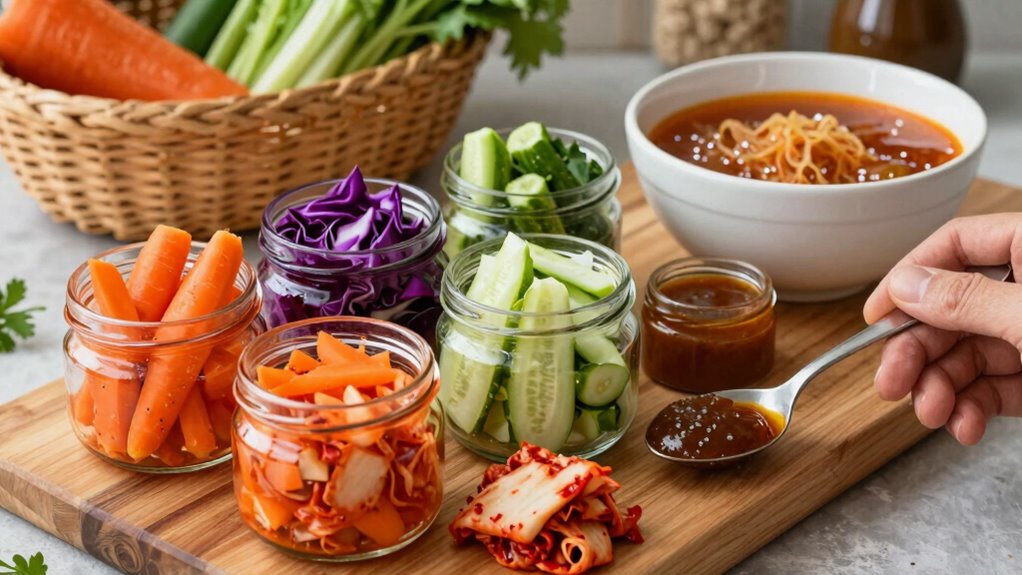
Fermented foods are a nutritious and flavorful way to enhance a vegan diet, offering probiotics that support gut health and boost immunity. Incorporating these foods can be a game-changer, but it’s vital to do so mindfully. When you understand the probiotic benefits and fermentation techniques, you can enjoy the advantages without overdoing it.
Probiotic benefits are at the heart of why fermented foods are valuable. They introduce beneficial bacteria into your digestive system, helping balance gut flora, improve digestion, and strengthen your immune response. But more isn’t always better. Start by adding small portions of foods like sauerkraut, kimchi, or kombucha into your meals. Listen to how your body reacts, and gradually increase intake if you notice positive effects. This way, you avoid discomfort or digestive upset, which can happen if you suddenly flood your gut with too many probiotics.
Start small with fermented foods and gradually increase to support gut health without discomfort.
Fermentation techniques are essential to making delicious and safe vegan fermented foods at home. You can easily ferment vegetables like carrots, cucumbers, or cabbage using simple methods—submerging chopped produce in saltwater brine and allowing it to ferment at room temperature. This process encourages the growth of probiotic bacteria naturally present on the vegetables. The longer you ferment, the more pronounced the flavor and probiotic content, but overdoing it might result in overly sour or less appealing tastes. Keep track of fermentation times, and taste-test your creations to find the sweet spot that balances flavor and probiotic benefits.
When you include fermented foods in your diet, variety is your friend. Rotate different types to ensure you’re exposed to a range of beneficial bacteria and nutrients. Incorporate fermented soy products like tempeh or miso, and explore fermented drinks such as water kefir or kombucha. Each offers unique flavors and benefits, broadening your palate and supporting your gut health. Be cautious not to rely solely on one or two types, as diversity enhances the probiotic spectrum.
Finally, moderation is essential. While fermented foods are a healthful addition, consuming them excessively can lead to bloating, gas, or other digestive issues. Balance your intake with plenty of fiber-rich vegetables, fruits, and whole grains. By understanding fermentation techniques and listening to your body’s responses, you can enjoy the probiotic benefits of fermented foods in a way that complements and enriches your vegan diet without overdoing it.
vegan fermented foods starter kit
As an affiliate, we earn on qualifying purchases.
As an affiliate, we earn on qualifying purchases.
Frequently Asked Questions
Can Fermented Foods Replace All Probiotic Supplements in a Vegan Diet?
Fermented foods can replace many probiotic supplements in your vegan diet, but they might not offer the same probiotic absorption as concentrated supplements. Varieties like sauerkraut, kimchi, and tempeh provide beneficial bacteria, but their probiotic content varies. To optimize gut health, include a diverse range of fermented foods regularly, yet consider supplements if you’re targeting specific strains or higher doses, ensuring you get the full spectrum of probiotic benefits.
Are There Any Risks of Consuming Too Many Fermented Foods?
Yes, consuming too many fermented foods can disrupt your digestive balance. Overdoing it may lead to fermentation overload, causing bloating, gas, or stomach discomfort. To avoid these issues, introduce fermented foods gradually and monitor how your body responds. Balance is key—incorporate a variety of probiotics without exceeding your tolerance, so you enjoy the benefits without risking digestive upset.
How Do I Select the Healthiest Fermented Foods for My Diet?
They say, “You are what you eat,” so choose wisely. To pick the healthiest fermented foods, look for those made with traditional fermentation techniques that maximize nutrient preservation. Opt for unpasteurized, minimally processed options like sauerkraut, kimchi, or plant-based yogurts. Read labels carefully, avoiding additives and preservatives. Fresh, naturally fermented foods guarantee you get the most probiotics and health benefits, keeping your diet vibrant and nourishing.
What Are Some Beginner-Friendly Fermented Foods for Vegans?
You should start with beginner-friendly fermented foods like sauerkraut, kimchi, and vegan yogurt, which are easy to incorporate into your meals. These foods promote probiotic diversity, supporting gut health. Look for products made with simple fermentation methods, such as natural fermentation without added sugars or preservatives. Gradually add these to your diet to enjoy their benefits without overwhelming your system, and experiment with different flavors and textures.
How Long Should I Incorporate Fermented Foods Into My Daily Routine?
Research shows that incorporating fermented foods daily can boost gut health and immunity. You should aim to include them consistently, about 4 to 6 weeks, to experience fermentation benefits. This routine helps maintain dietary balance while reaping probiotics’ advantages. Listen to your body and adjust intake as needed, ensuring fermented foods complement your overall diet without overwhelming your system. Regular, mindful consumption supports long-term health benefits.
As an affiliate, we earn on qualifying purchases.
Conclusion
Think of your vegan journey as tending a lively garden. Fermented foods are the nourishing rain—adding flavor, health, and energy. But just like too much rain can drown delicate roots, overdoing it may upset your balance. Embrace fermented foods gently, like a gentle shower, allowing their benefits to bloom without overwhelm. With mindful care, your plant of health will flourish, thriving in harmony—each sip and bite a step toward vibrant wellness.
As an affiliate, we earn on qualifying purchases.
fermentation jars for vegetables
As an affiliate, we earn on qualifying purchases.
As an affiliate, we earn on qualifying purchases.
Halloween Picks
halloween
As an affiliate, we earn on qualifying purchases.