
Hydroponic gardens are a simple and efficient way for you to grow more greens at home. They use minimal space and require less physical effort than traditional soil gardening. With controlled nutrient delivery and recirculating water, plants grow faster and healthier. Plus, you don’t need outdoor land or pesticides. These systems are easy to set up and maintain, making home gardening accessible for everyone. Keep exploring to discover how you can get started easily.

Get health and wellness essentials delivered free with Prime
- Fast, free delivery on millions of items
- Prime Video, Amazon Music and more included
- Member-only deals all year
Key Takeaways
- Hydroponic systems are beginner-friendly and require minimal setup and maintenance for growing greens at home.
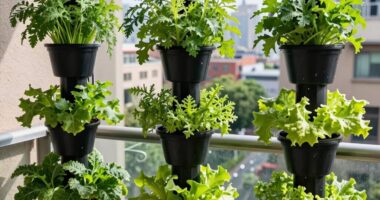
- They maximize small spaces, making indoor or balcony gardening efficient and accessible.
- Recirculating water systems ensure high water efficiency and reduce waste.
- Controlled nutrient delivery promotes faster growth and higher yields of leafy greens.
- Eliminating soil-borne pests and diseases simplifies plant care and increases success rates.
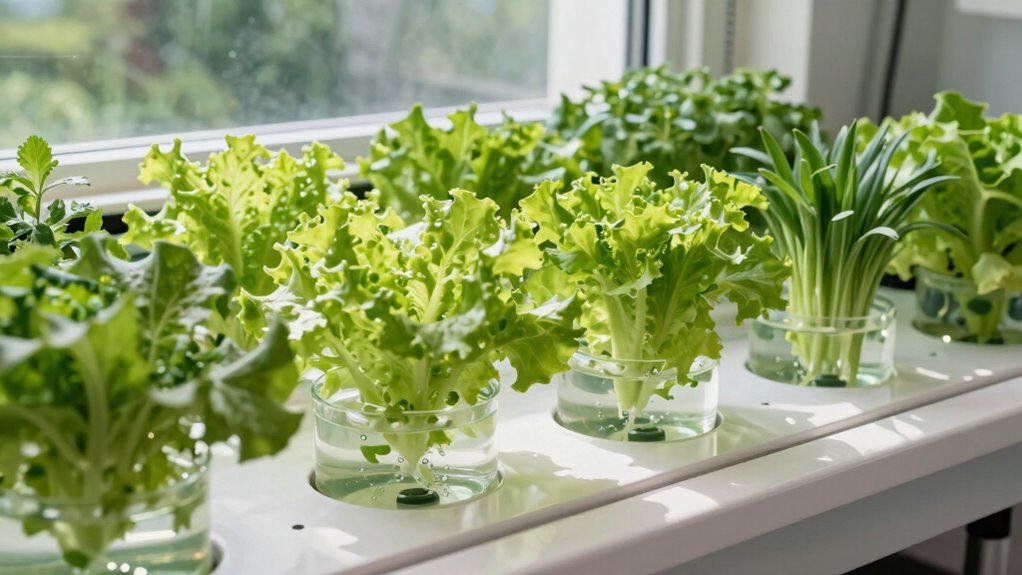
Hydroponic gardens offer an innovative way to grow plants without soil, allowing you to cultivate fresh vegetables and herbs indoors or in limited spaces. If you’re interested in urban farming or want to adopt more sustainable practices, hydroponics provides an efficient solution. It lets you maximize small areas, making it perfect for city dwellers who lack traditional garden space. With a hydroponic setup, you can grow greens year-round, regardless of weather conditions, giving you constant access to nutritious produce.
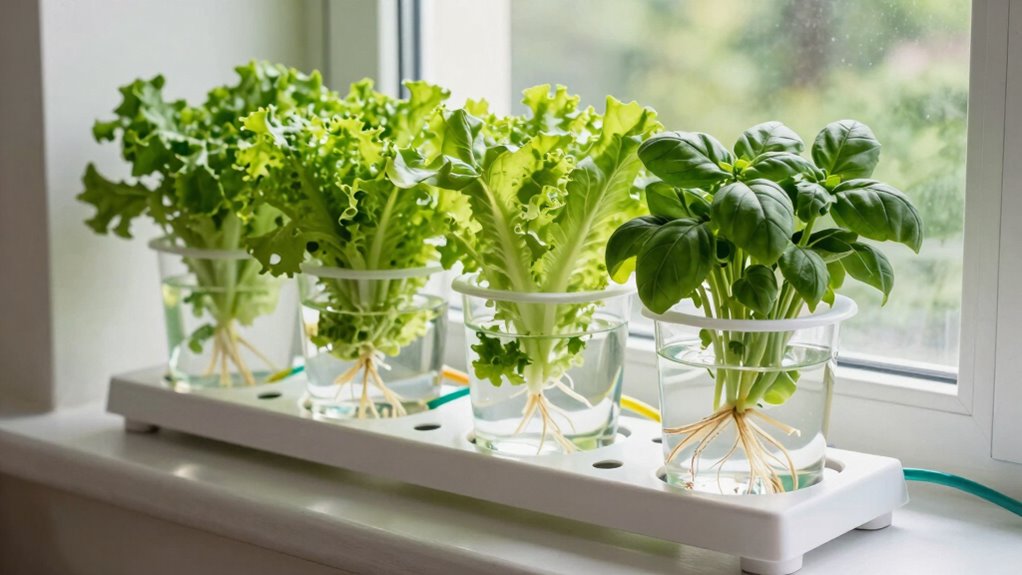
One of the main advantages is the ease of managing your garden. Unlike soil-based gardening, hydroponics requires less physical effort—no digging, weeding, or dealing with soil-borne pests. Plus, since the plants are suspended in nutrient-rich water solutions, you get faster growth and higher yields. This means you can harvest more greens in less time, making your home gardening efforts more productive and rewarding. For urban farmers, hydroponic systems are a practical way to contribute to local food production and reduce reliance on store-bought vegetables.
Sustainable practices come naturally with hydroponic gardening because it uses markedly less water than traditional soil gardening. The water circulates within a closed system, recycling nutrients and reducing waste. You can also control the nutrients precisely, minimizing excess runoff that can harm the environment. This level of control not only promotes healthier plant growth but also aligns with eco-friendly principles, helping you lower your carbon footprint. Additionally, hydroponic gardens eliminate the need for chemical pesticides and herbicides, further supporting sustainable and organic practices. Since hydroponics often employs recirculating water systems, it further enhances water efficiency and environmental sustainability. Implementing biodiversity-friendly practices within your hydroponic setup can also support beneficial microorganisms and promote a healthier ecosystem.
Setting up a hydroponic garden is straightforward, especially with many beginner-friendly kits available. You don’t need a large outdoor space or soil; just a well-lit area indoors or a small balcony can suffice. Once set up, you maintain the system by monitoring water levels and nutrient concentrations. The plants’ roots are directly accessible for quick adjustments, so you can optimize conditions as needed. This simplicity makes hydroponic gardening accessible to everyone, even those new to gardening. Additionally, the easy-to-maintain nature of hydroponics means you can enjoy fresh produce with minimal effort and time investment.
hydroponic garden kit for beginners
As an affiliate, we earn on qualifying purchases.
As an affiliate, we earn on qualifying purchases.
Frequently Asked Questions
How Much Does a Basic Hydroponic System Typically Cost?
A basic hydroponic system usually costs between $50 and $200, depending on size and features. When you do a cost comparison, you’ll see that the initial investment is quite affordable compared to traditional gardening. You might also find starter kits that include everything you need, making it easier to get started. Over time, you’ll save money on soil and fertilizers, making it a smart choice for home gardeners.
Can Hydroponic Gardens Be Used Indoors Year-Round?
Yes, you can use hydroponic gardens indoors year-round. To succeed, you’ll need proper indoor lighting, like grow lights, to mimic sunlight and guarantee healthy plant growth. Space optimization is key; choose compact systems that fit your available area. With the right setup, you can enjoy fresh greens anytime, regardless of the season, making hydroponics an efficient, all-year solution for indoor gardening.
What Are the Common Pests or Diseases in Hydroponic Setups?
Hold your horses, crop whisperer! In hydroponic setups, pests like aphids and spider mites, along with diseases such as root rot and mold, are common threats. You need to focus on pest management by inspecting plants regularly and maintaining cleanliness. Disease prevention involves proper nutrient balance and good airflow. Staying vigilant keeps your greens healthy and thriving, turning your modern garden into a pest-free paradise.
How Much Water Does a Hydroponic Garden Usually Consume?
A hydroponic garden typically uses about 90% less water than traditional soil gardening. You’ll find it promotes water conservation and improves irrigation efficiency, as water is recirculated within the system. This means you only need to add small amounts of water regularly, reducing waste. Because of this efficient water use, hydroponic gardens are ideal for conserving resources while growing fresh greens at home.
Are Hydroponic Gardens Suitable for Growing Root Vegetables?
Yes, hydroponic gardens can be suitable for growing root vegetable varieties, but they require proper soil replacement techniques. You’ll need to create a nutrient-rich, loose medium that supports root development, like coconut coir or perlite. This setup allows roots to grow without soil, making it easier to manage and harvest. With the right techniques, you can successfully grow carrots, radishes, and other root vegetables hydroponically at home.
indoor hydroponic herb garden system
As an affiliate, we earn on qualifying purchases.
As an affiliate, we earn on qualifying purchases.
Conclusion
Imagine biting into fresh greens grown effortlessly at home, no dirt or mess involved. Hydroponic gardens make that possible, turning the complexity of traditional gardening into a simple, clean experience. While some see gardening as a chore, you’ll find it’s an exciting, stress-free way to boost your health and kitchen. Why settle for store-bought greens when you can enjoy the freshness and convenience of your own hydroponic garden? It’s gardening made easy.
small space hydroponic vegetable grower
As an affiliate, we earn on qualifying purchases.
As an affiliate, we earn on qualifying purchases.
recirculating water hydroponic system
As an affiliate, we earn on qualifying purchases.
As an affiliate, we earn on qualifying purchases.
Cold & flu season Picks
humidifiers
As an affiliate, we earn on qualifying purchases.