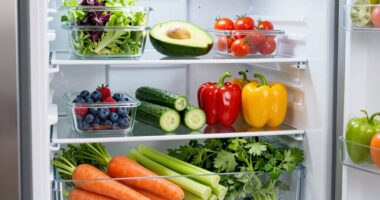
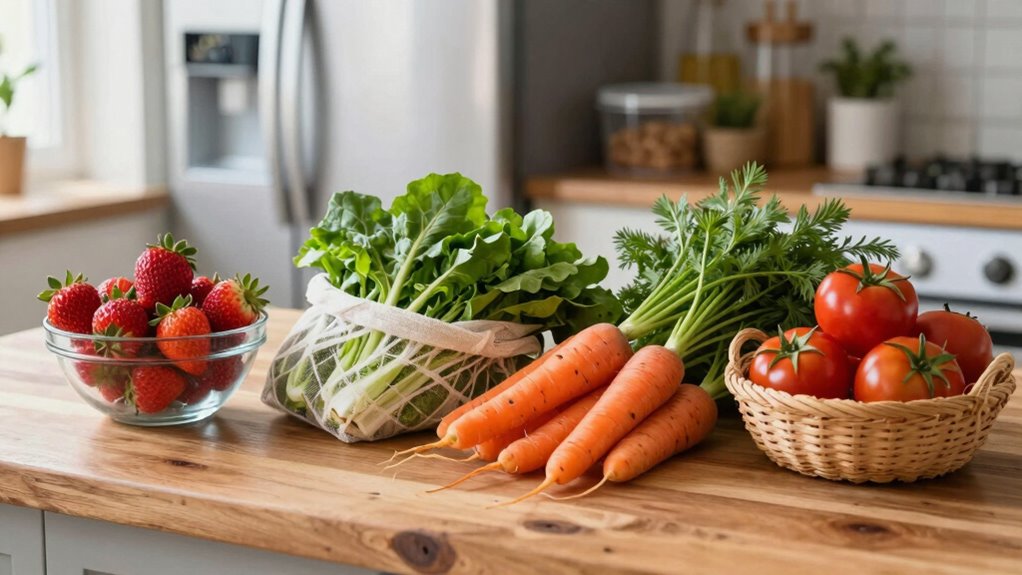

To keep produce fresh longer and tastier, store fruits and vegetables properly based on their type. Keep berries and citrus in the fridge right away, while fruits like bananas and tomatoes should stay at room temperature until ripened, then refrigerate to slow spoilage. Wrap leafy greens in damp paper towels and store in perforated bags. Root veggies like carrots and potatoes prefer cool, dark places. Proper storage techniques and temperature control help extend freshness and flavor—discover more tips to maximize your produce’s quality.

Get health and wellness essentials delivered free with Prime
- Fast, free delivery on millions of items
- Prime Video, Amazon Music and more included
- Member-only deals all year
Key Takeaways
- Store fruits like berries and citrus in the fridge from the start to preserve freshness and flavor.
- Keep leafy greens in perforated bags with a damp paper towel to retain moisture and extend shelf life.
- Keep most vegetables in the fridge’s crisper drawer at proper humidity and avoid cold-sensitive produce like tomatoes.
- Manage ripening by leaving certain fruits at room temperature until ripe, then refrigerate to slow further ripening.
- Avoid storing produce with ethylene gas-producing fruits together to prevent premature spoilage.

Storing produce properly can considerably extend its freshness and prevent waste. When you pay attention to how you store fruits and vegetables, you help preserve their flavor, texture, and nutritional value. One of the key aspects of effective produce storage is understanding fruit ripening. Many fruits continue to ripen after being picked, so you need to manage their environment to prevent over-ripening. For example, keep bananas, tomatoes, and avocados at room temperature until they reach your preferred ripeness, then transfer them to the fridge to slow down the process. This way, you enjoy their peak flavor longer. Conversely, some fruits like berries and citrus are best stored in the fridge from the start to maintain their freshness.
Proper storage extends produce freshness, flavor, and nutrition by managing ripening and temperature.
Vegetable freshness also depends heavily on the right storage methods. Leafy greens, such as spinach or lettuce, lose moisture quickly, so wrapping them in a damp paper towel and placing them in a perforated plastic bag helps retain their crispness. Root vegetables like carrots and potatoes should be stored in a cool, dark, and well-ventilated place, not in the fridge, to prevent moisture buildup that can cause spoilage. For vegetables like broccoli and cauliflower, a perforated plastic bag in the fridge works well, keeping them fresh without trapping excess moisture.
Temperature plays a crucial role in maintaining produce quality. Most vegetables stay fresher longer in the fridge’s crisper drawer, where humidity levels are higher. However, some fruits and vegetables are sensitive to cold; for instance, tomatoes and potatoes can develop a mealy texture or off-flavors if stored at too low a temperature. Knowing which produce prefers cool, room, or slightly warmer conditions can make a significant difference in how long they stay good. Additionally, understanding storage conditions can help optimize their lifespan and flavor. Proper storage techniques are also supported by understanding ripening, which influences when to refrigerate or leave produce at room temperature for optimal freshness. Being aware of ethylene gas production and its effects can further aid in preventing premature spoilage.
produce storage containers with vents
As an affiliate, we earn on qualifying purchases.
As an affiliate, we earn on qualifying purchases.
Frequently Asked Questions
Can You Freeze Fresh Produce Without Pre-Treating It?
Yes, you can freeze fresh produce without pre-treating it, but it’s not ideal for preservation. Freezing techniques like quick freezing help maintain quality, but skipping pre-treatment may lead to freezer burn or texture loss. For better produce preservation, consider blanching or other pre-treatments, which deactivate enzymes and improve flavor and texture upon thawing. Without pre-treatment, your produce might not taste as fresh once frozen.
What’s the Best Way to Store Herbs Long-Term?
To store herbs long-term, start with herb preservation by drying or freezing them. For drying, hang herbs upside down in a well-ventilated area until crispy, then store in airtight containers. Freezing works well too—chop herbs, fill ice cube trays with water or oil, and freeze. Both methods help maintain flavor enhancement, ensuring your herbs stay fresh and flavorful for later use.
How Do Humidity Levels Affect Produce Freshness?
Think of your produce’s freshness like a delicate dance—too much humidity and it wilts, too little and it withers. Humidity levels directly affect moisture control in your storage environment; too high, and produce risks mold and rot, too low, and it dries out prematurely. Maintaining the right humidity creates a balanced environment, helping your produce stay crisp, flavorful, and ready to enjoy longer—like a perfectly choreographed performance.
Should I Store Fruits and Vegetables Separately?
Yes, you should store fruits and vegetables separately because they ripen differently and can affect each other’s freshness. Fruits release ethylene, which speeds up ripening, while many vegetables are sensitive to it. Keeping them apart slows fruit ripening and prevents premature spoilage. By storing them separately, you maintain ideal freshness and flavor, ensuring your produce stays tasty longer and preserves its quality.
How Can I Tell if Produce Is Still Good?
You can tell if produce is still good by checking ripening indicators like color, texture, and smell. Look for spoilage signs such as mold, soft spots, or an off odor. If fruits are overly mushy or vegetables feel slimy, it’s time to toss them. Fresh produce should look vibrant, smell fresh, and feel firm. Trust these cues to keep your produce tasty and safe to eat.
As an affiliate, we earn on qualifying purchases.
Conclusion
By mastering these simple storage tips, you’re like a skilled gardener tending to a delicate bloom, ensuring each piece of produce remains fresh and flavorful. Think of your kitchen as a well-kept treasure chest, where every item is preserved with care. With a little attention, you’ll enjoy vibrant, tasty fruits and vegetables longer, turning your everyday meals into a feast of freshness. After all, a little effort now keeps the spoilage at bay, much like tending a garden yields bountiful harvests.
As an affiliate, we earn on qualifying purchases.
fruit ripening and storage guide
As an affiliate, we earn on qualifying purchases.
As an affiliate, we earn on qualifying purchases.
Cold & flu season Picks
humidifiers
As an affiliate, we earn on qualifying purchases.